- Region
- Cyclades, Greece
- How long
- 3–4 nights
- Population
- 15,480 (municipality of Thira, 2021 census)
- Ferry port
- Athinios, about 20 min by bus from Fira
- Airport
- Santorini (JTR), about 5 km from Fira
- From Athens
- ≈ 4 h 25 min–7 h 45 min by ferry from Piraeus, or a short flight
In short
- What it is: the rim of a volcano that collapsed in the Late Bronze Age eruption (about 1600 BCE). The villages of Fira, Firostefani, Imerovigli and Oia sit on cliffs up to about 300 m above the flooded caldera.
- Do first: a caldera boat trip to the Nea Kameni volcano and the hot springs, Akrotiri (the Bronze Age town buried by the eruption), the walk from Fira to Oia, and a winery tour.
- 2026 rules: Civil Protection measures adopted in April 2026 apply until at least 31 March 2027. They close the Ammoudi–Agios Nikolaos footpath and restrict parts of Fira's Old Port. The 588-step Karavolades stairs closed after a rockfall in August 2026.
- How long: 3–4 nights. Stay on the caldera for the view, or on the east coast (Kamari, Perissa) for beaches and value.
- Getting there: Seajets fast ferries take about 4 h 25 min–5 h 45 min from Piraeus, and Blue Star conventional ferries about 5 h 35 min–7 h 45 min (Ferryhopper data, checked November 2026). There are flights from Athens and, in summer, from much of Europe.
Why Santorini is unlike any other island
Most Cycladic islands are low, dry hills with harbours. Santorini is what is left of a volcano. Around 1600 BCE one of the largest eruptions of the last few thousand years emptied the magma chamber beneath the island, and its centre collapsed into the sea. What remains is a broken ring: the main island (Thira), the smaller Thirasia to the west, the islet of Aspronisi, and in the middle the dark lava islands of Palea Kameni and Nea Kameni, built up by eruptions over the last two thousand years. The last of these, a small lava-dome eruption, was in 1950.
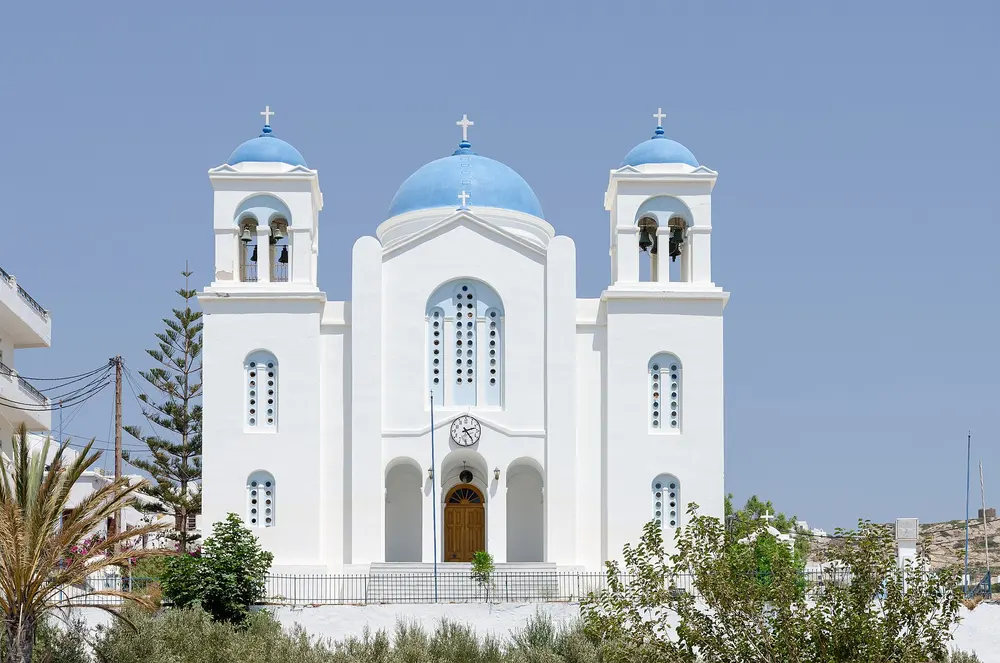
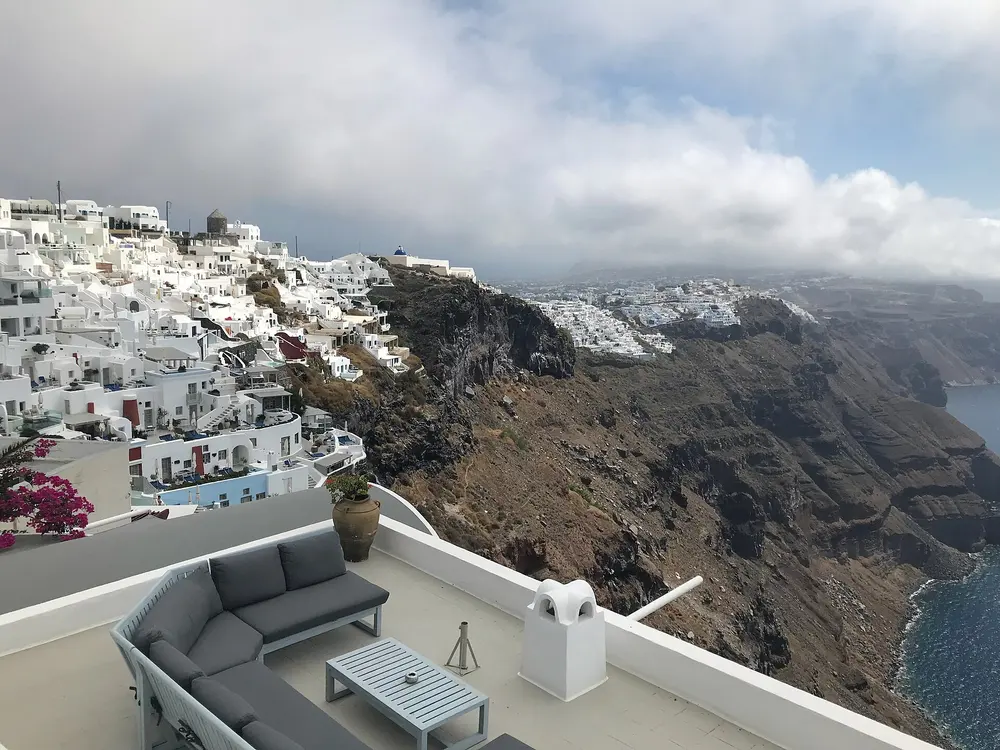
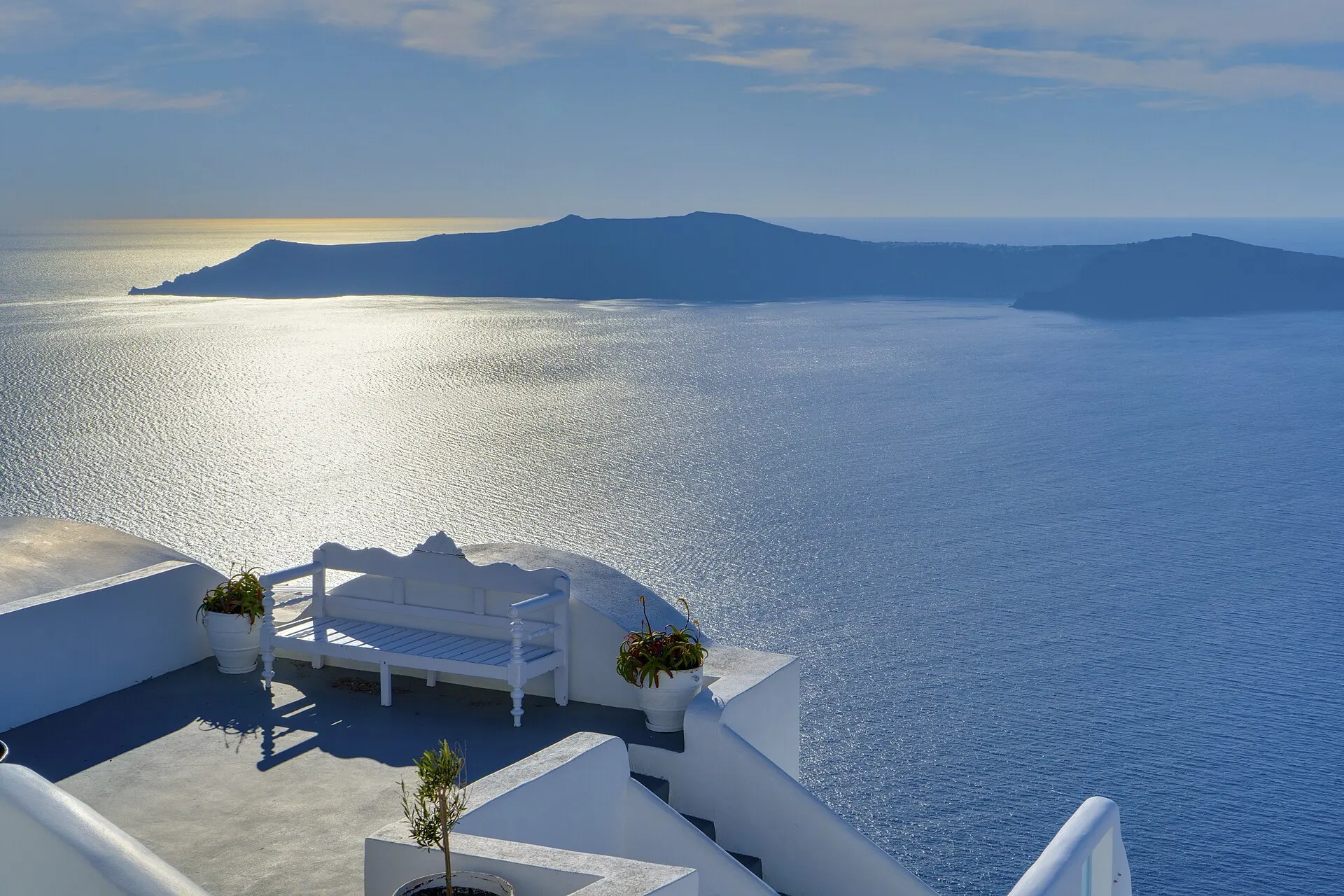
The result is the view that sells the island. The inner cliffs drop several hundred metres to deep water in bands of red, black and cream volcanic rock, and the villages are built along the top. Whitewashed houses, chapels with blue domes and hotels carved into the soft rock look west over the caldera to the sunset. The outer side of the island slopes gently east and south to long beaches of black and red volcanic sand, vineyards and quieter inland villages.
Santorini is also one of the busiest islands in Greece. Cruise ships anchor in the caldera, and on summer evenings Oia's lanes fill for the sunset. You can still have a very good visit. Choose your season, base yourself carefully, and spend time away from the four caldera villages.
Book tours in SantoriniLive times, prices and free cancellation terms on GetYourGuide.
Check availabilitySantorini in 2026: what has changed
In early 2025 a long earthquake swarm between Santorini and Amorgos led the authorities to close some areas, and visitor numbers fell for a time. On 28 April 2026, on the advice of the scientific committees that monitor seismic and volcanic risk, the Greek authorities adopted Civil Protection measures that apply until at least 31 March 2027 (as reported by Euronews, 28 April 2026). They include:
- Fira Old Port: a restricted zone above the port that visitors may not enter. The cable car and the path between Fira and the Old Port are not restricted.
- Ammoudi (below Oia): no private vehicles on the municipal road down to the port, except a limited number of municipal passenger vehicles. The coastal footpath from Ammoudi to Agios Nikolaos is closed.
- Athinios port: traffic controls during ship arrivals and departures.
- High-risk zones marked on an official map, where staying is prohibited during earthquake tremors.
On top of this, the Karavolades stairs, the 588-step path from Fira down to the Old Port, were closed to walkers and donkeys after a rockfall at the start of August 2026, with no reopening date announced (Greek City Times, 1 August 2026). Until they reopen, the cable car is the only way up and down from Fira's Old Port, and summer queues can be long. Red Beach has been officially closed since earthquake-related rockfalls in February 2025. Do not walk past the signs. Rules can change quickly, so check the Municipality of Thira and Civil Protection notices before you travel.
The caldera villages
- Fira (Thira) is the capital and the transport hub. It has the central bus station, the cable car to the Old Port, the Archaeological Museum and the Museum of Prehistoric Thera, and most of the shops, bars and restaurants. It is lively and convenient, and crowded at midday when cruise passengers come up.
- Firostefani begins where Fira ends, a ten-minute walk north along the rim. It is quieter, with the same view and a few good tavernas.
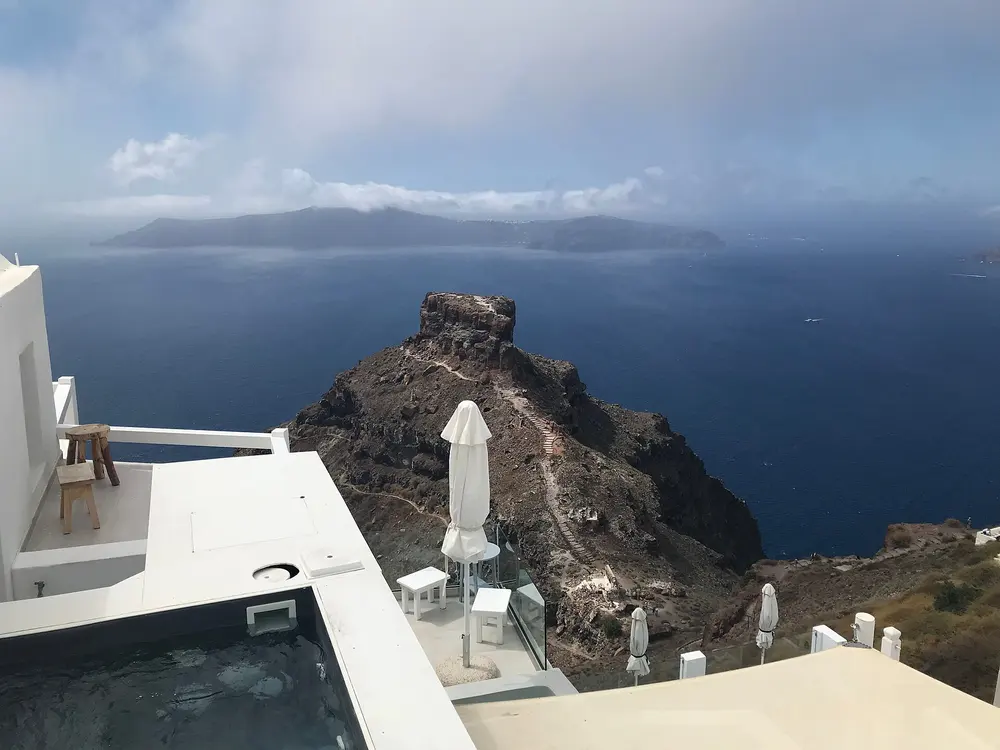
- Imerovigli is the highest of the caldera villages, at roughly 300 m. It looks across to Skaros, a rock where a Venetian castle stood, and has a reputation for calm, high-end stays. The sunset view is as good as Oia's, without the crowd.
- Oia sits on the northern tip. It has captains' houses, cave houses, windmills and the ruined Venetian castle that serves as the famous sunset viewpoint. Steps lead down to the tiny harbour of Ammoudi, with fish tavernas at the waterline. Note the 2026 vehicle ban on the Ammoudi road.
- Thirasia, across the caldera, has a few hundred residents, a cliff-top village and almost no tourism. Some boat tours stop there.
The Fira–Oia path along the caldera rim links all four. It is about 10 km one way, with roughly 300–370 m of ascent in total, and takes 3–5 hours with stops. The hardest section climbs past Imerovigli towards the chapel of Profitis Ilias above Oia. There is no shade, so start early and carry water. See things to do in Santorini for the route.
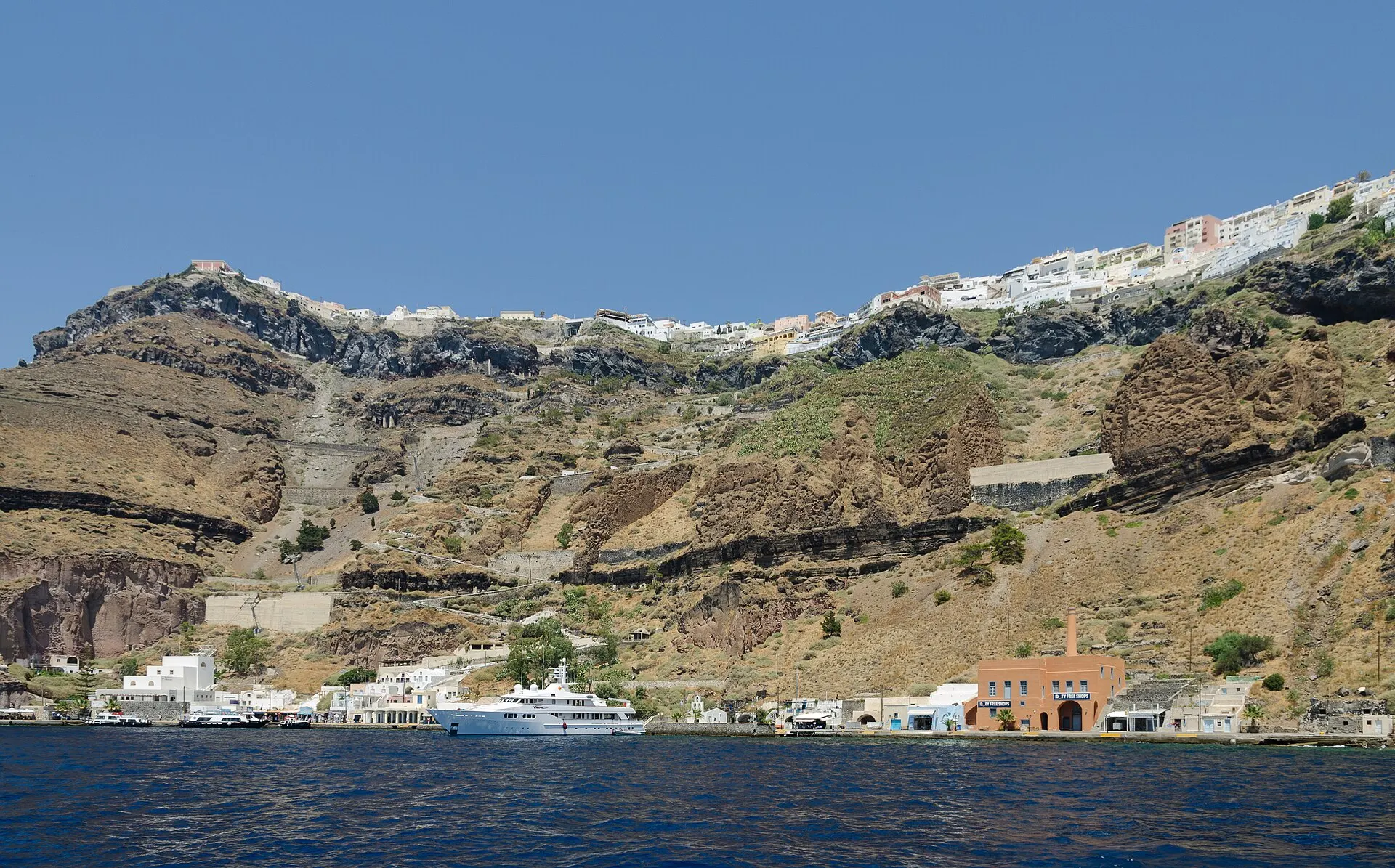
Fira's houses and churches line the rim of the caldera above Nea Kameni.
Beyond the rim: villages, wine and the south
Away from the caldera, Santorini feels much more like a lived-in Cycladic island. Pyrgos, about 7 km from Fira and home to 1,078 people (2021 census), climbs a hill to the ruins of a Venetian castle (Kasteli) that was once the island's administrative centre, with views in every direction. Megalochori and Emporio keep their old lanes, bell towers and fortified houses. Profitis Ilias is the island's highest point, with a monastery and telecommunications masts on top.
Santorini's wine deserves a day. The volcanic soil, wind and lack of summer rain gave rise to an unusual way of growing vines: they are trained low into baskets called kouloures that protect the grapes from the wind. The flagship grape is Assyrtiko, which makes taut, mineral, high-acid white wines under the Santorini PDO. Vinsanto, made from sun-dried grapes, is the island's traditional sweet wine. Many estates in Pyrgos, Megalochori, Episkopi Gonia and Akrotiri have tasting rooms. A guided tour means nobody has to drive.
In the south, the Akrotiri excavation is the essential sight (see below). The coast here has the caldera's last cliffs, the Akrotiri lighthouse at the south-western tip, and small beaches such as Vlychada with its wind-carved pumice cliffs.
Akrotiri and Ancient Thera
Akrotiri was a prosperous Bronze Age harbour town with links to Minoan Crete. It was buried under volcanic ash in the great eruption, which preserved multi-storey houses, streets, storage jars and the wall paintings now displayed in Fira and Athens. No large numbers of bodies or valuables have been found, which suggests the inhabitants had warning and left. A modern roof covers the whole excavation, so it is a good visit even on hot days.
Ancient Thera is a completely different site. It is the town founded by Dorian settlers in the first millennium BCE, later Hellenistic and Roman, and it sits on the ridge of Mesa Vouno between Kamari and Perissa. The site is exposed, with superb views, and is reached by a steep road or footpath.
Admission, as published by the Ministry of Culture's Ephorate of Antiquities of the Cyclades for 2026: Akrotiri costs €20 (reduced €10). From April to October it opens 08:00 until the evening (18:00–19:30 depending on the fortnight), except Mondays and Thursdays, when it closes at 15:30. In winter it is open 08:30–15:30 and closed on Tuesdays. The Museum of Prehistoric Thera in Fira costs €10 (reduced €5) and is closed on Tuesdays. Ancient Thera opens 08:30–15:30 in summer and is closed on Wednesdays, with short hours in November and a winter closure from December to February. Check the Ephorate's page for the day of your visit.
Santorini: entry to the ruins of Akrotiri with an audio guide
Admission to the Bronze Age town of Akrotiri with an audio guide, so you can visit at your own pace.
Check availabilityBook via GetYourGuideSantorini: Akrotiri prehistoric city private guided tour
A private guided visit to the excavation of Akrotiri, the town buried by the great eruption.
Check availabilityBook via GetYourGuideTour listings are on GetYourGuide. Prices, times and cancellation terms are shown live on each listing and can change; AegeanSea.com may earn a commission at no extra cost to you.
Beaches: black sand, red cliffs and pumice
Santorini's beaches are on the east and south coasts, away from the caldera cliffs. The sand is dark volcanic grit that gets very hot by midday, so bring beach shoes.
- Kamari is a long organised beach with a promenade of restaurants, under the cliff of Mesa Vouno. It is close to the airport and has good bus links.
- Perissa and Perivolos are on the other side of Mesa Vouno. They form one of the longest beaches on the island, with beach bars, water sports and budget-friendly hotels behind.
- Vlychada is quieter, with sculpted pumice cliffs and a small marina nearby.
- Red Beach is officially closed after the February 2025 rockfalls. White Beach and the coves near Akrotiri are reached by boat. Some caldera cruises make swim stops on that coast.
The best of Santorini by boat
Seeing the caldera from the water is the experience most visitors remember. There are three classic types of trip:
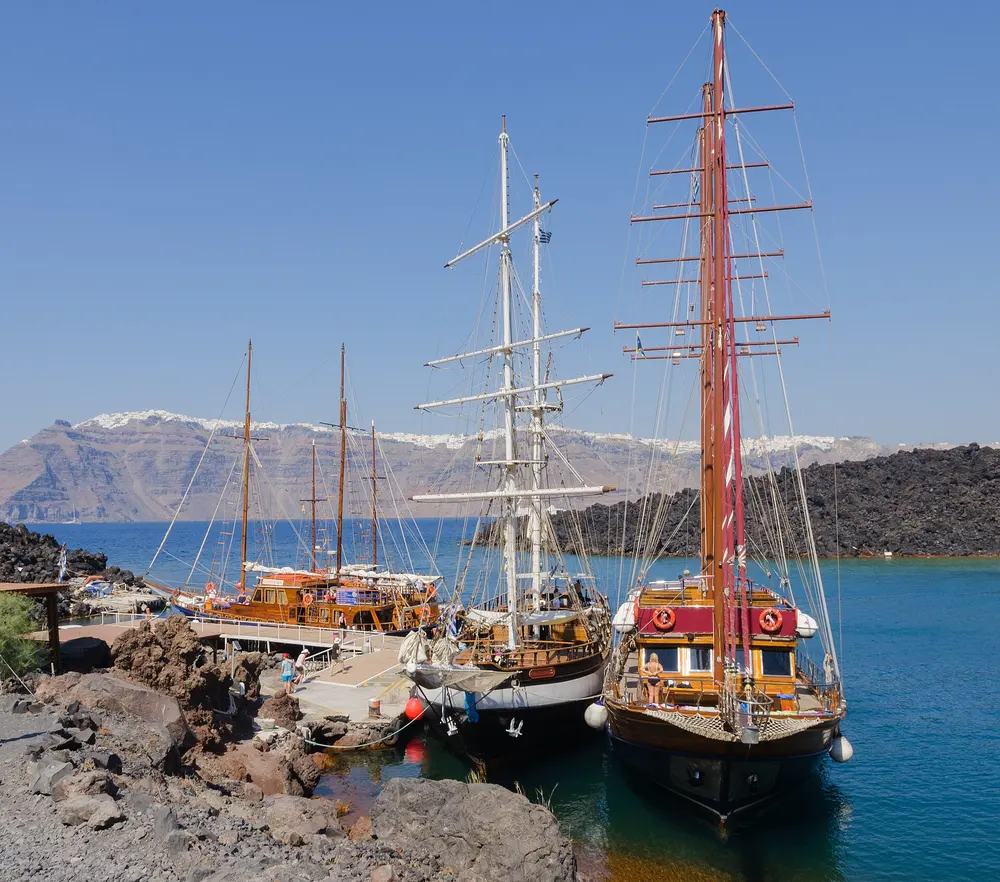
- Volcano and hot springs (half day): a traditional wooden boat from the Old Port to Nea Kameni, where you walk up to the craters, then a swim in the warm, iron-red water at the springs off Palea Kameni. Some trips continue to Thirasia.
- Catamaran caldera cruise (about 5 hours): swim stops at the White and Red beaches from the water, the hot springs, and a meal on board. The sunset departures end off Oia.
- Sailing cruise: fewer guests on a sailing boat, a slower pace, morning or sunset.
Compare them on Santorini tours. Book the sunset sailings well ahead from June to September.
Food and drink
Santorini's dry volcanic farmland produces a few things famously well. The small sweet cherry tomatoes (tomataki Santorinis, a PDO product) go into domatokeftedes, crisp tomato fritters. Fava, a purée of yellow split peas from Lathyrus clymenum, is grown here under its own PDO and served with onions, capers and olive oil. White aubergines and capers come from the island too. Fish tavernas line the waterfront at Ammoudi, Vlychada and Kamari. In Fira and Oia, caldera-view restaurants charge for the view, and the best value is often one street back from the rim.
For wine, start with a dry Assyrtiko, try a Nykteri (traditionally made from grapes picked at night and aged in barrels), and finish with Vinsanto. Most wineries open from spring to autumn. Book tastings at sunset, which are popular.
Where to stay, in short
Choose between the view and the beach. Oia, Imerovigli and Firostefani have caldera-view rooms and suites, often with plunge pools, at the highest prices. Expect steps and no road access to many hotels. Fira has the most choice at every price and the best connections. Kamari and Perissa are beach resorts on the east and south coasts with far better value and family-friendly hotels. Pyrgos and Megalochori suit visitors with a car who want village life and wineries. Compare areas and properties on where to stay in Santorini.
How long to stay and sample plans
- 2 nights: day 1, Fira and the walk to Oia, sunset in Imerovigli or Oia. Day 2, a morning catamaran or volcano trip, then Akrotiri and a winery in the afternoon.
- 4 nights: add a beach day in Kamari or Perissa with Ancient Thera, a village day in Pyrgos and Megalochori, and an evening at Ammoudi.
- Island hopping: Santorini sits at the southern end of the main Cyclades ferry line. Ios is about 35 minutes away by fast ferry, Naxos 1 h 05 min–2 h 20 min and Paros 1 h 35 min–3 h 30 min. Fast boats also run to Amorgos and Milos in season. See getting to Santorini.
Practical tips
- Avoid the cruise-ship peak: visit Fira and Oia early in the morning or after the ships' passengers return in the late afternoon. Since 2025 cruise passengers landing on Santorini and Mykonos have paid a per-passenger fee, €20 in the June–September high season.
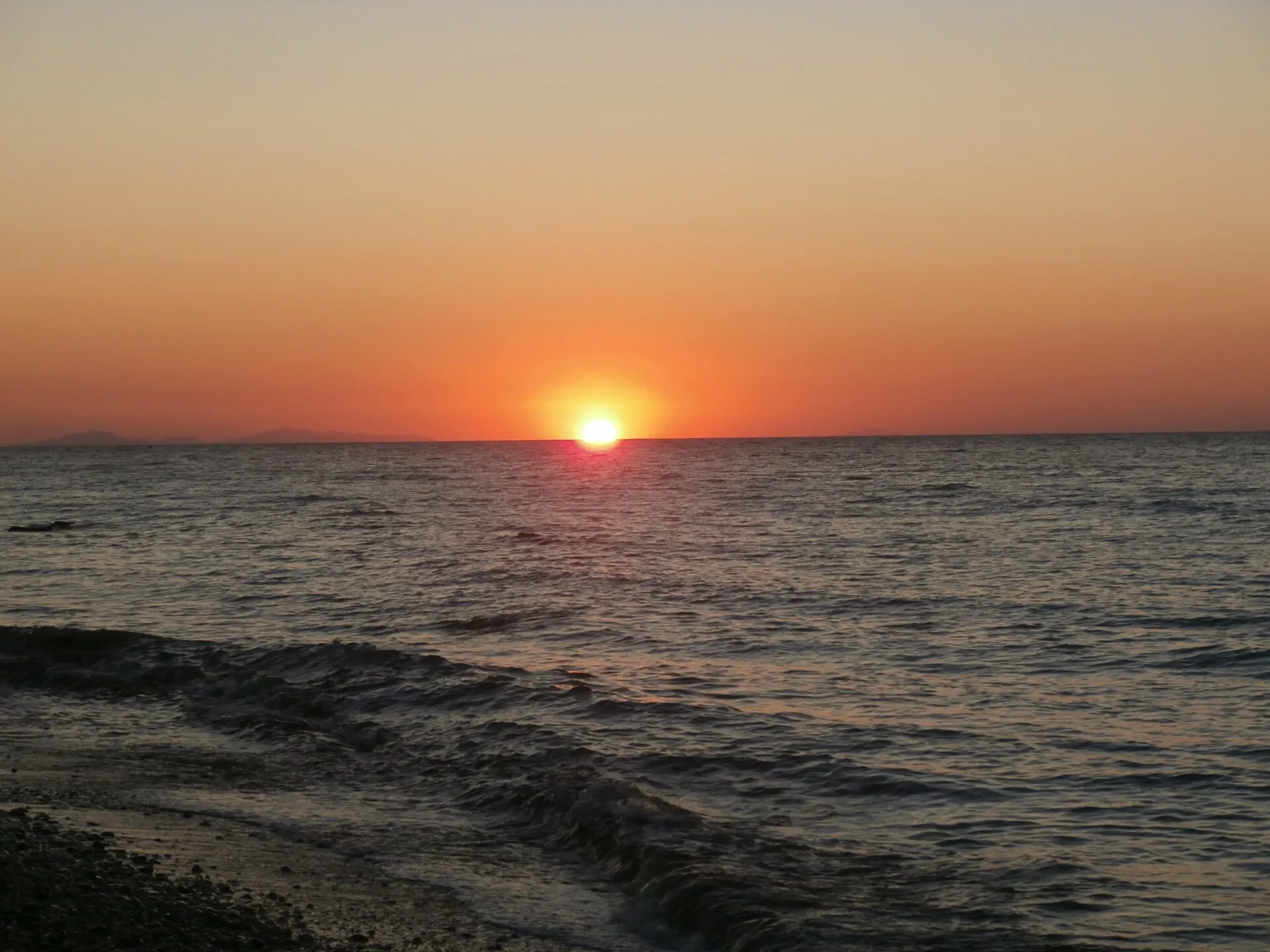
- Sunset in Oia: arrive at least an hour early for the castle viewpoint, or watch from Imerovigli, Firostefani or a boat instead.
- Getting around: KTEL buses radiate from Fira to Oia, Kamari, Perissa, Akrotiri, the airport and the port. Summer buses fill up. A small car or quad is useful for the south, but parking in Fira and Oia is very hard in summer.
- Heat and sun: the caldera faces west with no shade. Carry water, wear a hat, and avoid midday walks from June to September.
- When to come: late April–June and September–October give warm seas without the peak crowds. See when to go to Santorini.
Plan your visit to Santorini
- Things to doSantorini's sights ranked and explained: the Fira–Oia path, the volcano and hot…
- ToursThe best Santorini tours on GetYourGuide, compared: sunset sailing and catamaran…
- Getting thereFerries to Santorini by operator with published crossing times, flights from Athens and…
- Where to staySantorini's areas compared: caldera-view hotels in Oia, Imerovigli, Firostefani and…
- When to goSantorini month by month: air and sea temperatures, the July–August meltemi,…
Frequently asked questions
Is Santorini safe to visit after the 2025 earthquakes?
Santorini welcomed visitors through 2025 and 2026. Civil Protection measures adopted in April 2026, valid until at least 31 March 2027, close or restrict specific high-risk areas: the Ammoudi–Agios Nikolaos footpath, parts of Fira's Old Port and vehicle access to Ammoudi. Red Beach has been closed since February 2025. Follow the signs and official notices, keep off closed paths, and check the latest situation before you travel.
Oia or Fira: which is better to stay in?
Oia is the most photogenic and the most expensive, and it is crowded at sunset. Fira has more choice, nightlife and the bus hub. Imerovigli and Firostefani sit between them, with the same view and more calm. Families and visitors on a budget are better off in Kamari or Perissa.
How many days do you need in Santorini?
Three or four nights lets you do a boat day, Akrotiri, the caldera walk, a winery and a beach without rushing. Two nights covers the highlights.
Can you swim in Santorini's caldera?
Yes, from boats. The classic swim is at the warm springs off Palea Kameni on volcano tours. Catamaran cruises also stop at bays on the south coast. The caldera villages themselves are on cliffs with no beaches.
Can I walk down to Fira's Old Port?
Not in late 2026. The 588-step Karavolades stairs closed after a rockfall in August 2026, with no reopening date announced. Use the cable car, and allow extra time in summer when the queues are long.
Sources and official information
Facts were checked against these official sources in November 2026. Opening hours, prices and timetables change, so confirm before you go.
- cyclades.culture.gov.gr
- euronews.com
- greekcitytimes.com
- en.protothema.gr
- ferryhopper.com
- en.wikipedia.org
- en.wikipedia.org
- en.wikipedia.org
- topoguide.gr
- cruisemapper.com
- greeka.com
AegeanSea.com is an independent guide, not the official site of any tourism board, government, port authority or ferry operator. Some links are affiliate links: tours go to GetYourGuide and stays go to Booking.com, and we may earn a commission at no extra cost to you.