- Region
- Crete, Greece
- How long
- 5–7 nights (east and centre)
- Population
- 624,408 (whole island, 2021 census); Heraklion municipality 179,302
- Main airport
- Heraklion Nikos Kazantzakis (HER), on the eastern edge of the city
- Ferry port
- Heraklion, ≈ 7 h 25 min–9 h 50 min from Piraeus (published times)
- Knossos ticket
- €20 full / €10 reduced (Hellenic Heritage, checked November 2026)
In short
- What this guide covers: the centre and east of Crete — Heraklion, Knossos, the Lasithi plateau, Hersonissos and Malia, Agios Nikolaos, Elounda, Spinalonga and Sitia. Western Crete (Chania, Rethymno, Balos, Elafonisi, Samaria) has its own guide.
- Do first: the Heraklion Archaeological Museum and Knossos on the same day or two consecutive days, then a boat to Spinalonga from Plaka, Elounda or Agios Nikolaos.
- 2026 tickets: Knossos €20 (reduced €10); Heraklion Archaeological Museum €20; Spinalonga €20 (reduced €10); Phaistos €15 (reduced €8). Hours and free days below (Hellenic Heritage, checked November 2026).
- UNESCO: Knossos, Phaistos, Malia, Zakros, Zominthos and Kydonia were inscribed together as the Minoan Palatial Centres in July 2025.
- How long: Crete is about 260 km long. Give the centre and east five days at least, and add three or four more for the west.
Crete is two trips: why this guide covers the centre and east
Crete is the largest Greek island and the fifth largest in the Mediterranean: about 260 km from east to west, home to 624,408 people at the 2021 census, and divided into four regional units — Chania, Rethymno, Heraklion and Lasithi. Three mountain ranges run along it: the White Mountains in the west (2,453 m), Psiloritis or Mount Ida in the centre (2,456 m, the island's highest point) and the Dikti range in the east (2,148 m). Between them lie upland plateaus, olive-covered valleys and a coastline that changes completely from the busy north to the steep, quiet south.
Most visitors try to see the whole island from one base and spend their holiday in the car. It works far better as two trips. This guide covers Heraklion and the east: the Minoan sites, the city and its museum, the resort coast at Hersonissos and Malia, the Lasithi plateau, and the Gulf of Mirabello with Agios Nikolaos, Elounda and Spinalonga. Our Chania and western Crete guide covers the Venetian towns of Chania and Rethymno, the Samaria Gorge and the beaches of Balos and Elafonisi.
If you have a week, pick one half and do it well. With ten days or more, split your stay: three or four nights around Heraklion or the Gulf of Mirabello, then the rest in Chania or Rethymno. The national road along the north coast joins them.
Book tours in CreteLive times, prices and free cancellation terms on GetYourGuide.
Check availabilityHeraklion: more than a transit city
Heraklion (Iraklio) is Crete's capital and its main port and airport. First impressions from the ring road are not flattering, but the old centre inside the Venetian walls rewards a full day. The Heraklion Archaeological Museum holds the great finds of Minoan Crete — the frescoes from Knossos, the Phaistos disc, the snake goddesses, the bull's-head rhyton, the gold bee pendant from Malia — and it is the best preparation for the palace sites. Go before Knossos if you can, or straight afterwards while the ruins are fresh in your mind.
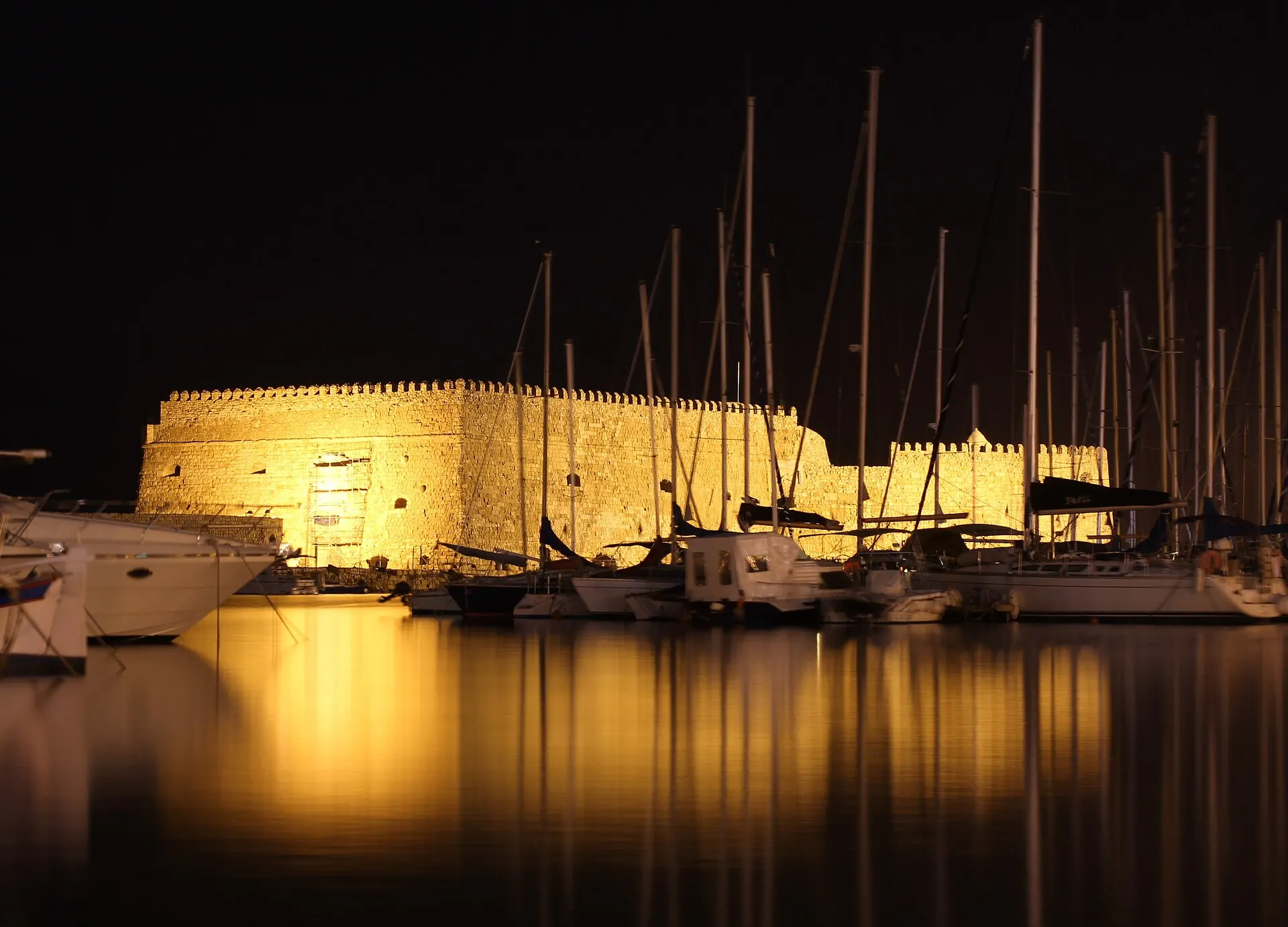
Walk from the museum down to the old harbour, where the Venetian sea fortress, the Koules, guards the entrance, and the vaulted arsenals of the Venetian shipyards still stand on the waterfront. Inland, Lions Square is named after the Morosini fountain (1628), and 25th August Street, the main pedestrian street, runs down to the harbour past the Venetian Loggia and the church of Agios Titos. The 16th-century city walls are among the best preserved in the Mediterranean; the writer Nikos Kazantzakis is buried on the Martinengo bastion, under a famous epitaph that says he hopes for nothing, fears nothing and is free
Heraklion also eats well. The 1866 Street market, the tavernas of the old centre and the raki bars are where locals go, and the city is the gateway to the wine villages of Archanes and Peza a short drive south.
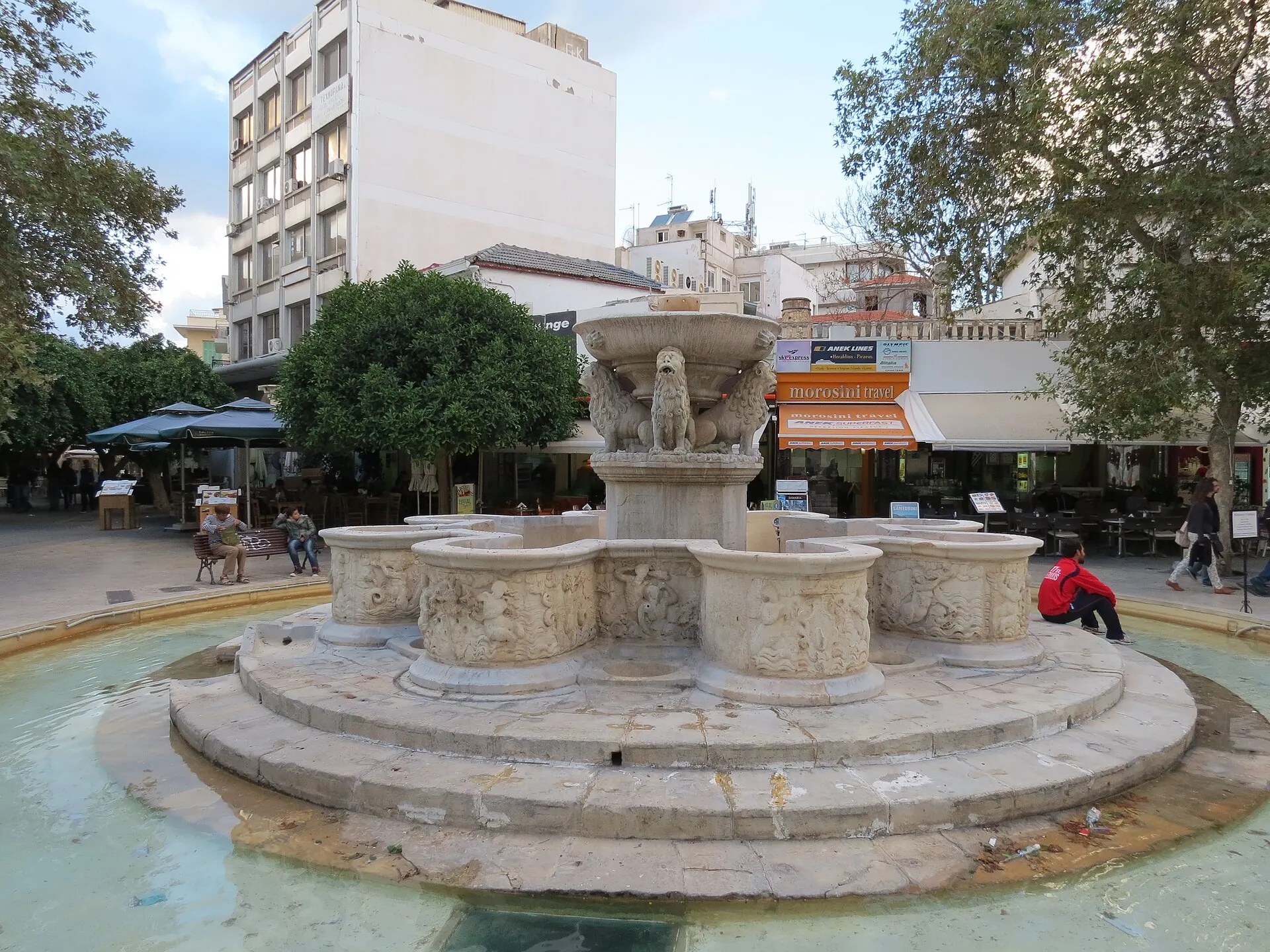
The Morosini fountain on Lions Square, the meeting point of central Heraklion.
Knossos and the Minoan palaces
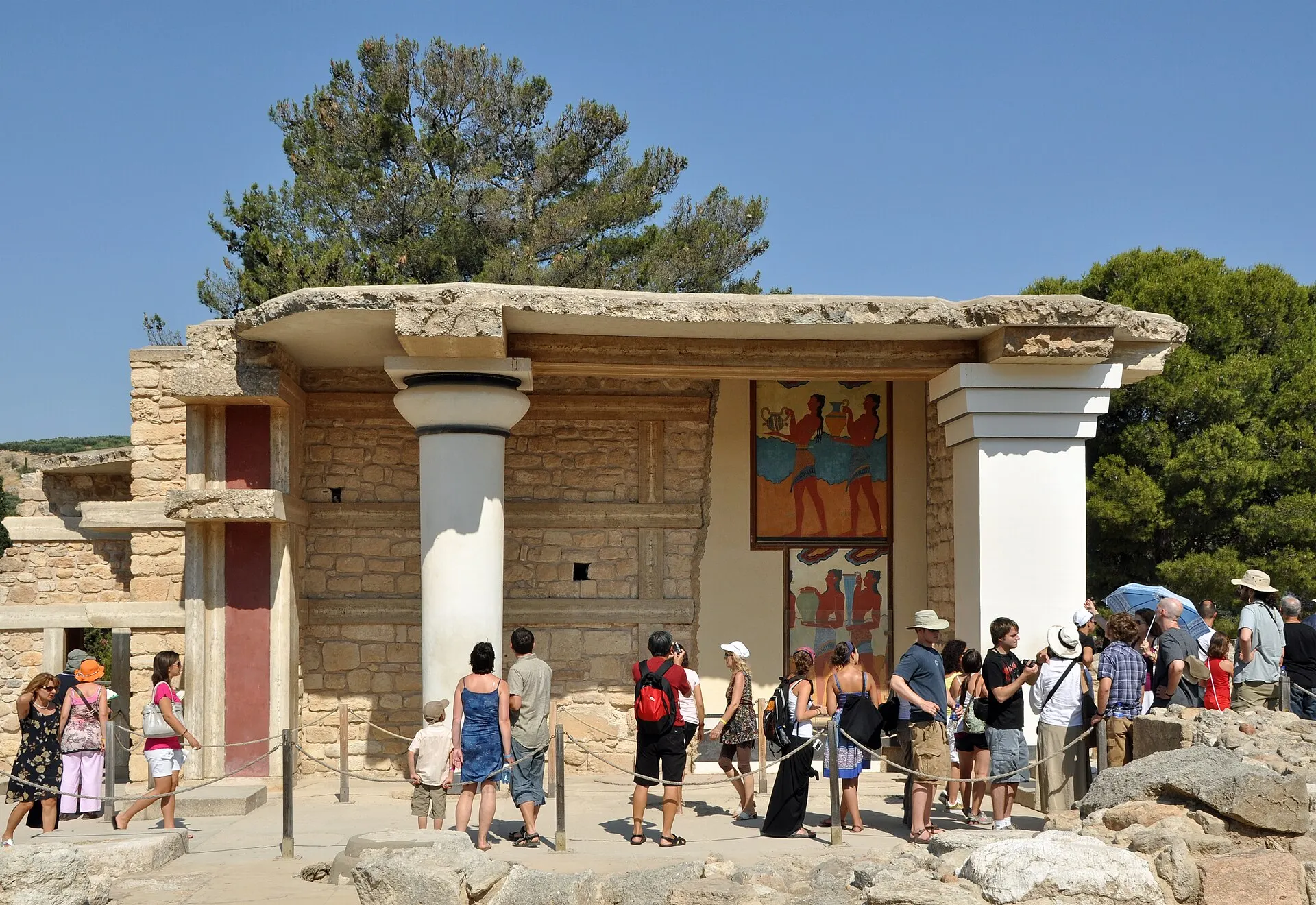
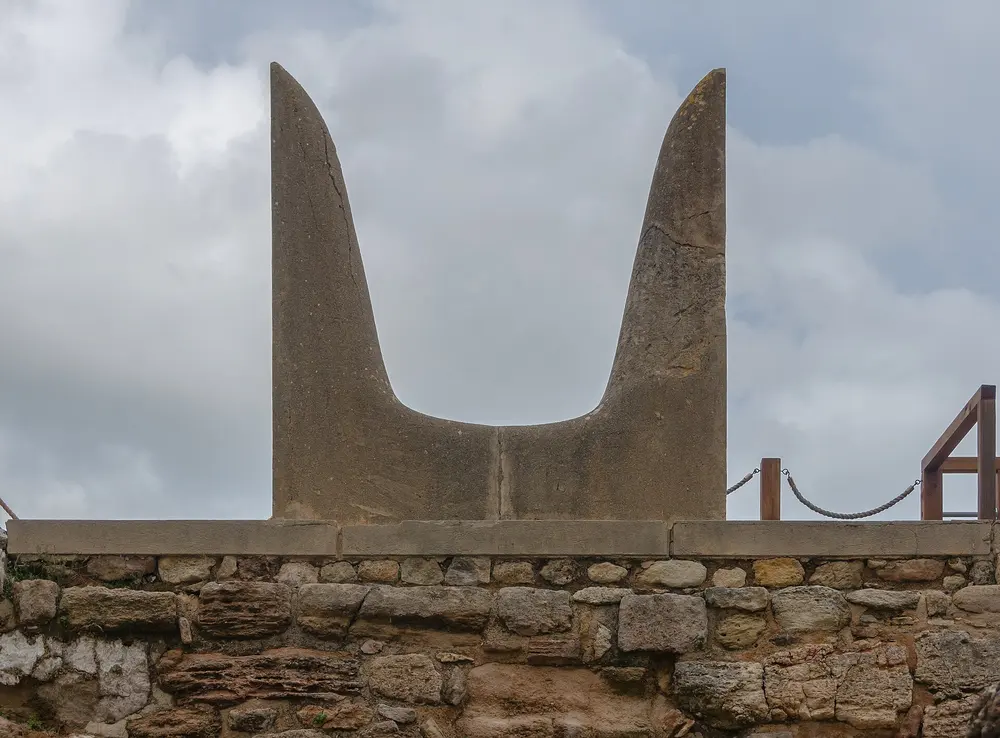
Knossos lies about 5 km south of Heraklion's historic centre. People lived on the hill from about 7000 BCE; the first palace was built around 1900 BCE and rebuilt after a destruction around 1700 BCE, and the great palace you walk through belongs mainly to the period from about 1700 to 1450 BCE. The modern story began with the Heraklion merchant Minos Kalokairinos, who dug here in 1878–79, and above all with Arthur Evans, who excavated from 1900 and rebuilt parts of the palace in reinforced concrete. Those reconstructions — the red columns, the painted copies of the frescoes, the restored Throne Room — make the site easy to read but are debated by archaeologists. The original frescoes and finds are in the Heraklion museum.
Knossos is the most visited site on Crete, and from late morning in summer the main viewpoints have queues. Arrive at opening time or come in the last two hours, wear a hat (there is little shade) and consider a guide or audio guide: without one, the site is a confusing maze of walls. City bus line 2 runs to Knossos from central Heraklion; buy the ticket at a kiosk before you board.
In July 2025 UNESCO inscribed six Minoan sites as one World Heritage property, the Minoan Palatial Centres: Knossos, Phaistos and Malia (all three in this half of the island), Zakros in the far east, the mountain site of Zominthos on Psiloritis, and Kydonia under modern Chania. Phaistos, above the Messara plain in the south, is less reconstructed and more atmospheric than Knossos; Malia, on the north coast east of Hersonissos, is flat and easy to visit with children.
- Knossos hours
- 1 Apr–31 Aug 08:00–20:00; closing earlier through September and October (18:00 from 16 Oct); 1 Nov–31 Mar 08:00–17:00. Last entry 20 min before closing
- Knossos ticket
- €20 full, €10 reduced
- Heraklion Archaeological Museum
- €20 full. 1 Apr–31 Oct 08:00–20:00 (Wednesday 13:00–20:00); 1 Nov–31 Mar 08:30–15:30 (Wednesday 10:00–17:00)
- Phaistos
- €15 full, €8 reduced. Summer 08:00–20:00 (shorter from September); 1 Nov–31 Mar 08:30–15:30
- Free entry
- 6 March, 18 April, 18 May, the last weekend of September, 28 October, and the first and third Sunday of each month from November to March
- Closed
- 1 January, 25 March, 1 May, Orthodox Easter Sunday, 25 and 26 December
Knossos: skip-the-line guided walking tour
A licensed guide leads you through the palace of Knossos, with skip-the-line entry as described in the listing.
Check availabilityBook via GetYourGuide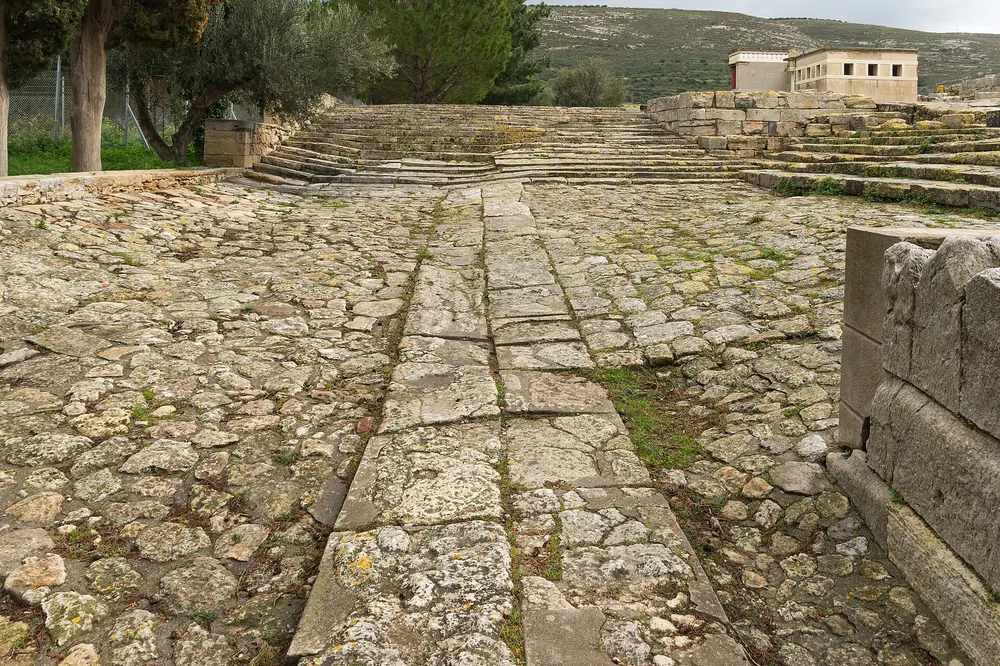
Palace of Knossos e-ticket and audio guide
Mobile entry ticket for Knossos with an audio guide, for visiting at your own pace.
Check availabilityBook via GetYourGuideHeraklion Archaeological Museum and Knossos palace guided tour (half day)
Half-day guided visit to the Heraklion museum and the palace of Knossos.
Check availabilityBook via GetYourGuideTour listings are on GetYourGuide. Prices, times and cancellation terms are shown live on each listing and can change; AegeanSea.com may earn a commission at no extra cost to you.
The Lasithi plateau and the Dikti mountains
An hour or so inland from the coast, the road climbs through hairpins to the Lasithi plateau, a flat, fertile basin ringed by the Dikti mountains. It was once famous for thousands of cloth-sailed windmills used to pump water; a few have been restored, and the old stone mill towers still stand along the passes. The villages around the edge — Tzermiado, Agios Georgios, Psychro — are farming communities where you can eat well and cheaply.
Above Psychro is the Dikteon cave, one of the caves that Greek myth names as the birthplace of Zeus. The path up is steep and stony; you can hire a donkey for part of it. Inside, steps lead down past stalactites to a small pool. Most organised Lasithi tours combine the plateau, the cave and an olive-oil or pottery stop, which saves you the mountain driving.
Crete: Lasithi plateau and Knossos palace day tour
Full day combining the Lasithi plateau in the Dikti mountains with the palace of Knossos.
Check availabilityBook via GetYourGuideCrete: Lasithi plateau, Cave of Zeus and olive oil tour
The plateau, the Dikteon cave and an olive-oil stop in one day.
Check availabilityBook via GetYourGuideLassithi jeep safari with BBQ
Jeep safari on the Lasithi plateau tracks with a barbecue meal.
Check availabilityBook via GetYourGuideTour listings are on GetYourGuide. Prices, times and cancellation terms are shown live on each listing and can change; AegeanSea.com may earn a commission at no extra cost to you.
Agios Nikolaos, Elounda and Spinalonga
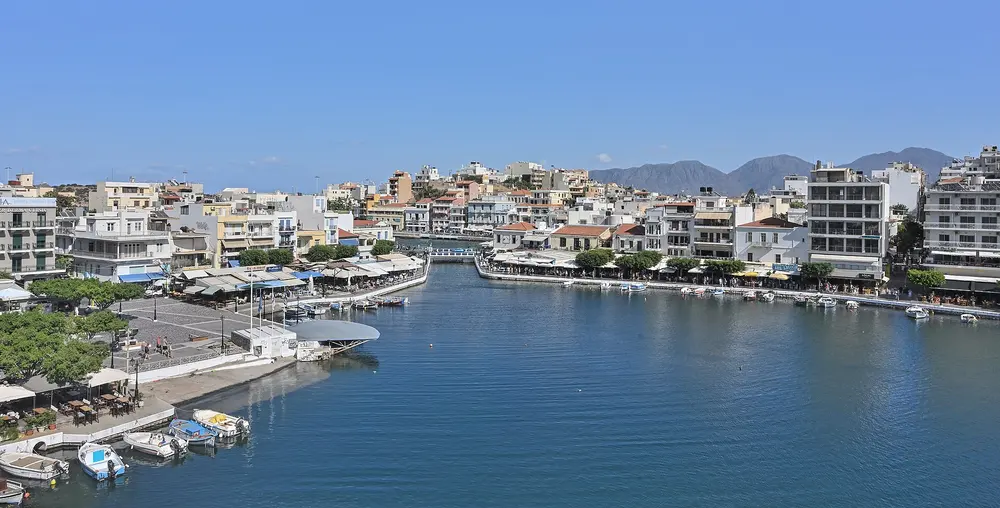
East of Malia the coast turns into the wide Gulf of Mirabello, the most beautiful stretch of Crete's north coast. Agios Nikolaos is a lively, compact town built around a small, deep lake, Lake Voulismeni, which is joined to the harbour by a short channel. It has a good small archaeological museum, beaches within walking distance and a busy harbour where the boats to Spinalonga leave.
Ten kilometres north, Elounda is a fishing village that became home to some of Crete's most exclusive resorts. The causeway at the south end of the bay crosses to the Spinalonga peninsula (Kolokytha), with the sunken remains of ancient Olous in the shallows. Beyond Elounda the road ends at Plaka, a small village of tavernas facing Spinalonga across about 750 m of water.
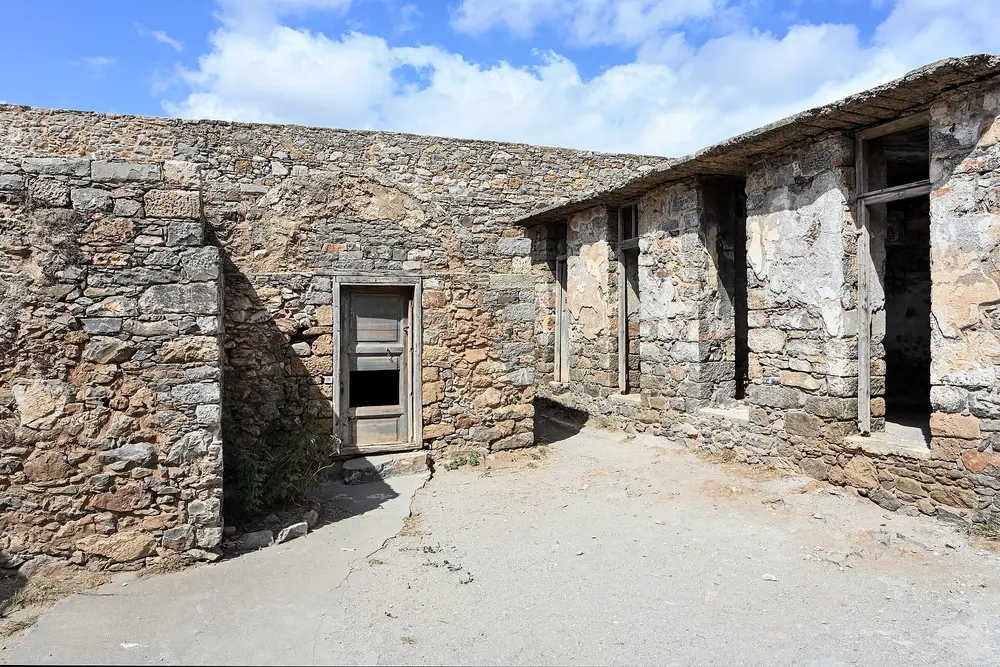
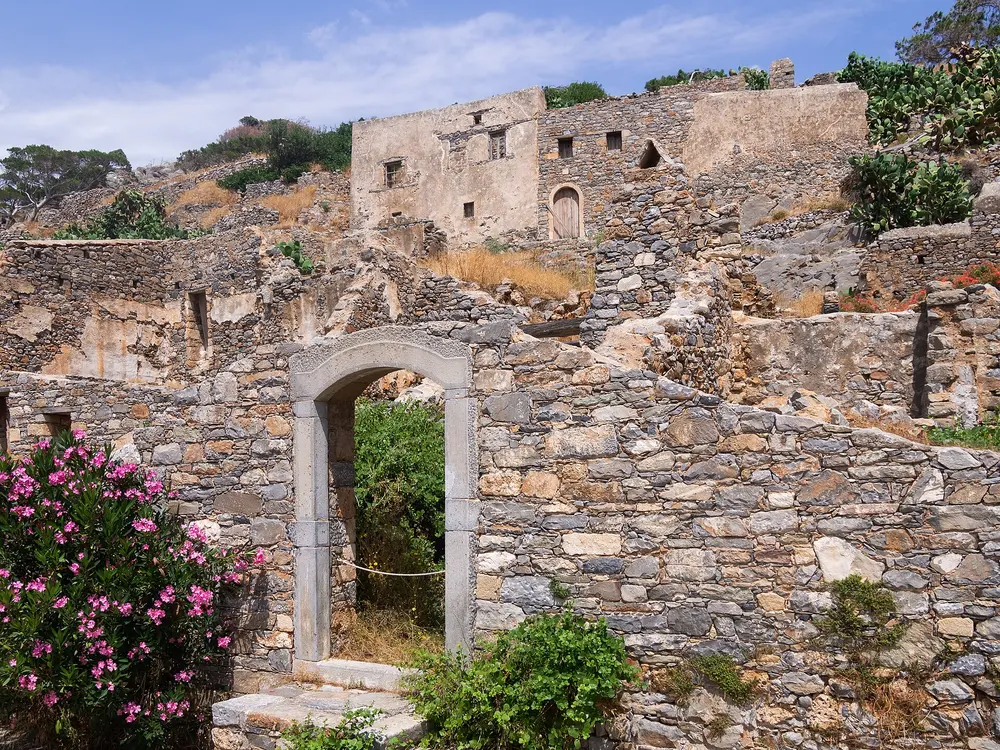
Spinalonga is the island most people come for. The Venetians began a sea fortress here in 1579 over the ruins of an older acropolis, and held it until 1715, long after the rest of Crete had fallen to the Ottomans. In 1903 the Cretan State made it an isolation colony for people with leprosy; the first patients arrived in 1904 and the colony was closed in 1957, when the remaining residents were moved to Athens. Victoria Hislop's 2005 novel The Island made it famous again. Today you walk a circuit through the gate tunnel, past the restored houses, the shops, the church and the cemetery, with views out over the gulf.
Boats run frequently in season from Plaka (the shortest crossing), Elounda and Agios Nikolaos (a longer cruise, often with a swim stop at Kolokytha). The boat fare is separate from the site ticket. Allow at least an hour and a half on the island, and bring water and a hat.
- Spinalonga ticket
- €20 full, €10 reduced (Hellenic Heritage, November 2026)
- Summer hours
- 1 Apr–31 Aug 08:00–20:00; closing earlier through September and October (18:00 from 16 Oct)
- Winter hours
- 1 Nov–31 Mar 08:30–15:30, closed on Tuesdays
- Boats from
- Plaka (shortest), Elounda, Agios Nikolaos
From Agios Nikolaos: Spinalonga island boat cruise
Boat cruise from Agios Nikolaos harbour to Spinalonga island.
Check availabilityBook via GetYourGuide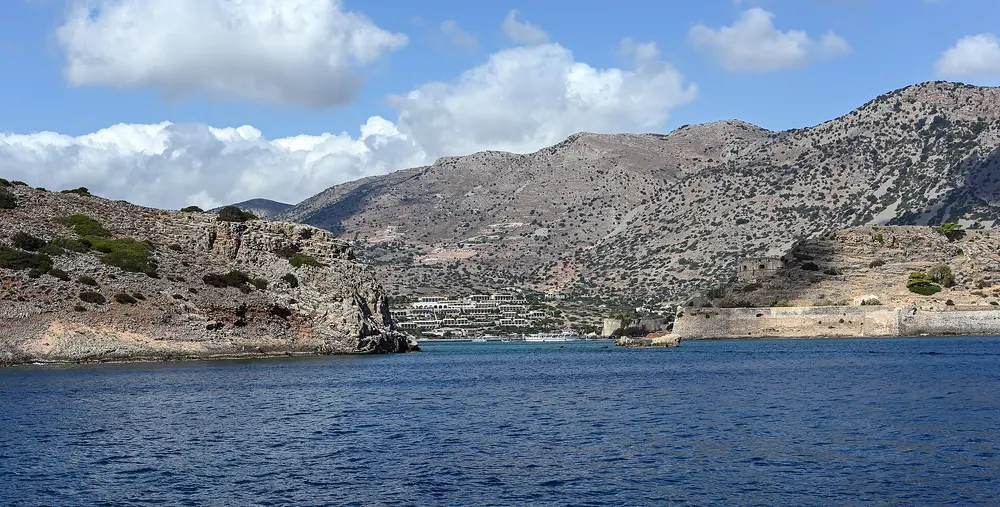
Agios Nikolaos: Spinalonga and Kolokytha catamaran with meal
Catamaran day from Agios Nikolaos to Spinalonga and Kolokytha bay, with a meal on board.
Check availabilityBook via GetYourGuideDay trip to Spinalonga, Agios Nikolaos, Elounda and Plaka
A full day in the Gulf of Mirabello: Agios Nikolaos, Elounda, Plaka and the island.
Check availabilityBook via GetYourGuideTour listings are on GetYourGuide. Prices, times and cancellation terms are shown live on each listing and can change; AegeanSea.com may earn a commission at no extra cost to you.
The far east: Sitia, Vai, Toplou and Zakros
Beyond Agios Nikolaos the road winds along the coast to Sitia, a relaxed harbour town with a small airport and ferry links to Karpathos and Kasos. This is the least developed corner of Crete: dry hills, olive groves and very few large hotels. The fortified Toplou monastery stands alone on a plateau north-east of Sitia, and near Cape Sidero the beach of Vai is backed by a grove of Cretan date palms, one of the few native palm forests in Europe.
On the east coast, Kato Zakros is a tiny village beside the ruins of the fourth great Minoan palace, part of the 2025 UNESCO listing. A path through the Valley of the Dead, a gorge with Minoan burial caves in its walls, leads down from Ano Zakros to the palace and the sea. It is a full day from Heraklion; better to stay a night in Sitia or the east.
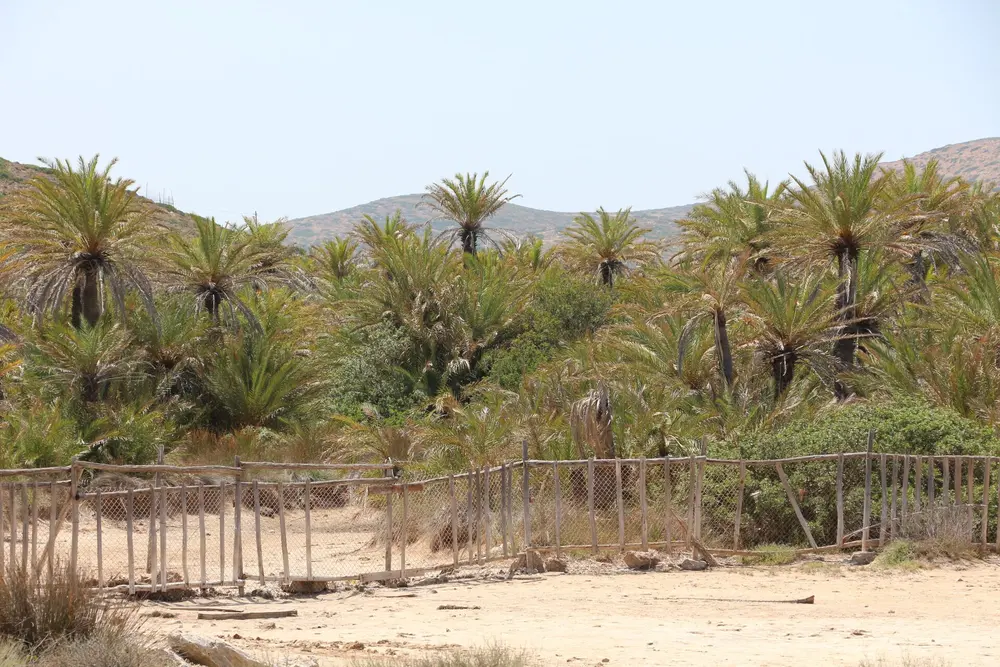
Crete: Heraklion to Vai palm beach direct
Direct day trip from Heraklion to the palm beach of Vai.
Check availabilityBook via GetYourGuideCrete: private day trip to Sitia, Vai and Toplou
Private day in the far east: Sitia, Vai beach and Toplou monastery.
Check availabilityBook via GetYourGuideTour listings are on GetYourGuide. Prices, times and cancellation terms are shown live on each listing and can change; AegeanSea.com may earn a commission at no extra cost to you.
The south: Phaistos, Matala and the Messara
From Heraklion it is about an hour and a half across the mountains to the Messara, Crete's largest plain, which runs to the Libyan Sea. Phaistos sits on a ridge above it with views to Psiloritis; nearby are the Minoan villa of Agia Triada and the Roman capital of Crete at Gortyn, where the Gortyn law code is inscribed on stone blocks.
On the coast, Matala is known for the caves cut into its sandstone cliffs, used as Roman-era tombs and, in the 1960s and 1970s, as homes by travellers. The village is now a small resort with a good beach; the caves are a fenced archaeological site. Further east, Lentas and the coves around Kali Limenes are quiet and wild. A day trip from Heraklion combining Phaistos and Matala is one of the best on the island.
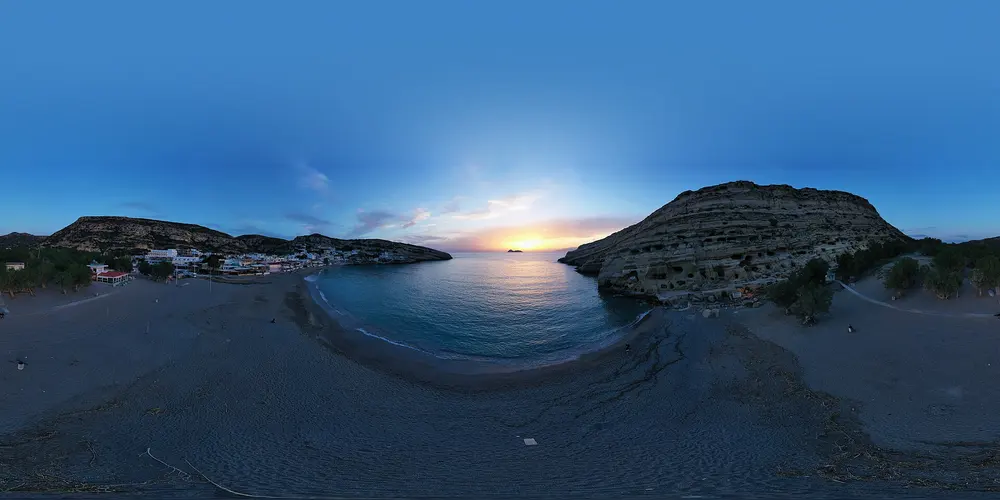
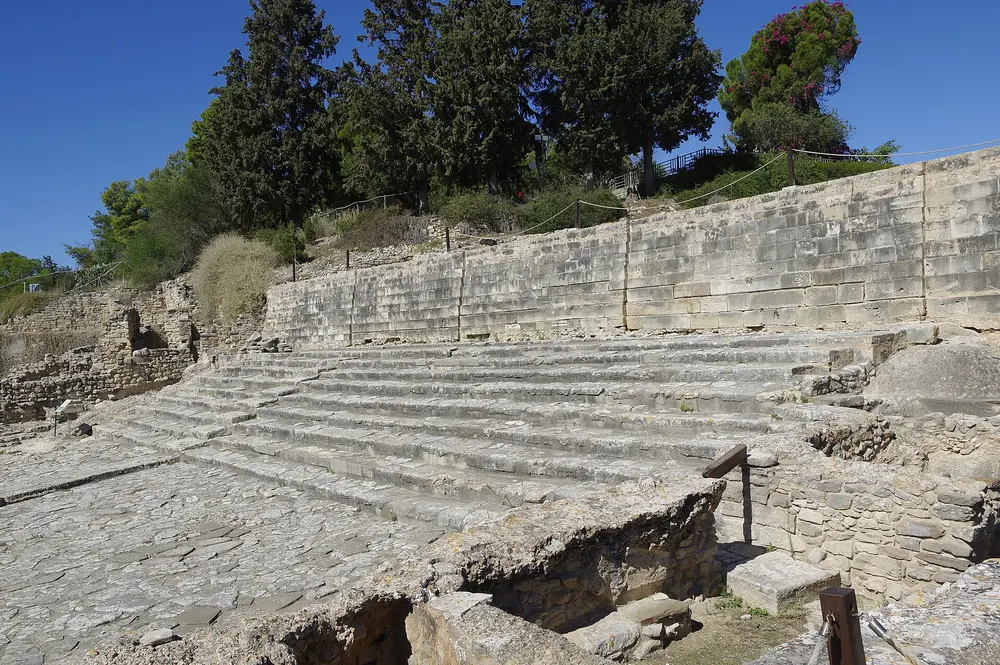
Crete: Phaistos palace and Matala village guided tour
Guided day to the Minoan palace of Phaistos and the beach village of Matala.
Check availabilityBook via GetYourGuideDiscover classical Crete: Knossos, Gortyna, Phaistos and Zaros
Knossos, Roman Gortyn, Phaistos and the mountain village of Zaros in one long day.
Check availabilityBook via GetYourGuideTour listings are on GetYourGuide. Prices, times and cancellation terms are shown live on each listing and can change; AegeanSea.com may earn a commission at no extra cost to you.
Beaches of central and eastern Crete
The north coast east of Heraklion is lined with long sandy beaches backed by resort hotels — Amoudara on the city's west side, then Gouves, Hersonissos, Stalis and Malia. They are convenient, with sunbeds and water sports, but rarely quiet in summer. The best swimming in this half of the island is further east and south:
- Gulf of Mirabello: small beaches in and around Agios Nikolaos and Elounda, and Kolokytha bay on the Spinalonga peninsula, reached by boat or on foot.
- Voulisma (Istron): a sheltered sandy cove south-east of Agios Nikolaos with very clear water.
- Vai and Itanos in the far north-east; Xerokampos and Kato Zakros on the east coast, empty even in August.
- Matala, Kommos (a long beach beside a Minoan harbour site) and Lentas on the south coast, where the Libyan Sea is warmer and the wind lighter on meltemi days.
In July and August the north coast can be windy; on those days the south coast is usually calmer. Our Aegean beaches guide compares Crete's beaches with the islands'.
The best of Heraklion and the east, booked
Food and drink
Crete grows much of what it eats, and the food is the main reason many people return. Olive oil is used generously; vegetables, wild greens (horta), snails, pulses and cheese matter as much as meat. Dishes to look for: dakos (barley rusk with tomato, olive oil and soft mizithra cheese), kalitsounia (small cheese or greens pies), gamopilafo (wedding pilaf cooked in meat stock), slow-cooked lamb or goat, chochlioi boubouristi (snails fried with rosemary and vinegar) and staka (a rich sheep's-milk cream).
Meals usually end with a small carafe of tsikoudia (raki), the clear grape spirit, offered free with fruit or a sweet. The hills south of Heraklion — around Archanes, Peza and Dafnes — are Crete's main wine country, growing local grapes such as Vidiano, Vilana, Kotsifali and Liatiko, and several estates welcome visitors. For more on Greek island food, see our food and wine guide.
Crete: Knossos palace, winery and olive oil tour with lunch
Knossos combined with a winery visit, an olive-oil producer and lunch.
Check availabilityBook via GetYourGuideCrete: Knossos palace and Archanes with wine tasting tour
Knossos and the wine village of Archanes, with a tasting.
Check availabilityBook via GetYourGuideTour listings are on GetYourGuide. Prices, times and cancellation terms are shown live on each listing and can change; AegeanSea.com may earn a commission at no extra cost to you.
Where to stay, in short
- Heraklion city: best for the museum, Knossos and the food scene, with buses and ferries on the doorstep. Boutique hotels in the old centre.
- Hersonissos and Malia: big resort hotels and apartments, beaches and nightlife, good value for families and groups; 30–40 minutes from the airport.
- Agios Nikolaos: a real town with restaurants, the lake and boats to Spinalonga. Good all-round base for the east.
- Elounda and Plaka: calm bays, upmarket resorts and Spinalonga views. Best for a relaxed beach stay.
- Sitia and the far east: quiet, local and far from everything else.
See where to stay in Heraklion and eastern Crete for areas compared and properties on Booking.com.
How long to stay and sample plans
Crete is big and its roads are slow: the north-coast highway (VOAK) is busy and partly single-carriageway, and mountain roads take longer than the map suggests. Plan on one main area per two or three days.
- 3 days: Heraklion museum and old town; Knossos; Spinalonga by boat from Agios Nikolaos or Elounda.
- 5 days: add the Lasithi plateau and a day in the south (Phaistos and Matala), and a beach day on the Gulf of Mirabello.
- 7 days: base yourself in two places — Heraklion (3 nights) and Agios Nikolaos or Elounda (4 nights) — and add Sitia, Vai and Zakros.
- 10–14 days: combine this guide with western Crete: Chania old town, Balos, Elafonisi and the Samaria Gorge.
If you are island hopping, Heraklion has fast ferries to Santorini in season (about 1 h 35 min–1 h 40 min, published times) and slower ferries via Kasos to Karpathos and Rhodes. See getting to Heraklion and our island-hopping guide.
Practical tips
- Car hire is the easiest way to explore beyond the resorts. Drive defensively on the national road and expect slow traffic in mountain villages. KTEL Heraklion–Lasithi buses link Heraklion with Hersonissos, Malia, Agios Nikolaos, Sitia and the south coast.
- Sites in summer: go at opening time; most Minoan sites have little shade. Carry water.
- Sea and wind: the meltemi (July–August) blows hardest on the north coast; boat trips may be cancelled on windy days.
- New airport: a new international airport is being built at Kastelli, south-east of Heraklion. Its opening has slipped several times; the latest official target is November 2028. Until then, flights use Nikos Kazantzakis Airport.
- Season: most resort hotels open from April to October. Heraklion, Agios Nikolaos and Sitia stay open all year.
Plan your visit to Crete
- Things to doThe best things to do in central and eastern Crete, ranked: the Heraklion museum,…
- ToursThe best GetYourGuide tours from Heraklion, Hersonissos, Malia, Agios Nikolaos and…
- Getting thereFerries to Heraklion from Piraeus, Santorini and the Dodecanese with published crossing…
- Where to stayThe best areas to stay in central and eastern Crete compared — Heraklion city,…
- When to goCrete's weather, sea temperature, wind and crowds month by month, with site opening…
Frequently asked questions
Is Knossos worth visiting?
Yes, especially combined with the Heraklion Archaeological Museum, which holds the original frescoes and finds. Go early, take a guide or audio guide, and remember that some of what you see is Arthur Evans's early-20th-century reconstruction.
How much is the ticket for Knossos in 2026?
€20 full price and €10 reduced, according to Hellenic Heritage, checked in November 2026. Entry is free on certain dates, including the first and third Sunday of each month from November to March.
How do I get to Spinalonga?
By boat from Plaka (the shortest crossing), Elounda or Agios Nikolaos. The boat fare is separate from the €20 site ticket. Organised day trips from Heraklion and the resorts include the boat.
Should I stay in Heraklion or Chania?
Heraklion and the east are best for the Minoan sites, Spinalonga and the Gulf of Mirabello; Chania is the prettier old town and the base for Balos, Elafonisi and Samaria. With ten days or more, stay in both.
Can I visit Crete in winter?
Yes. Heraklion and the main towns stay open and the sites run on winter hours, but many resort hotels close from November to March and the sea is cool.
Sources and official information
Facts were checked against these official sources in November 2026. Opening hours, prices and timetables change, so confirm before you go.
- hh.gr
- hh.gr
- hh.gr
- hh.gr
- en.wikipedia.org
- en.wikipedia.org
- en.wikipedia.org
- en.wikipedia.org
- greekreporter.com
- ferryhopper.com
- greekreporter.com
AegeanSea.com is an independent guide, not the official site of any tourism board, government, port authority or ferry operator. Some links are affiliate links: tours go to GetYourGuide and stays go to Booking.com, and we may earn a commission at no extra cost to you.