In short
- Best overall: late May–June and September to early October. Warm sea, long days, full ferry schedules, and fewer people than in July–August.
- July and August are hottest, busiest and most expensive, and the meltemi wind blows hardest – great for windsurfing and cooling off, bad for small boats and high-speed ferries.
- Swimming season: the sea is usually comfortable from about June to October; in May and late October it is bracing.
- Spring (April–May) is the season for wildflowers, walking and Greek Orthodox Easter (2 May in 2027). Winter is quiet and green, with many island hotels and tavernas closed and thin ferry schedules.
- Crete, Rhodes and the Turkish coast are a few degrees warmer and have longer seasons than the Cyclades and the North Aegean.
The short answer
For most people the sweet spot is the last week of May through June, and September into the first week of October. The sea has warmed up (or is still warm), the full summer ferry network is running, every taverna is open, and the heat and crowds of July and August are either still to come or already gone. Room prices on Santorini and Mykonos are lower than in peak season, and you can find space on the beach.
If you can only travel in July or August, it still works: book rooms and the long ferry legs early, plan beach days on the sheltered south-facing coasts when the meltemi blows, and do your sightseeing early in the morning. If you want quiet, walks and wildflowers, go in April or May – and accept that the sea will be cool. Winter is for city life in Athens, İzmir and Heraklion, archaeology without queues, and island life as locals know it.
| Spring | Sweet spotEarly summer | High summer | Sweet spotAutumn | Winter | |
|---|---|---|---|---|---|
| Months | Apr–mid-May | Late May–Jun | Jul–Aug | Sep–mid-Oct | Nov–Mar |
| Swimming | ●○○○○ | ●●●●○ | ●●●●● | ●●●●● | ○○○○○ |
| Walking and sightseeing | ●●●●● | ●●●●○ | ●●○○○ | ●●●●○ | ●●●○○ |
| Ferry choice | ●●●○○ | ●●●●● | ●●●●● | ●●●●○ | ●○○○○ |
| Crowdslower is better | ●○○○○ | ●●●○○ | ●●●●● | ●●●○○ | ○○○○○ |
| Wind (meltemi)lower is better | ●○○○○ | ●●○○○ | ●●●●○ | ●●○○○ | ●●○○○ |
| Best for | Hikers, Easter, flowers | Almost everyone | Beach and nightlife | Swimmers, wine harvest | Budget, culture, quiet |
-
Spring
- Months
- Apr–mid-May
- Swimming
- ●○○○○
- Walking and sightseeing
- ●●●●●
- Ferry choice
- ●●●○○
- Crowds
- ●○○○○
- Wind (meltemi)
- ●○○○○
- Best for
- Hikers, Easter, flowers
-
Early summer
Sweet spot- Months
- Late May–Jun
- Swimming
- ●●●●○
- Walking and sightseeing
- ●●●●○
- Ferry choice
- ●●●●●
- Crowds
- ●●●○○
- Wind (meltemi)
- ●●○○○
- Best for
- Almost everyone
-
High summer
- Months
- Jul–Aug
- Swimming
- ●●●●●
- Walking and sightseeing
- ●●○○○
- Ferry choice
- ●●●●●
- Crowds
- ●●●●●
- Wind (meltemi)
- ●●●●○
- Best for
- Beach and nightlife
-
Autumn
Sweet spot- Months
- Sep–mid-Oct
- Swimming
- ●●●●●
- Walking and sightseeing
- ●●●●○
- Ferry choice
- ●●●●○
- Crowds
- ●●●○○
- Wind (meltemi)
- ●●○○○
- Best for
- Swimmers, wine harvest
-
Winter
- Months
- Nov–Mar
- Swimming
- ○○○○○
- Walking and sightseeing
- ●●●○○
- Ferry choice
- ●○○○○
- Crowds
- ○○○○○
- Wind (meltemi)
- ●●○○○
- Best for
- Budget, culture, quiet
Editorial ratings for a typical year in the Cyclades; Crete, Rhodes and the Turkish coast run a little warmer. As of November 2026.
Month by month
Air temperatures are typical daytime highs on the islands of the central Aegean; sea temperatures are typical surface values. Both are rounded and vary by year and location – Crete, Rhodes and the Turkish coast are often 1–3 °C warmer, the North Aegean and the Sporades a little cooler.
| Month | Air (day) | Sea | Meltemi | Crowds | Ferries and opening |
|---|---|---|---|---|---|
| January | ≈ 14 °C | ≈ 16 °C | Winter storms | Very low | Core lines only; many hotels closed |
| February | ≈ 14–15 °C | ≈ 15–16 °C | Winter storms | Very low | Core lines; Carnival / Clean Monday |
| March | ≈ 16 °C | ≈ 16 °C | Occasional | Low | Core lines; first reopenings late in month |
| April | ≈ 19 °C | ≈ 17 °C | Rare | Low–medium | High-speed routes start; Easter weeks busy |
| May | ≈ 23 °C | ≈ 19 °C | Starts in spells | Medium | Most hotels and boats running |
| June | ≈ 27 °C | ≈ 22 °C | Spells | Medium–high | Full summer network |
| July | ≈ 29 °C | ≈ 24 °C | Frequent, strongest | High | Full; book ahead |
| August | ≈ 29 °C | ≈ 25 °C | Frequent, strongest | Very high (peak 15 Aug) | Full; sells out |
| September | ≈ 26 °C | ≈ 24 °C | Spells, easing | Medium–high | Full until late month |
| October | ≈ 22 °C | ≈ 22 °C | Occasional | Medium–low | High-speed routes end; closures from mid-month |
| November | ≈ 18 °C | ≈ 19 °C | Autumn storms | Low | Core lines; many closures |
| December | ≈ 15 °C | ≈ 17 °C | Winter storms | Very low (Christmas in towns) | Core lines only |
The meltemi: the wind that shapes the summer
The meltemi – called the etesian (annual) winds since antiquity – is a dry north wind that blows across the Aegean in summer when high pressure sits over the Balkans and low pressure over Türkiye and the Middle East. It is most frequent from about mid-May to mid-September, with the strongest and longest spells in July and August. A typical meltemi day starts calm or breezy, builds to force 5–7 on the Beaufort scale in the afternoon in the open Cyclades, and drops at night; spells often last three to five days.
- What it means for you: cooler, haze-free days; rough seas on north-facing beaches; delays and cancellations for high-speed ferries and small tour boats; flags at full stretch on Mykonos and Naxos.
- Where it is strongest: the open central Cyclades (Mykonos, Tinos, Andros, Naxos, Paros, Ios) and the channel between Andros and Evia. It is weaker in the Saronic Gulf and on the sheltered coasts of Crete, Rhodes and the Turkish mainland.
- How to beat it: pick south-facing beaches on windy days (for example the south coast of Mykonos or the southwest coast of Naxos), book sailing trips with a flexible date, and keep a buffer day before flights. Windsurfers and kitesurfers come to Paros, Naxos and Alaçatı precisely for it.
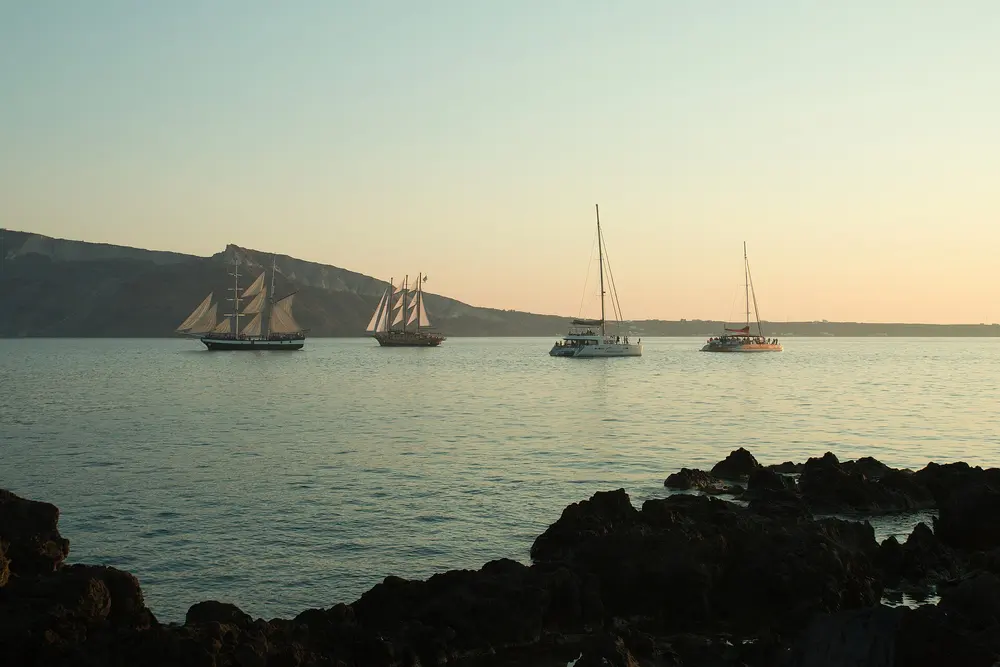
Dreamcatcher sunset sailing cruise in the caldera
An afternoon-to-sunset sail around Santorini's caldera on a sailing boat, ending as the sun goes down. Check the listing for swim stops, meal and pick-up.
Check availabilityBook via GetYourGuideTour listings are on GetYourGuide. Prices, times and cancellation terms are shown live on each listing and can change; AegeanSea.com may earn a commission at no extra cost to you.
Crowds, prices and the August peak
Greek and Turkish school holidays and European summer holidays meet in mid-July to late August. The busiest single moment is the week around 15 August (the Dormition of the Virgin, a national holiday in Greece), when Greeks head to their home islands and ferries and rooms sell out. Santorini's caldera villages also fill with cruise passengers on many days from spring to autumn; Greece charges cruise passengers a per-person disembarkation fee, highest at Santorini and Mykonos in summer.
Accommodation is priced by season: shoulder months are usually noticeably cheaper than July–August, especially on Santorini and Mykonos. Every stay in Greece also carries a small per-room, per-night climate resilience fee set by category and season, paid at the property.
Season by region
- Cyclades: long dry summers, the strongest meltemi, very little shade. Mykonos and Ios nightlife runs from about June to early September.
- Crete: the longest season – warm enough for beaches from May to October and for walking in winter. The Samaria Gorge is usually open from about May to October, depending on weather and water levels.
- Dodecanese: Rhodes and Kos have reliable sunshine and some of the warmest sea; Rhodes Old Town is pleasant all year.
- Sporades and Saronic: greener and a little cooler; the Saronic islands are an easy year-round escape from Athens.
- North Aegean: Lesbos, Chios and Samos have a slightly shorter season and are excellent in spring (birds and flowers on Lesbos) and autumn.
- Türkiye's Aegean coast: Bodrum, Kuşadası and Çeşme are hot in July–August; Ephesus and Pergamon are best visited in spring and autumn, early in the morning in summer.
Festivals and holidays worth planning around
Greek Orthodox Easter is the biggest celebration of the year – in 2027 it falls on 2 May (with Clean Monday on 15 March and Whit Monday on 21 June). Village festivals (panigyria) fill August, and harvest festivals mark September and October. On the Turkish coast, the religious holidays of Ramazan Bayramı (9–11 March 2027) and Kurban Bayramı (16–19 May 2027) bring domestic crowds to the resorts. See the events calendar for details.
Book the best days of your trip
In the shoulder months the sea is calm more often, so it is the best time for the boat days most people come for: a caldera cruise on Santorini, Delos from Mykonos, Kleftiko on Milos. In July and August, morning departures usually have calmer water than the afternoon.
Frequently asked questions
What is the best month to visit the Greek islands?
June and September are the best all-round months: warm sea, full ferry schedules and fewer people than July and August.
When is the sea warm enough to swim?
For most people from about June to October, when surface temperatures are typically around 22–25 °C. May and late October are fresh but swimmable on calm, sunny days.
Is the meltemi dangerous?
Not on land, but it makes the sea rough, cancels small boats and fast ferries, and creates dangerous surf on exposed beaches. Follow lifeguard flags and port-authority bans.
Is it worth visiting the Aegean islands in winter?
For walking, archaeology and local life, yes – especially Crete, Rhodes, Syros, Naxos and the Turkish coast towns. For beach holidays, no: many hotels and tavernas on smaller islands close and the sea is cold.
Sources and official information
Facts were checked against these official sources in November 2026. Opening hours, prices and timetables change, so confirm before you go.
AegeanSea.com is an independent guide, not the official site of any tourism board, government, port authority or ferry operator. Some links are affiliate links: tours go to GetYourGuide and stays go to Booking.com, and we may earn a commission at no extra cost to you.