- Region
- Saronic islands, Greece
- How long
- 2–3 nights or a day trip
- Population
- 12,911 (municipality, 2021 census)
- Size
- About 87 km²; highest point Mount Oros, 531 m
- Ports
- Aegina Town (main), Souvala and Agia Marina
- From Piraeus
- ≈ 35–40 min by high-speed boat, ≈ 1 h 05 min–1 h 25 min by conventional ferry
In short
- Why go: Aegina is the easiest real Greek island from Athens: a short boat ride to a busy, authentic harbour town, outstanding ancient sites and good swimming.
- Must-do: the Temple of Aphaia, the hill of Kolona and its museum, the chapels of Paleochora, the monastery of Agios Nektarios, and fish by the harbour at Perdika.
- Taste: Aegina's pistachios are the most famous in Greece, with a festival every September.
- Getting there: frequent boats from Piraeus, about 40 minutes by high-speed boat.
- How long: a full day trip works; two or three nights let you see the whole island and swim at Moni.
Why Aegina
Aegina sits in the middle of the Saronic Gulf, about 15 nautical miles from Piraeus, which makes it the closest substantial island to Athens. It is roughly triangular, about 87 km², with a volcanic cone, Mount Oros (531 m), in the south, a fertile plain of pistachio and olive groves in the west, and pine-clad hills in the north-east. Around 13,000 people live here year-round, and many Athenians keep weekend houses, so the island feels lived in rather than built for tourism.
In antiquity, Aegina was a powerful maritime city-state and a rival of Athens. Ancient writers credited it with the first coinage in Europe, the silver staters stamped with a sea turtle; surviving electrum staters are dated to around 700 BC. In modern history, the island was briefly the seat of the first government of independent Greece under Ioannis Kapodistrias in the late 1820s, before the capital moved to Nafplio. It suits history lovers, food lovers, families who want short transfers, and anyone with a day or two to spare in Athens.
Book tours in AeginaLive times, prices and free cancellation terms on GetYourGuide.
Check availabilityAegina Town
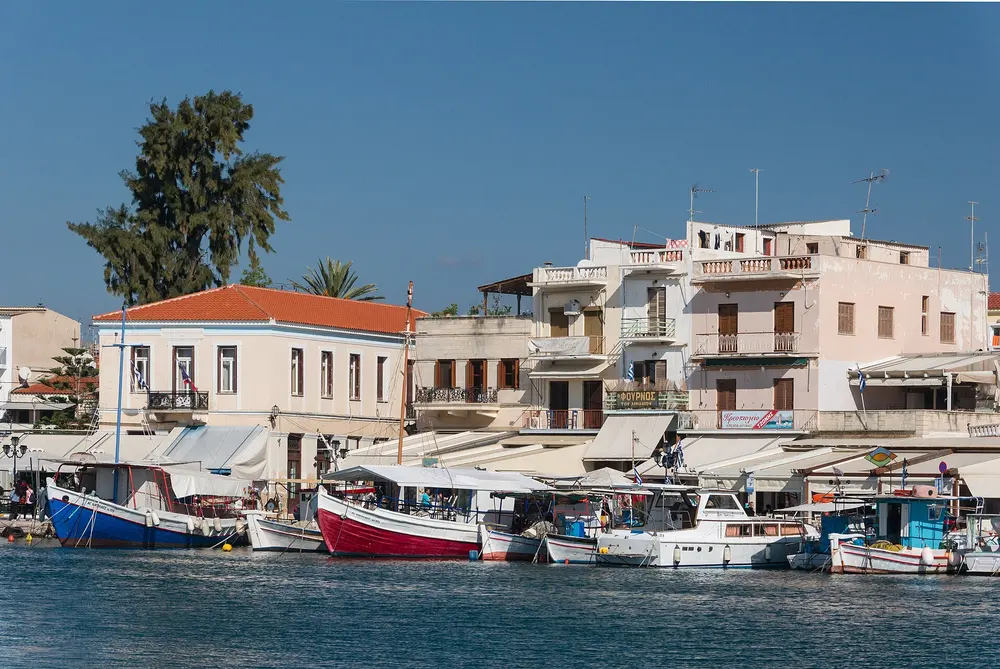
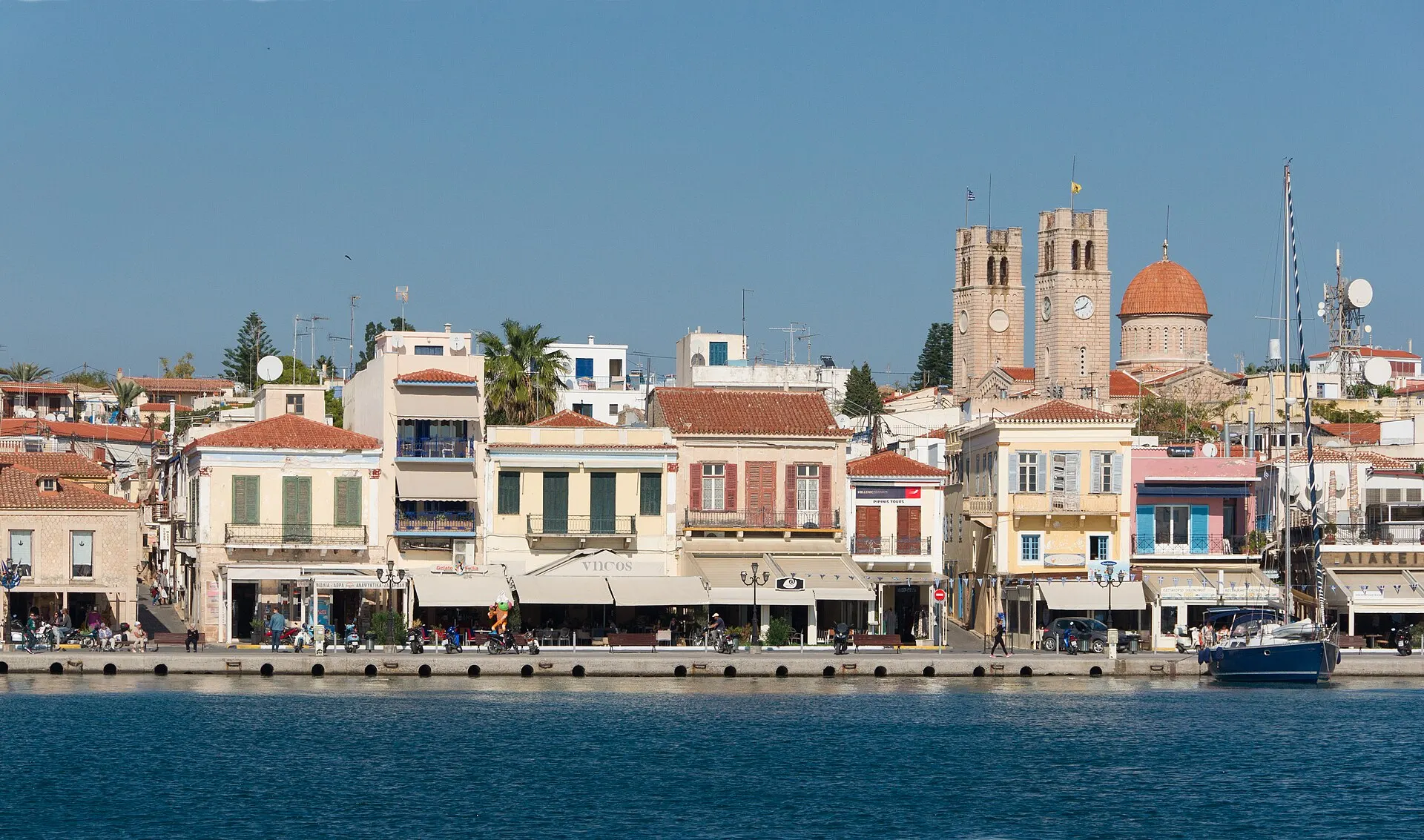
The main town is a working port: fishing boats, ferries, horse-drawn carriages for visitors, and a long waterfront of cafés and pistachio sellers. The small white chapel of Agios Nikolaos stands at the harbour entrance. Behind the front, the lanes hide neoclassical houses from the 19th century, when Aegina briefly served as the first seat of government of the new Greek state, the fish market and tavernas, and the medieval Tower of Markellos.
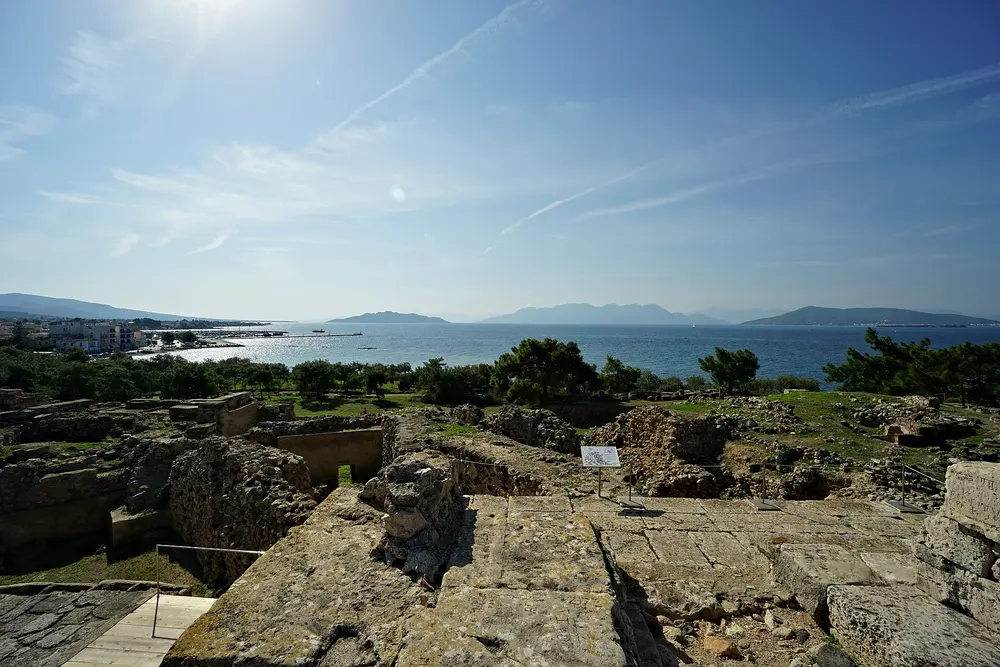
North of the harbour, the low hill of Kolona was the acropolis of ancient Aegina, inhabited from the Neolithic period. A single standing column of the late-6th-century BC Doric Temple of Apollo gave the hill its Venetian name, Kolona. The site and its archaeological museum share one ticket: €10, reduced €5, open 10:00–17:30 on most days and closed on Tuesdays (and Thursdays in winter), per the Hellenic Heritage listing checked in November 2026.
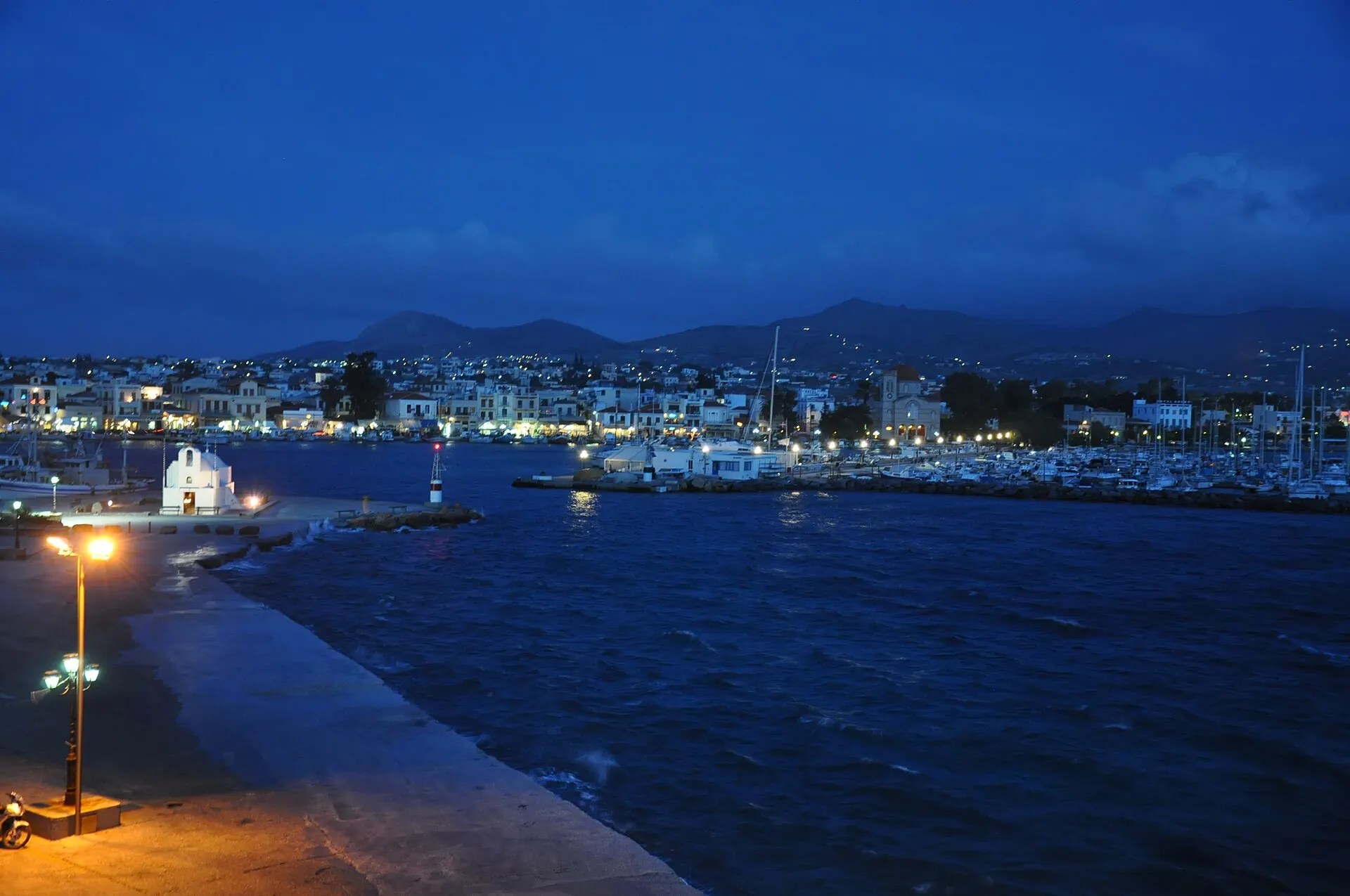
Aegina harbour at dusk, with the chapel of Agios Nikolaos on the quay.
The Temple of Aphaia
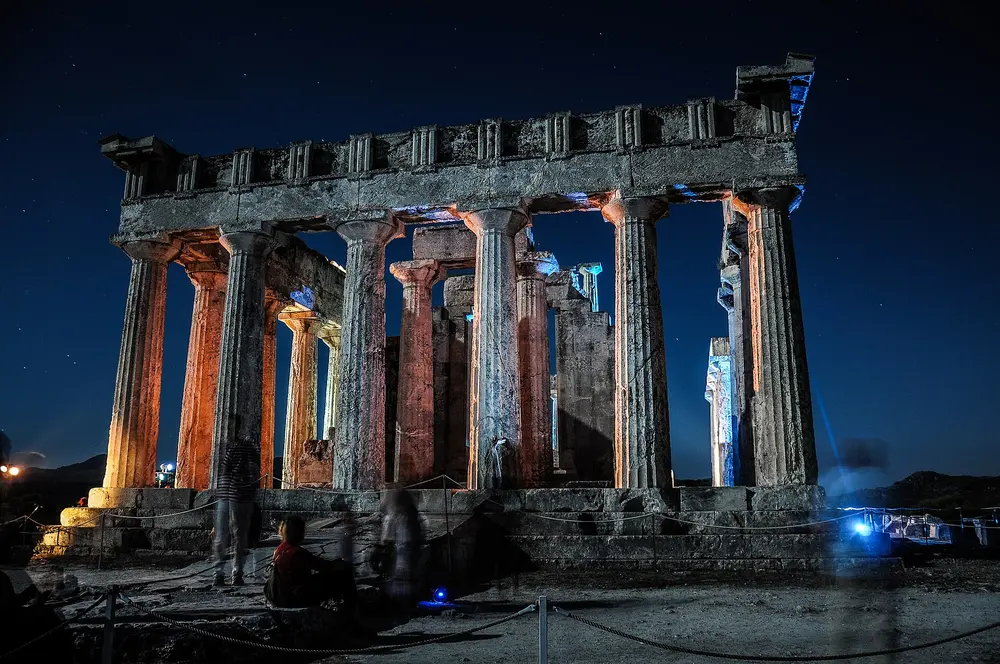
On a pine-covered hill in the north-east of the island stands the Temple of Aphaia, built around 500–490 BC and one of the best-preserved Doric temples in Greece, with most of its columns still standing and views over the Saronic Gulf to Athens. It was dedicated to Aphaia, a local goddess later associated with Athena. Its painted pediment sculptures, showing scenes from the Trojan Wars, were removed in 1811 by Charles Cockerell and Carl Haller von Hallerstein, acquired by Ludwig I of Bavaria, and are displayed in the Glyptothek in Munich. A small on-site collection shows fragments and reconstructions.
Tickets cost €10 (reduced €5) for the site and collection; from April to August the site is open daily 08:00–20:00, with shorter hours in autumn and 10:00–17:30 from November to March (Hellenic Heritage, checked November 2026). The collection closes on Tuesdays. The temple is about 6 minutes by car from Agia Marina, or a stiff 30-minute walk uphill; buses from Aegina Town to Agia Marina stop nearby.
- Ticket
- €10, reduced €5 (site and Scientific Collection)
- Hours
- Apr–Aug daily 08:00–20:00; Nov–Mar 10:00–17:30; shorter Sep–Oct
- Free days
- Including 6 Mar, 18 Apr, 18 May, last weekend of Sep, 28 Oct; 1st and 3rd Sunday Nov–Mar
- Source
- Hellenic Heritage (hh.gr), checked November 2026
Agios Nektarios and Paleochora
Inland on the road to Agia Marina, the large monastery and modern church of Agios Nektarios draw pilgrims from all over Greece. Nectarios of Aegina, who founded a convent here in the early 20th century, is one of the most venerated modern saints of the Orthodox Church, and his feast day on 9 November brings crowds. Dress modestly.
Across the valley rises Paleochora, the island's medieval capital, founded inland for protection against pirates and abandoned in the 19th century. Almost nothing remains of the houses, but more than 30 small Byzantine and post-Byzantine churches and chapels survive on the hillside, some with frescoes, linked by footpaths and crowned by the ruins of a castle. It is free, open-air and atmospheric, especially late in the day.
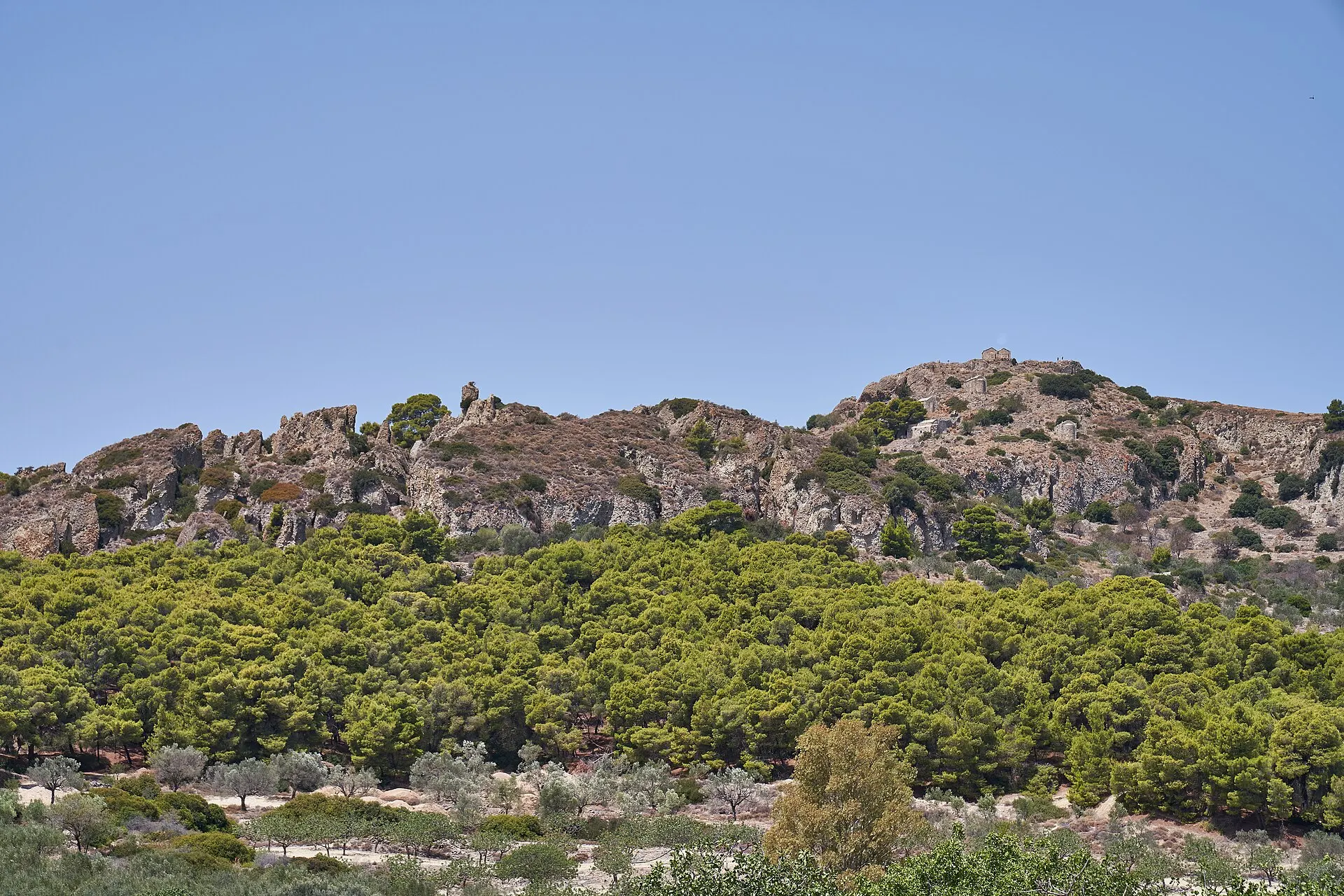
The hillside of Paleochora, the abandoned medieval capital of Aegina, scattered with chapels.
Beaches and the coast
- Agia Marina: the island's main resort on the east coast, with a sandy beach, hotels and boats from Piraeus in summer.
- Souvala: a small port and resort on the north coast, with summer ferries from Piraeus.
- Marathonas and Aiginitissa: sandy beaches on the west coast between the town and Perdika.
- Perdika: a fishing village at the south-west tip with fish tavernas on the harbour.
- Moni: a small, wooded, uninhabited island a few minutes by boat from Perdika, with clear water and a beach.
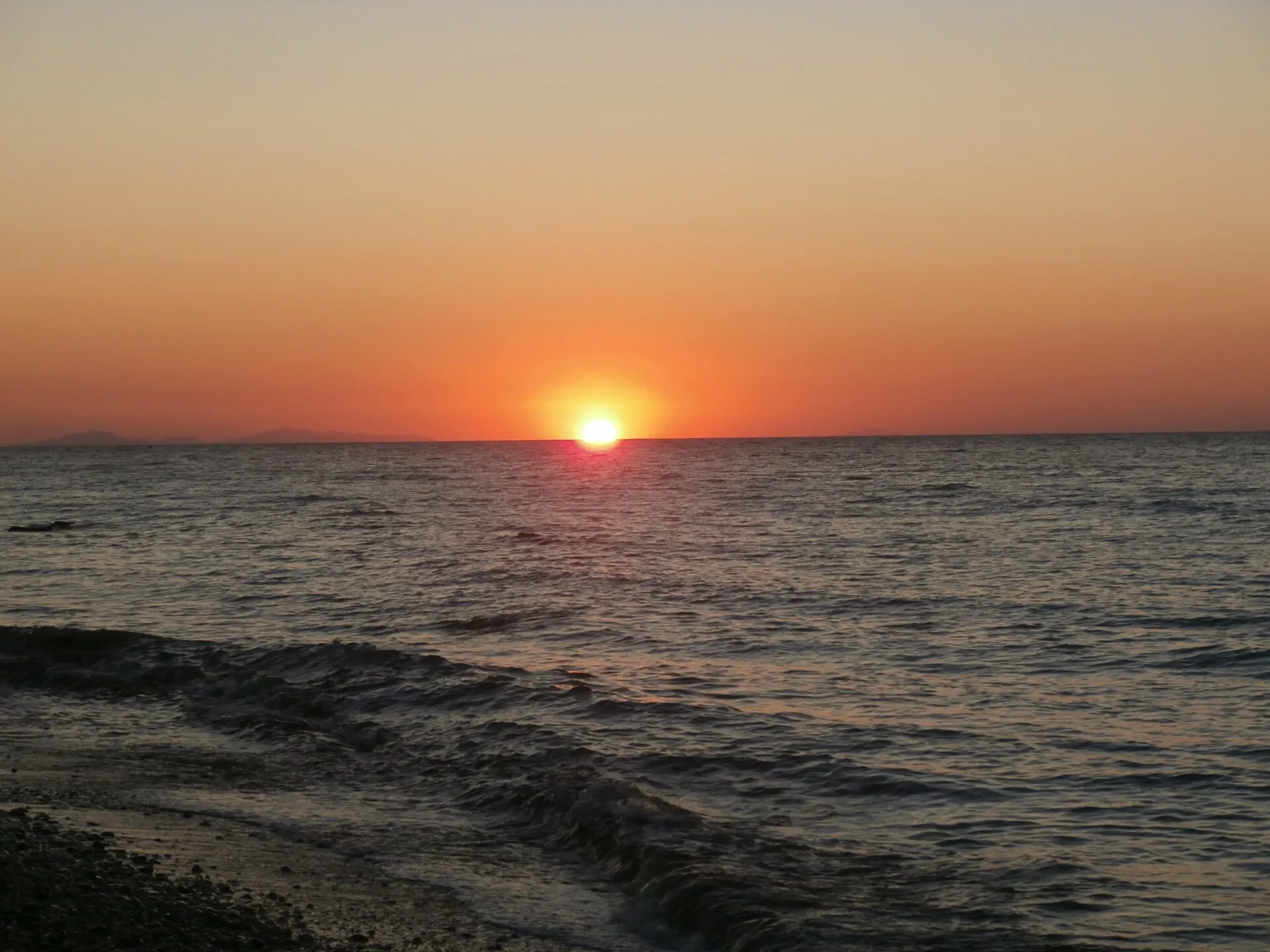
The west-coast beaches look towards the sunset and the Peloponnese; in the summer north wind, the south-west around Perdika and Moni is the most sheltered.
Pistachios and food
Aegina is synonymous with pistachios in Greece. Systematic cultivation began in 1896, introduced by the physician Nikolaos Peroglou, and the Aegina pistachio has had Protected Designation of Origin status since 1996. Orchards cover much of the west of the island, and the harvest takes place in late summer. The Fistiki Fest, held every September, celebrates it with tastings and events. Buy roasted pistachios, pistachio butter and sweets on the harbour, and look for fresh fish in Perdika and the tavernas behind the fish market.
Walking and the interior
The interior is hilly, with old cisterns, abandoned villages, chapels and stone "dragon houses" (drakospita), and the summit of Mount Oros, where the sanctuary of Zeus Hellanios stood, gives views across the whole gulf. Guided hikes explore these in the cooler months; the climb to Oros is best done early in the day.
Aegina: Ellanion Zeus mountain summit hiking tour
A guided hike to the summit of Mount Oros and the sanctuary of Zeus Hellanios.
Check availabilityBook via GetYourGuideAegina: 3 cisterns and 2 abandoned villages hiking tour
A guided hike through the interior to old cisterns and two abandoned villages.
Check availabilityBook via GetYourGuideTour listings are on GetYourGuide. Prices, times and cancellation terms are shown live on each listing and can change; AegeanSea.com may earn a commission at no extra cost to you.
Getting there, when to go and how long
Boats leave Piraeus for Aegina Town many times a day: high-speed boats take about 35–40 minutes, conventional ferries 1 h 05 min–1 h 25 min; there are also summer services to Agia Marina and Souvala. See getting to Aegina. The island is pleasant from April to October and, being so close to Athens and lived in, it never fully closes in winter. See when to go.
On a day trip, choose between Aphaia plus Agia Marina, or the town plus Perdika and Moni. With two or three nights, see it all and add neighbouring Agistri. Combine with Hydra for a Saronic island-hop: see the Saronic islands guide.
Plan your visit to Aegina
- Things to doThe best of Aegina ranked: the Temple of Aphaia, Kolona and its museum, the chapels of…
- ToursThe best Aegina tours compared: Aphaia, Agios Nektarios and Paleochora, day trips from…
- Getting thereHow to reach Aegina: ferries and fast boats from Piraeus by operator with published…
- Where to stayAegina's bases compared: the lively harbour town, the beach resort of Agia Marina below…
- When to goAegina month by month: measured temperatures and rainfall, sea temperature, weekend…
Frequently asked questions
Is Aegina worth a day trip from Athens?
Yes. It is about 40 minutes by high-speed boat from Piraeus, and in a day you can see the Temple of Aphaia, the town and a beach.
How much is the Temple of Aphaia ticket?
€10, reduced €5, covering the site and the collection (Hellenic Heritage listing, checked November 2026). Free on certain dates.
What is Aegina famous for?
Its pistachios, the Temple of Aphaia, ancient coins and its role as the first seat of government of independent Greece under Kapodistrias.
Does Aegina have good beaches?
Reasonable ones: Agia Marina, Marathonas and Aiginitissa are sandy, and the island of Moni off Perdika has clear water. Aegina is not primarily a beach island.
Sources and official information
Facts were checked against these official sources in November 2026. Opening hours, prices and timetables change, so confirm before you go.
AegeanSea.com is an independent guide, not the official site of any tourism board, government, port authority or ferry operator. Some links are affiliate links: tours go to GetYourGuide and stays go to Booking.com, and we may earn a commission at no extra cost to you.