- Region
- Crete, Greece
- How long
- 5–7 nights (west)
- Population
- 111,375 (municipality of Chania, 2021 census); Rethymno town 35,763
- Airport
- Chania (CHQ) on the Akrotiri peninsula; flights from Athens ≈ 55 min
- Ferry port
- Souda, ≈ 6.5 km from Chania; ≈ 8 h–9 h 25 min from Piraeus (published)
- Samaria Gorge
- ≈ 16 km gorge; open roughly May–October, weather permitting; ticket required
In short
- What this guide covers: Chania and Rethymno, the White Mountains, the Samaria and Imbros gorges, the beaches of Balos, Falassarna and Elafonisi, and the south-coast villages from Paleochora to Frangokastello. Heraklion, Knossos and the east are in our central and eastern Crete guide.
- Do first: an evening around Chania's Venetian harbour; a boat to Gramvousa and Balos from Kissamos; Elafonisi early or late in the day; the Samaria Gorge if you are fit and it is open.
- Samaria in 2026: the gorge reopened on 19 May 2026 after winter maintenance; the official ticket site lists it closed from 1 November 2026 to 9 April 2027. Tickets are sold on the NECCA e-ticket site.
- How long: five to seven nights for the west alone; ten days or more to add Heraklion and the east.
Why western Crete
The western third of Crete is the island at its most dramatic. The White Mountains (Lefka Ori) rise to 2,453 m, only a few metres lower than Psiloritis, and are cut by deep gorges that run south to the Libyan Sea. The north coast has two of the best-preserved Venetian towns in the Mediterranean, Chania and Rethymno. The far west has the island's most famous beaches: the lagoon of Balos, the long sweep of Falassarna and the pale-pink shallows of Elafonisi.
It is also a place where you can get away from it all. Along the south coast, villages such as Sougia, Agia Roumeli and Loutro have no through road at all and are reached by boat or on foot. In the mountains, shepherds still make cheese in stone huts (mitata). This guide covers the regional units of Chania and Rethymno; for Heraklion, Knossos, Spinalonga and the east see our central and eastern Crete guide.
Book tours in ChaniaLive times, prices and free cancellation terms on GetYourGuide.
Check availabilityChania old town and the Venetian harbour
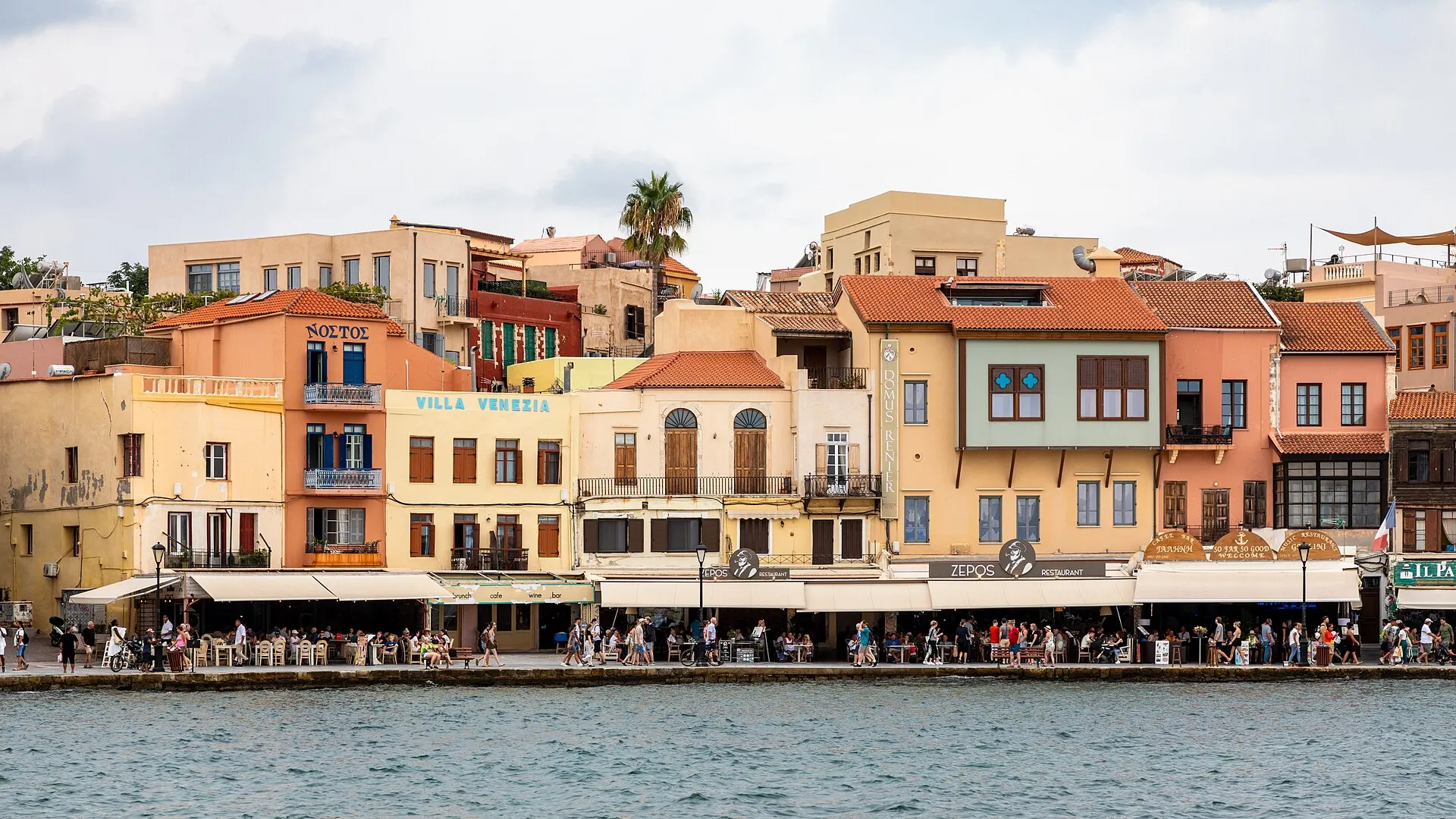
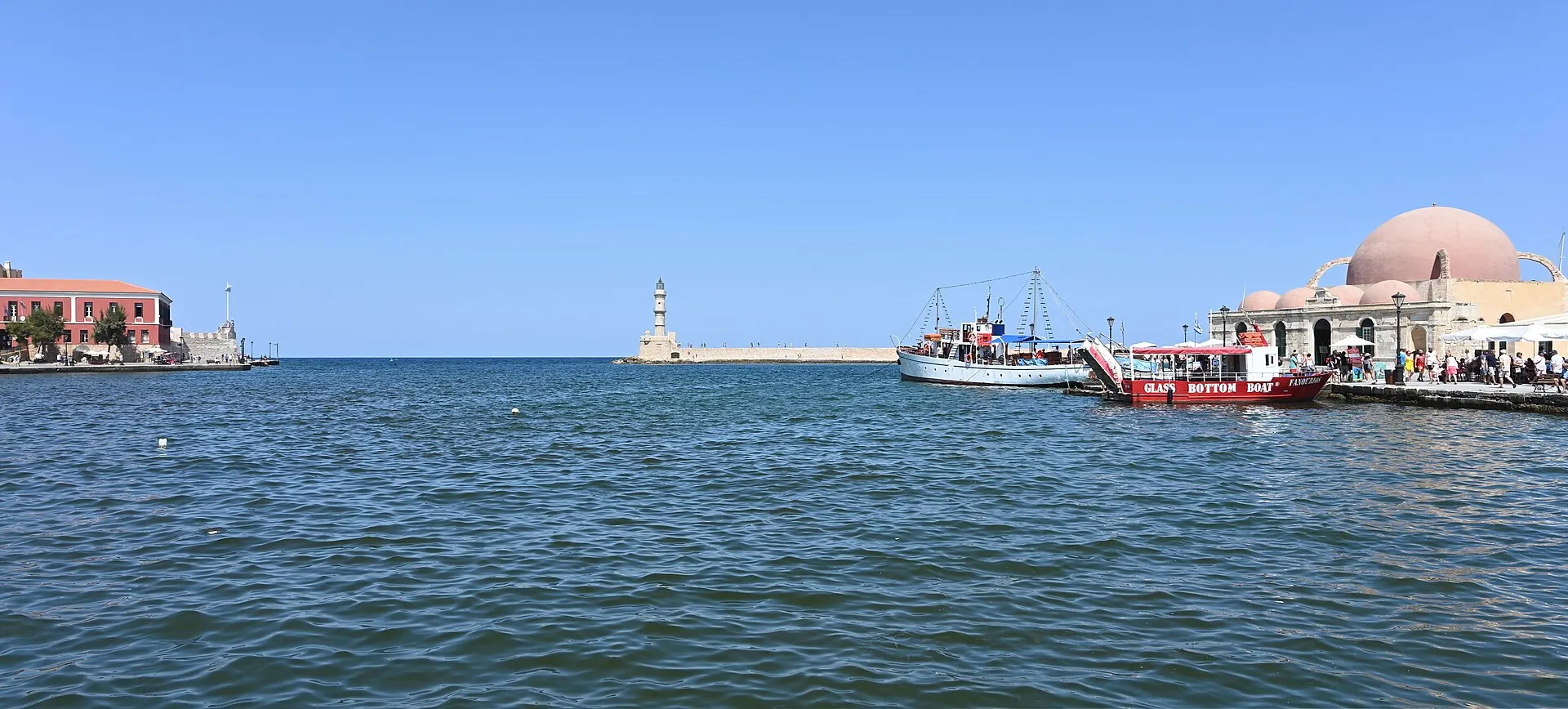
Chania was the capital of Crete until 1971 and is still its most beautiful town. The old town wraps round the Venetian harbour, where a long breakwater leads out to the lighthouse and the waterfront is lined with tall, pastel houses that are now cafés and restaurants. On the quay stands the domed Küçük Hasan mosque, the oldest Ottoman building in Crete, now used for exhibitions. At the western end, the Firkas fortress is where the Greek flag was raised in 1913, when Crete was united with Greece; it houses the Maritime Museum.
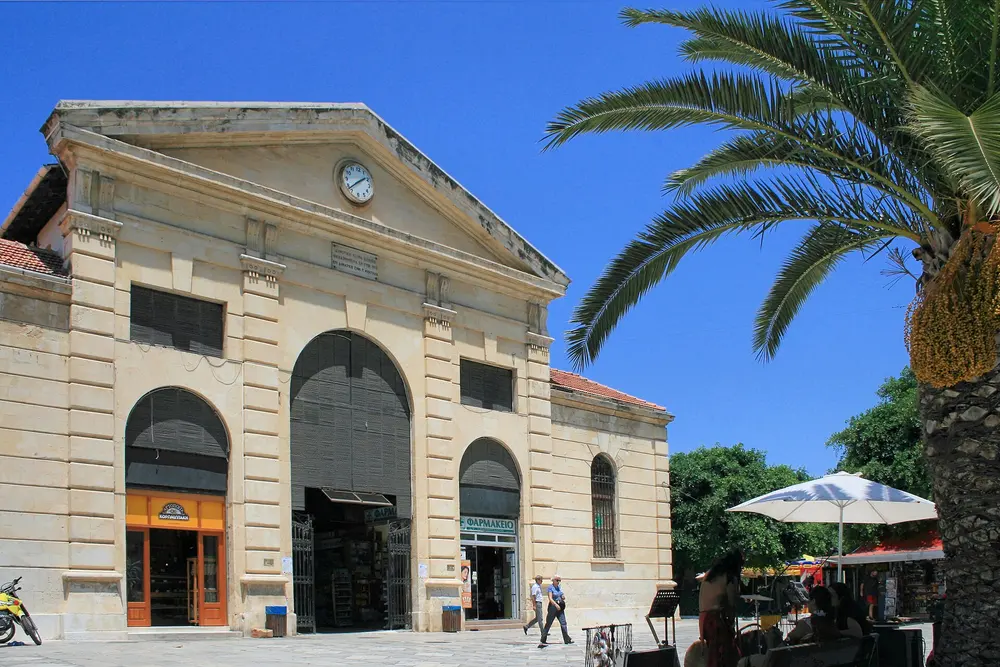
Behind the harbour, the old quarters each have their own character. Topanas, the former Christian quarter, is a maze of lanes with boutique hotels in restored mansions. The old Jewish quarter around the Etz Hayyim synagogue has craft shops and bars. Splantzia, the former Muslim quarter to the east, is quieter, with a plane-tree square and the church of Agios Nikolaos, which has both a minaret and a bell tower. To the south, the cross-shaped municipal market (built in 1913) is a good place for cheese, honey and herbs, and leather workers still line Skridlof Street.
The Venetian arsenals on the eastern harbour, the walls and bastions, and the Archaeological Museum (now in a modern building in the Chalepa district) fill a sightseeing day. Then do as the Chaniots do: walk the harbour at sunset and eat late.
Chania's old harbour quay, lined with Venetian-era houses.
Rethymno and the Arkadi monastery
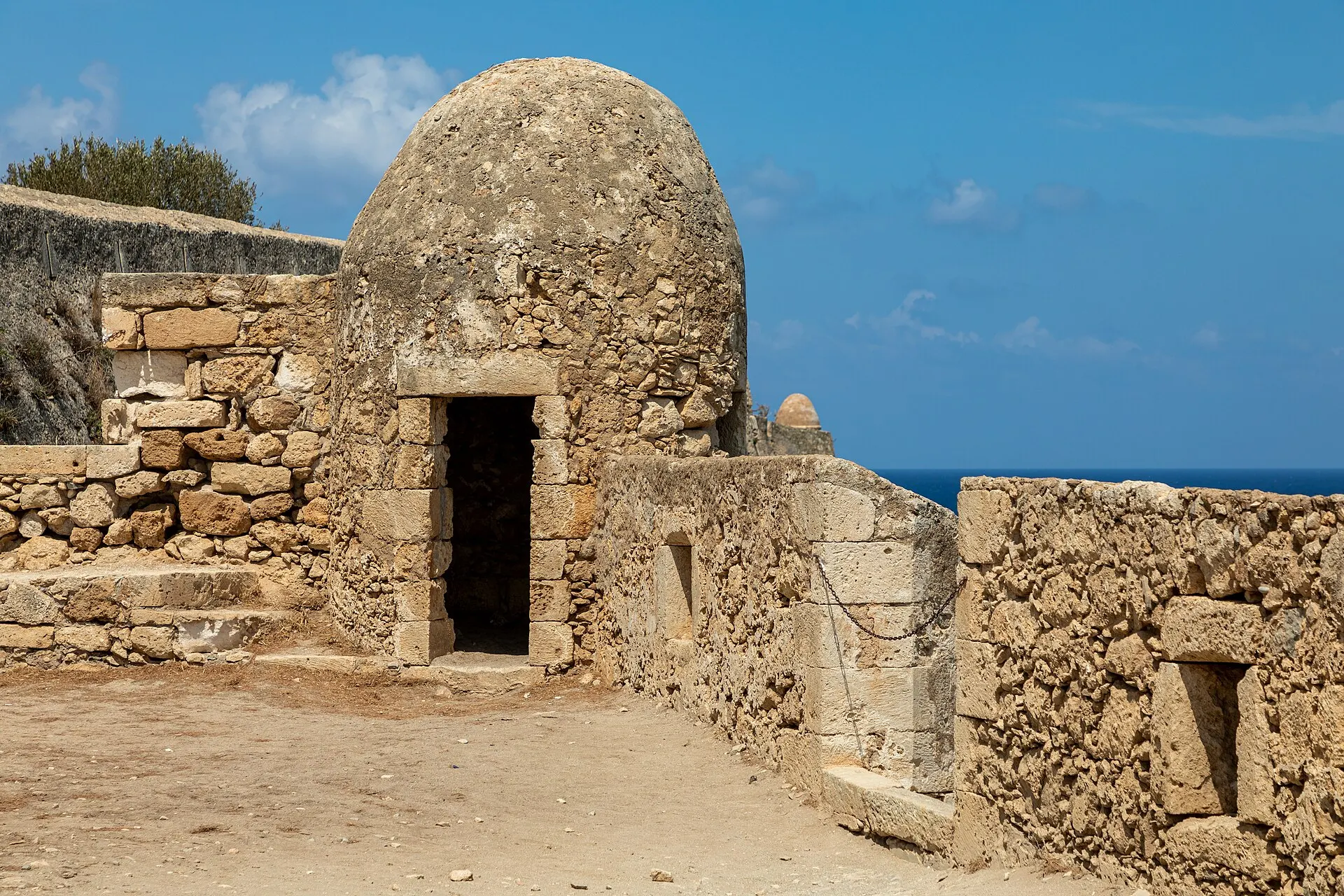
Halfway between Chania and Heraklion, Rethymno (35,763 people in 2021) has a Venetian and Ottoman old town that is almost as handsome as Chania's and a long town beach. Its skyline is dominated by the Fortezza, the Venetian citadel on the headland — one of the best-preserved castles on Crete — with a mosque and bastions inside its walls and views over the sea. The old town below has the Rimondi fountain, the minaret of the Neratze mosque (now a concert hall) and a small Venetian harbour packed with fish restaurants.
Inland, the Arkadi monastery is a national symbol. In November 1866, during the Cretan revolt against Ottoman rule, more than 700 women and children and 259 defenders sheltered here; when the besieging army broke in, the defenders blew up the gunpowder store rather than surrender. The church facade and the powder room survive. South of Rethymno, the road across the island passes the Kourtaliotiko gorge to Preveli, where a palm-lined river meets the sea below a monastery.
The Samaria Gorge
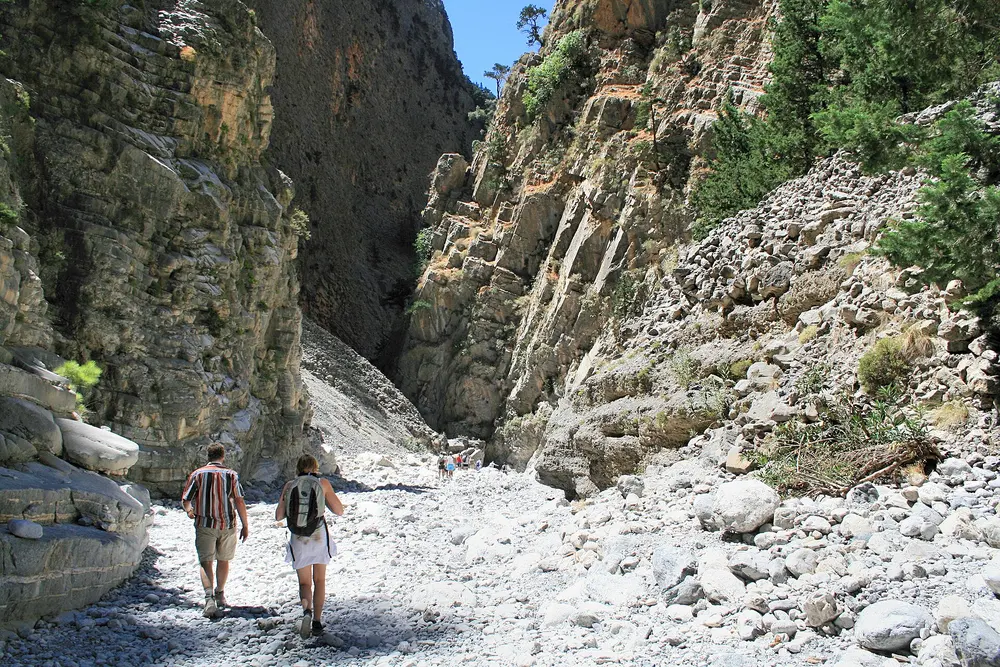
The walk through the Samaria Gorge is one of the great hikes of Europe: about 16 km from the wooden staircase of Xyloskalo in the Omalos plateau (about 1,250 m) down to Agia Roumeli on the Libyan Sea. The gorge is the heart of a national park created in 1962, partly to protect the Cretan wild goat, the kri-kri. Halfway down is the abandoned village of Samaria; near the end the walls close in at the Portes (Iron Gates), where the passage narrows to about 4 m between cliffs almost 300 m high.
Most people take five to seven hours. The first kilometres are a steep, stony descent; the lower gorge is gentler but hot. Agia Roumeli has no road, so you leave by boat — usually late in the afternoon — to Chora Sfakion or Sougia and Paleochora, where buses or your tour coach wait. If the full walk is too much, the "easy way" starts from Agia Roumeli and walks up to the Iron Gates and back.
The park is open from spring to autumn, weather permitting. In 2026 it reopened on 19 May, after annual trail maintenance, with free helmets at both entrances and a weather warning app; the ticket site lists it closed from 1 November 2026 to 9 April 2027. Entry requires a ticket, sold online on the official NECCA e-ticket site; the individual day ticket was reported at €10 from the 2025 season. The gorge closes on days of heavy rain or strong wind, so have a back-up day.
Samaria Gorge hike from Chania
Transport from the Chania area for the full Samaria Gorge walk to Agia Roumeli and back by boat and coach.
Check availabilityBook via GetYourGuideFrom Chania: Samaria Gorge hiking tour, easy way
The shorter "easy way" into the Samaria Gorge from Agia Roumeli on the coast.
Check availabilityBook via GetYourGuideChania area: Samaria Gorge hike and boat ride with pick-up
Samaria hike from the Chania area with the boat ride from Agia Roumeli.
Check availabilityBook via GetYourGuideTour listings are on GetYourGuide. Prices, times and cancellation terms are shown live on each listing and can change; AegeanSea.com may earn a commission at no extra cost to you.
Balos, Gramvousa and Falassarna
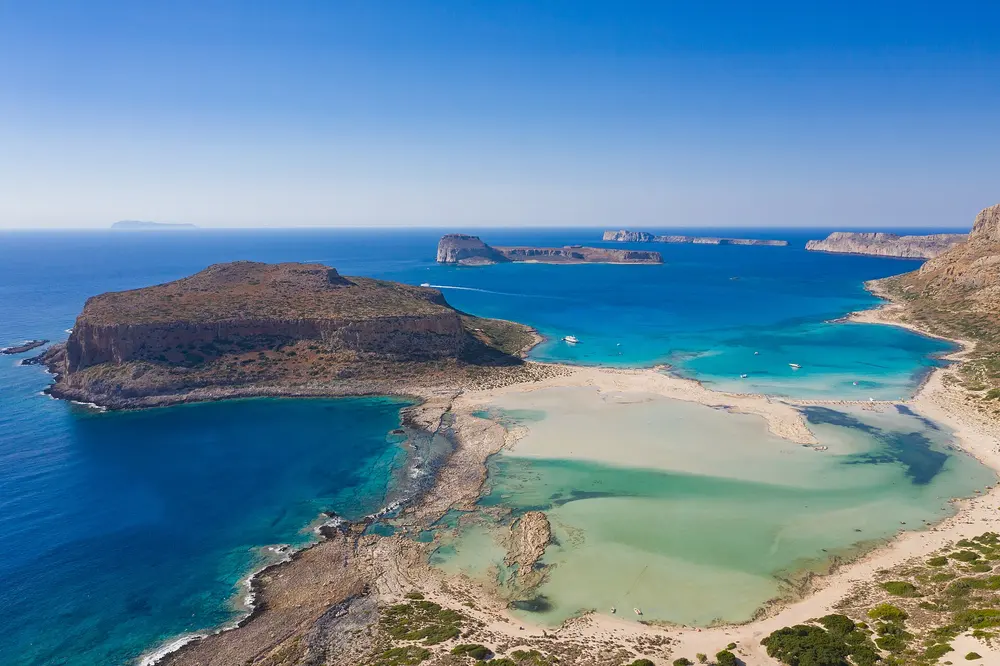
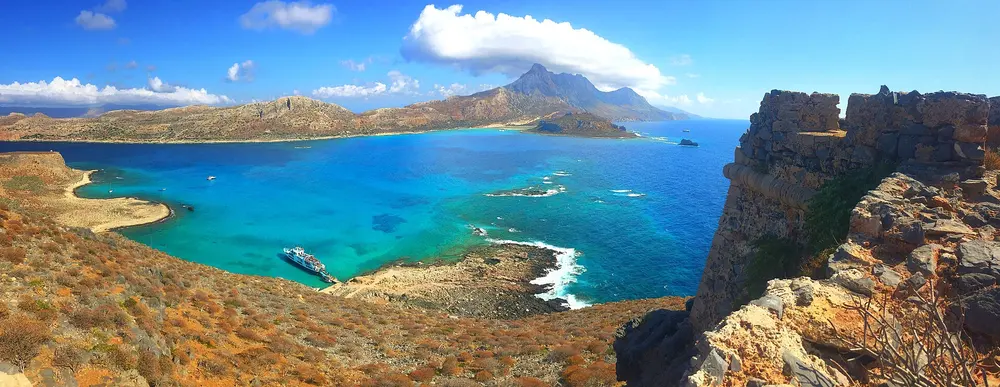
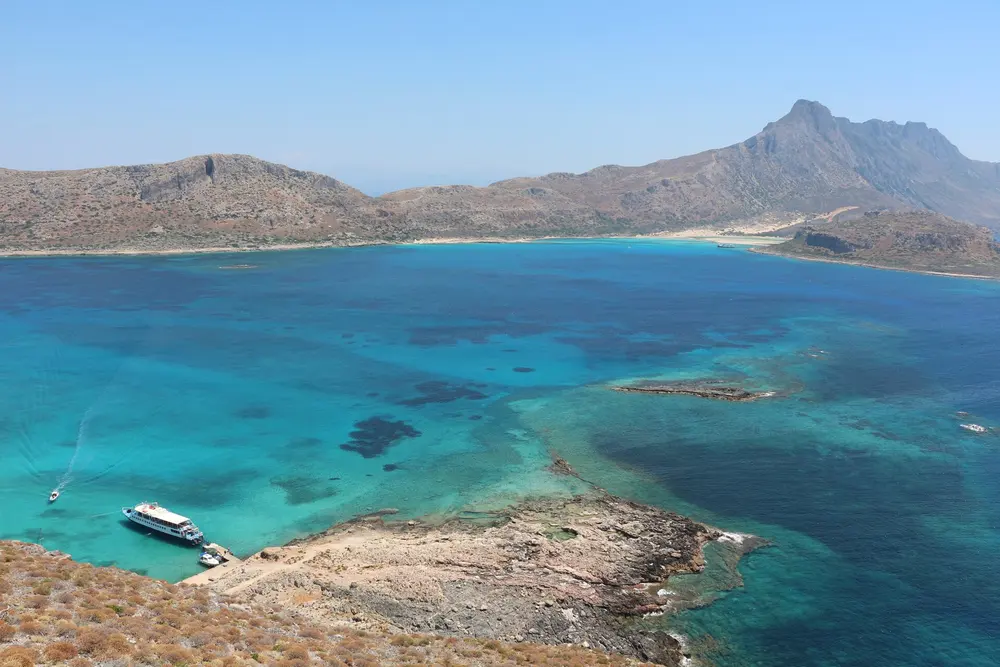
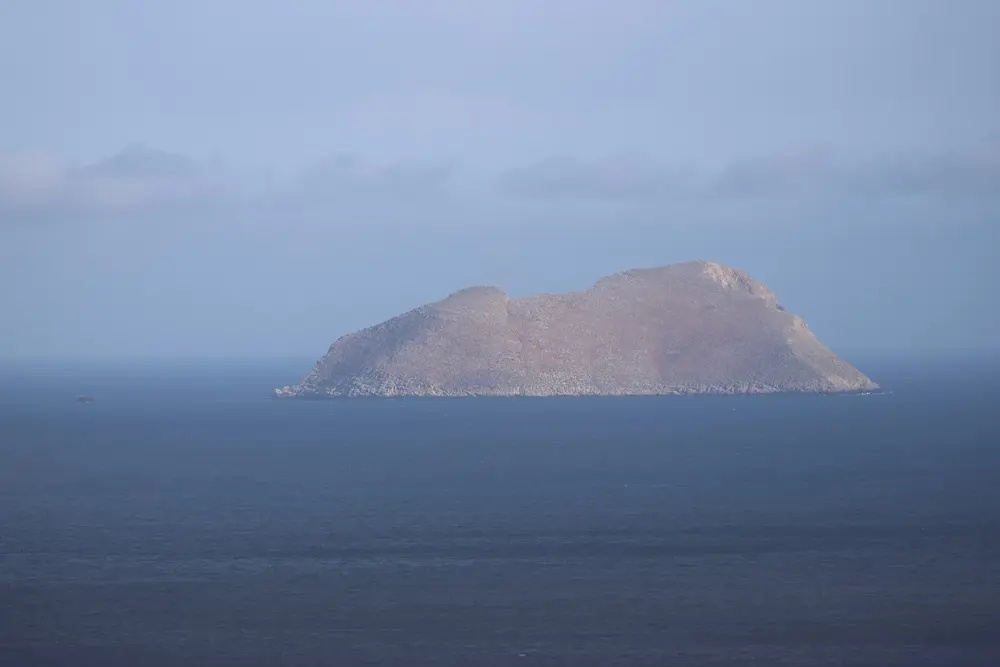
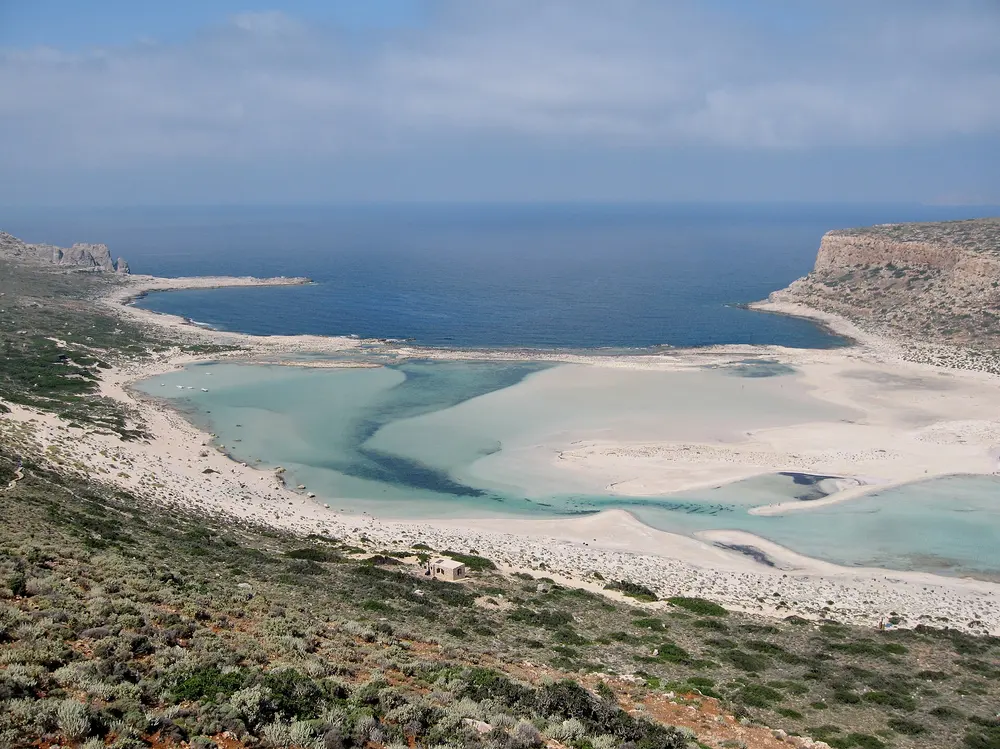
At the north-west tip of Crete, the Gramvousa peninsula hides the lagoon of Balos: white sand, water in every shade of turquoise and a rocky cape, Tigani, in the middle. You can reach it two ways. The boat from Kissamos port stops first at the islet of Imeri Gramvousa, where a Venetian fortress (built 1579–1584) crowns the hill above a beach and a shipwreck, then anchors off Balos for a few hours. By car, an unpaved road of about 8–10 km leads from Kaliviani to a car park, followed by a walk down of about 20–25 minutes (and longer back up, with no shade). Rental contracts often exclude damage on such roads, and a small fee is collected for the protected area.
On the west coast, Falassarna is a long, open sandy beach facing the sunset, with an ancient harbour site at its northern end. It catches the swell on windy days and is superb on calm ones.
From Chania: full-day Gramvousa island and Balos bay tour
Coach from Chania to Kissamos and the boat to Imeri Gramvousa and Balos.
Check availabilityBook via GetYourGuideFrom Kissamos: Balos and Gramvousa sailing cruise with lunch
Smaller-boat sailing day from Kissamos to Gramvousa and Balos, with lunch.
Check availabilityBook via GetYourGuide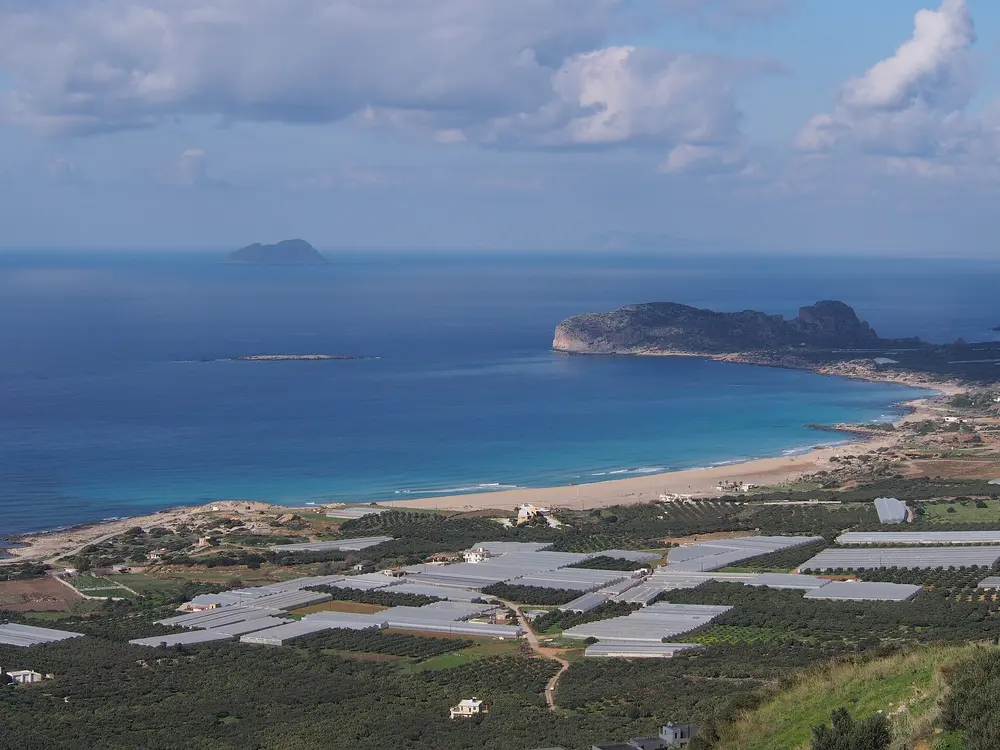
Balos and Falasarna: visit two unique beaches in one day
Land tour to the Balos viewpoint and beach and to Falassarna.
Check availabilityBook via GetYourGuideTour listings are on GetYourGuide. Prices, times and cancellation terms are shown live on each listing and can change; AegeanSea.com may earn a commission at no extra cost to you.
Elafonisi and the south-west
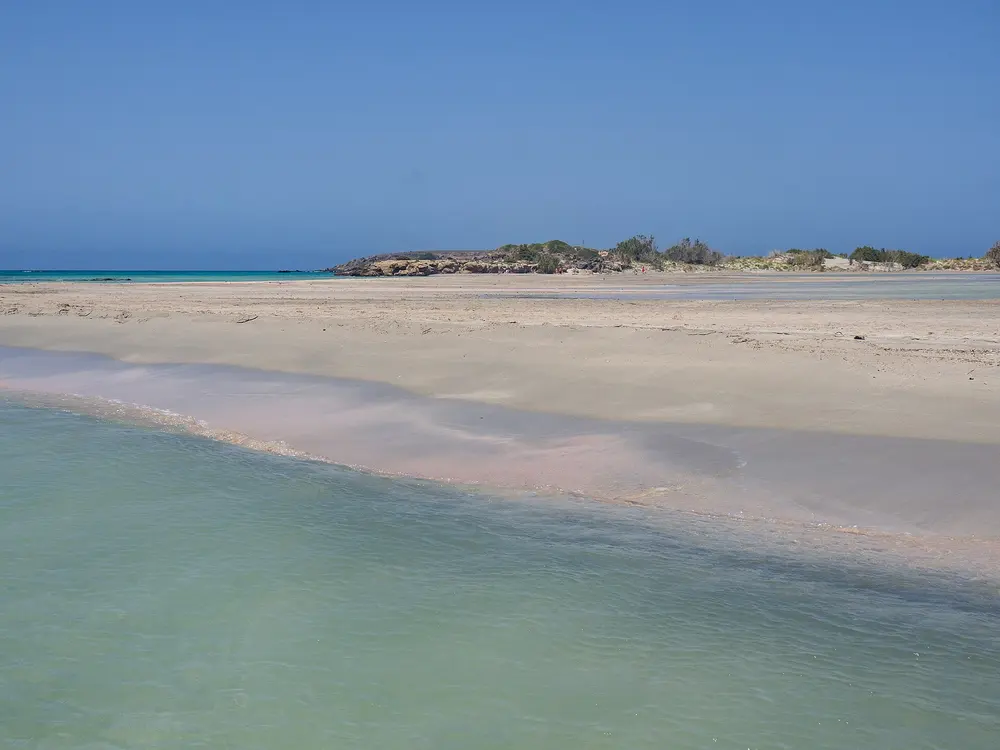
Elafonisi, at the south-west corner of Crete, is a protected nature reserve: a small island joined to the shore by sandbars and a shallow lagoon you can wade across in calm weather. The sand in places is tinged pink by the shells of tiny marine organisms. It is famous, which means crowded from late morning in summer; arrive early, or come in the late afternoon when the coaches have gone. Stay on the marked paths across the dunes, where rare plants grow. On the island there is a memorial to the hundreds of Greeks, most of them women and children, killed by Ottoman troops on Easter Sunday 1824.
Further east along the coast, Paleochora is a relaxed small town on a peninsula with a sand beach on one side and a pebble beach on the other, and the start of the coastal boats. Sougia is quieter still. On the drive back north through the chestnut villages of the Innachori, the views over the Libyan Sea are spectacular.
From Chania: day trip to Elafonisi island
Coach day from Chania to Elafonisi beach and lagoon.
Check availabilityBook via GetYourGuideFrom Chania: Elafonisi and Falasarna guided tour with snacks
Guided day combining Elafonisi and Falassarna, with snacks.
Check availabilityBook via GetYourGuideTour listings are on GetYourGuide. Prices, times and cancellation terms are shown live on each listing and can change; AegeanSea.com may earn a commission at no extra cost to you.
Sfakia, Loutro and the south coast
Sfakia is the mountainous south-east of the Chania region, famous in Cretan history for its fierce independence. Chora Sfakion is the port where Samaria hikers land; from here boats run west to Loutro, a white village on a bay with no road access, and on to Agia Roumeli. The Imbros gorge, shorter and easier than Samaria (about two to three hours walking), ends near Komitades, a short taxi ride from Chora Sfakion. East of Sfakia, the square Venetian castle of Frangokastello stands on a sandy beach with shallow water ideal for children.
Chania: Imbros gorge hike
Day trip to walk the Imbros gorge in Sfakia.
Check availabilityBook via GetYourGuideFrom Chania: Imbros gorge and Sfakia experience, hike and swim
Imbros gorge walk with a swim and time in Sfakia.
Check availabilityBook via GetYourGuideTour listings are on GetYourGuide. Prices, times and cancellation terms are shown live on each listing and can change; AegeanSea.com may earn a commission at no extra cost to you.
The best of western Crete, booked
Food and drink
Western Crete has its own specialities. Look for boureki (a Chania bake of courgettes, potatoes and soft cheese), Sfakian pies (thin cheese pies drizzled with honey), kalitsounia, gamopilafo, snails, slow-cooked lamb with stamnagathi greens, and graviera and anthotyros cheeses from the mountain villages. Fish tavernas in Kissamos, Paleochora and around Chania's harbour serve the day's catch, sold by weight.
Tsikoudia (raki) arrives with the bill. The hills around Chania and the Apokoronas have small wineries, and olive oil from the Kolymvari area is highly regarded. See our food and wine guide for more.
Chania food and wine walking tour
Food and wine walk through Chania's old town and market.
Check availabilityBook via GetYourGuideChania: Cretan cooking class with meal and wine
Hands-on Cretan cooking class ending with the meal and wine.
Check availabilityBook via GetYourGuideTour listings are on GetYourGuide. Prices, times and cancellation terms are shown live on each listing and can change; AegeanSea.com may earn a commission at no extra cost to you.
Where to stay, in short
- Chania old town: atmosphere, restaurants and the harbour; boutique hotels in restored mansions. Best base without a car.
- Platanias and Agia Marina: the resort strip west of Chania, with long beaches and family hotels.
- Rethymno: an old town plus a long town beach, midway to Heraklion.
- Kissamos: a quiet base for Balos, Falassarna and Elafonisi.
- Paleochora and the south coast: slow, small and seasonal.
See where to stay in Chania and western Crete for areas compared and properties on Booking.com.
How long to stay and sample plans
- 3 days: Chania old town; a Balos and Gramvousa boat day from Kissamos; Elafonisi.
- 5 days: add the Samaria Gorge (in season) and a day in Rethymno with the Arkadi monastery.
- 7 days: split between Chania (4 nights) and Paleochora or Sfakia (3 nights) for the south coast, Loutro and the Imbros gorge.
- 10–14 days: add Heraklion, Knossos and the east from our central and eastern Crete guide.
Chania is roughly two to two and a half hours by road from Heraklion along the north-coast highway, and KTEL buses link the two via Rethymno.
Practical tips
- Car hire makes the west much easier: the best beaches and villages are far apart and buses to the south coast are infrequent. Check your rental terms before driving to Balos.
- Beaches and wind: Falassarna and Elafonisi are exposed to wind and swell; Balos boats may not sail in strong winds. The south coast is usually calmer when the north wind blows.
- Protected areas: Balos, Elafonisi and Samaria are Natura 2000 areas. Take your rubbish home, stay off the dunes and do not take sand or shells.
- Season: Chania and Rethymno stay lively all year; south-coast villages and the boats along the coast run mainly from spring to autumn.
Plan your visit to Chania
- Things to doThe best things to do in western Crete, ranked: Chania's harbour and market, Balos and…
- ToursThe best GetYourGuide tours from Chania, Rethymno and Kissamos, compared: Samaria Gorge…
- Getting thereFlights into Chania, ferries from Piraeus to Souda with published crossing times,…
- Where to stayThe best areas to stay in western Crete compared — Chania old town, the Platanias…
- When to goWestern Crete month by month: temperatures and rain at Chania, sea temperatures, the…
Frequently asked questions
Is Chania better than Heraklion?
For a base with atmosphere, yes: Chania's old town and harbour are the prettiest on Crete, and it is close to Balos, Elafonisi and Samaria. Heraklion is better for Knossos, the museum and the east.
When is the Samaria Gorge open?
From spring to autumn, depending on the weather. In 2026 it reopened on 19 May; the official ticket site lists it as closed from 1 November 2026 to 9 April 2027. It closes on days of bad weather.
What is the best way to visit Balos?
The boat from Kissamos port, which also stops at Imeri Gramvousa. Driving is possible on an unpaved road followed by a 20–25-minute walk down, but many rental contracts exclude damage on that road.
Is Elafonisi beach really pink?
In places, yes: the pink tint comes from fragments of tiny marine organisms mixed into the sand. It is strongest at the water's edge and varies with the season and the waves.
Sources and official information
Facts were checked against these official sources in November 2026. Opening hours, prices and timetables change, so confirm before you go.
- en.wikipedia.org
- en.wikipedia.org
- en.wikipedia.org
- en.wikipedia.org
- en.wikipedia.org
- greekcitytimes.com
- samaria-tickets.necca.gov.gr
- argophilia.com
- ferryhopper.com
- flightconnections.com
AegeanSea.com is an independent guide, not the official site of any tourism board, government, port authority or ferry operator. Some links are affiliate links: tours go to GetYourGuide and stays go to Booking.com, and we may earn a commission at no extra cost to you.