- Region
- Saronic islands, Greece
- How long
- 2–4 nights
- Population
- 2,070 (municipality, 2021 census); 1,988 in Hydra Town
- Size
- About 64 km², long, narrow and mountainous
- From Athens
- Piraeus ferries ≈ 50 min–2 h 20 min (published), up to about 12 a day in summer
- Getting around
- On foot, by donkey or mule, or by water taxi: cars and motorcycles are banned
In short
- Why go: a harbour town of stone mansions with no cars or scooters, about an hour by fast boat from Piraeus. Hydra is the most elegant of the Saronic islands.
- Must-do: the harbour at dusk, the captains' mansions and museums, the coastal path to Kamini and Vlychos, swimming off the rocks, and the walk up to the Profitis Ilias monastery.
- History: Hydra's merchant fleet was central to the Greek War of Independence of 1821; the Miaoulia festival re-enacts it every June.
- Getting there: fast boats and ferries from Piraeus, about 50 minutes to just over 2 hours.
- How long: a day trip is possible, but 2–4 nights let you see Hydra when the day-trippers have left.
Why Hydra
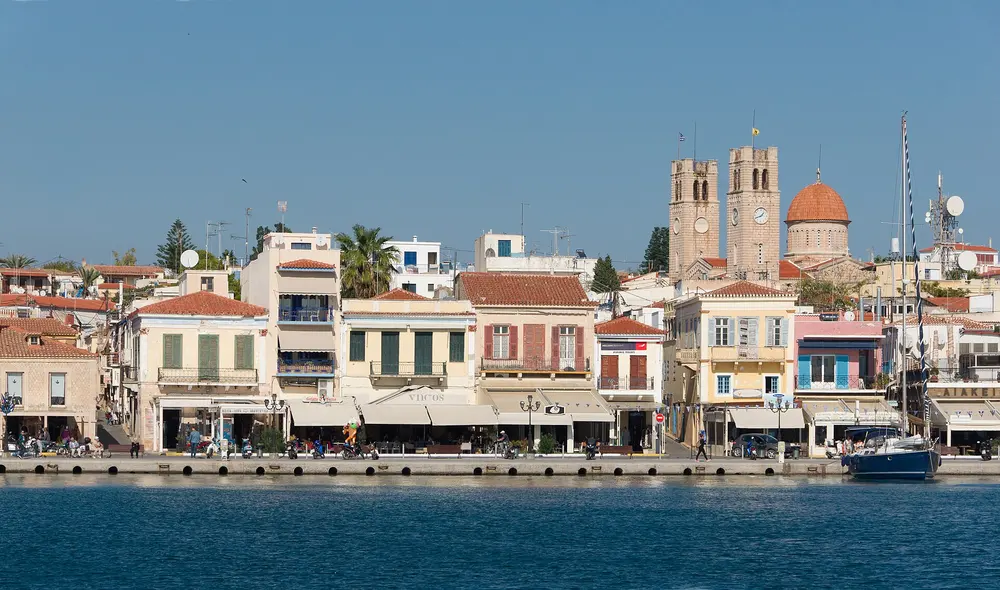
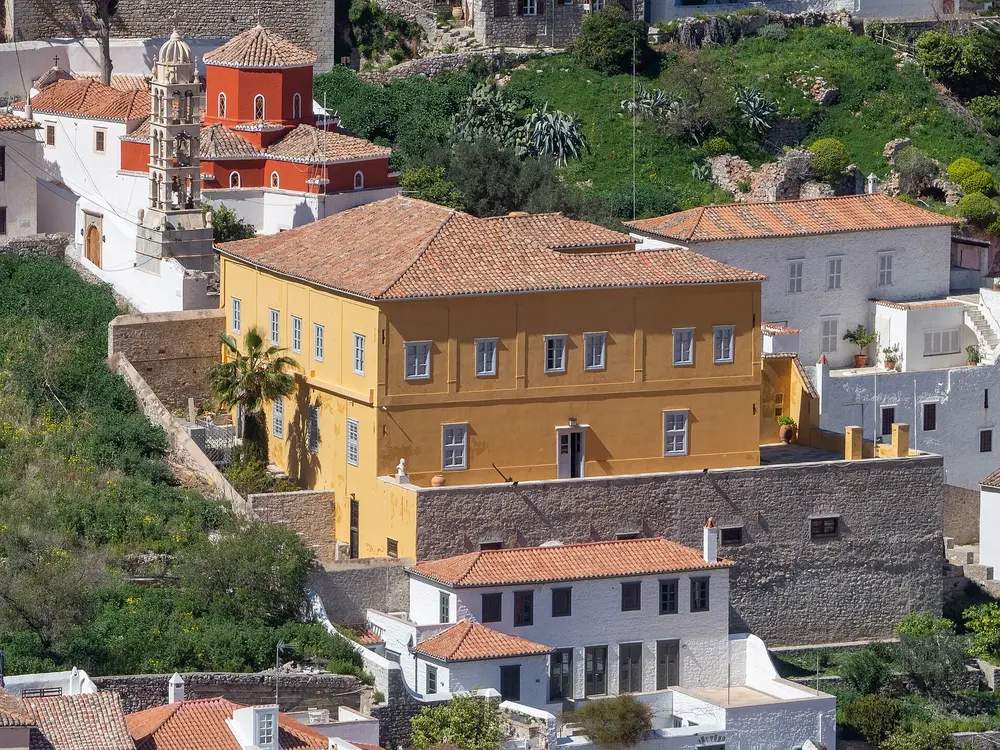
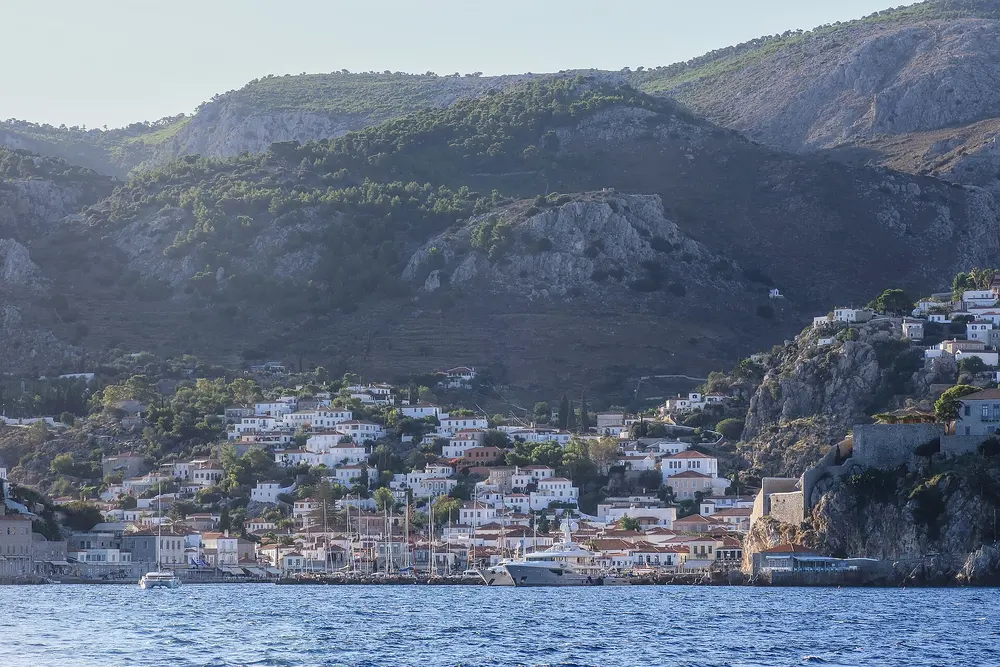
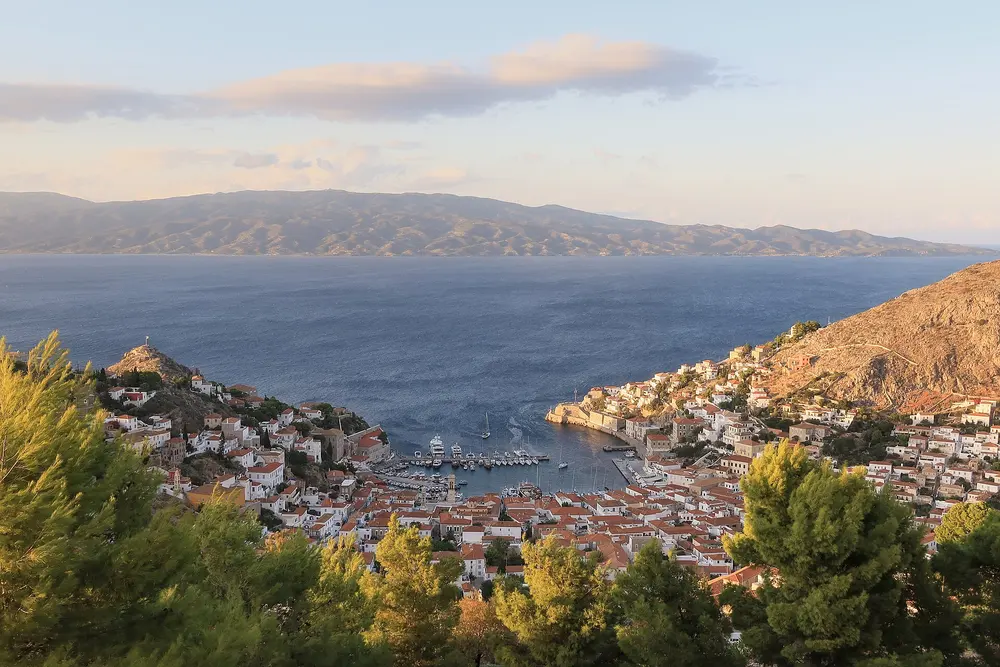
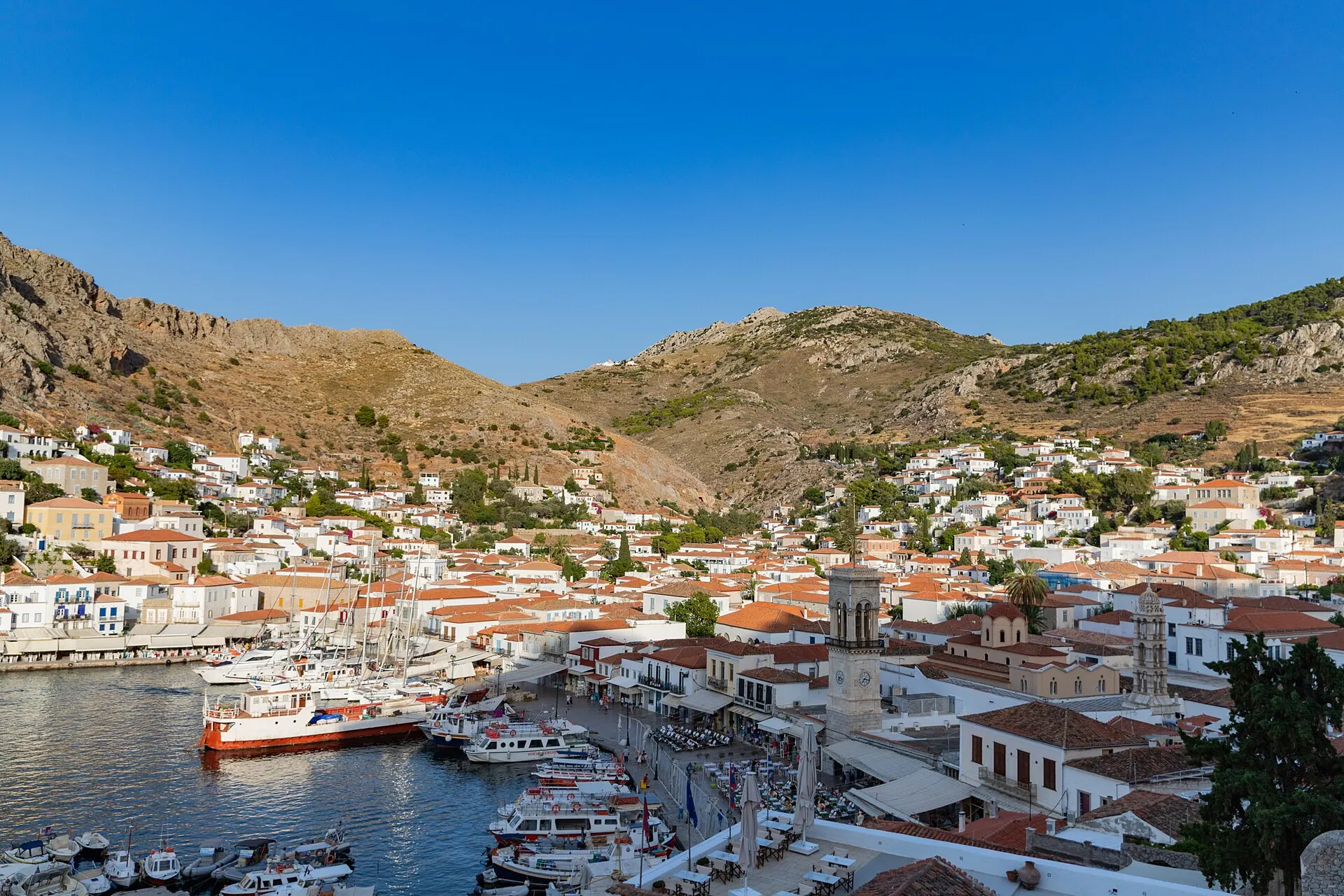
Hydra is a long, narrow ridge of rock off the eastern tip of the Peloponnese, about 64 km² and mostly bare mountain. Almost everyone lives in one place, Hydra Town, built in an amphitheatre around a small, deep harbour. Grey-stone mansions with tiled roofs, built by sea captains and merchants in the 18th and 19th centuries, rise in tiers above the quays, with whitewashed houses filling the gaps.
What makes Hydra unusual is what is missing. Cars and motorcycles are banned by law; apart from rubbish trucks there are no motor vehicles. Goods and luggage move by donkey, mule and handcart, and people walk or take water taxis. The result is a town that is quiet once the day boats have gone, where the main sounds are boat engines, church bells and hooves on stone.
Hydra has long attracted artists, writers and musicians, among them Leonard Cohen, who lived here in the 1960s. Today it combines fashionable bars and galleries with a working harbour. It suits couples, walkers, swimmers who are happy with rocks rather than sand, and anyone wanting a short island break from Athens. It does not suit beach holidays on long sandy strands.
Book tours in HydraLive times, prices and free cancellation terms on GetYourGuide.
Check availabilityHydra Town and the harbour
The harbour is the island's stage. Cafés and bars line the quays; yachts moor stern-to in summer; donkeys wait by the clock tower of the monastery of the Dormition of the Virgin (the cathedral), whose courtyard holds the grave of the 1821 leader Lazaros Kountouriotis and a small church museum. Cannons still stand on the old fortifications at both ends of the harbour.
Climb the lanes behind the quays to see the mansions (archontika). The Lazaros Kountouriotis mansion, on the hill west of the harbour, is a branch of the National Historical Museum and shows how a leading Hydriot family lived, with furniture, costumes and paintings. The Historical Archives Museum of Hydra, on the harbour, holds documents, portraits and relics of the island's fleet. Opening days and hours vary by season, so check before you go.
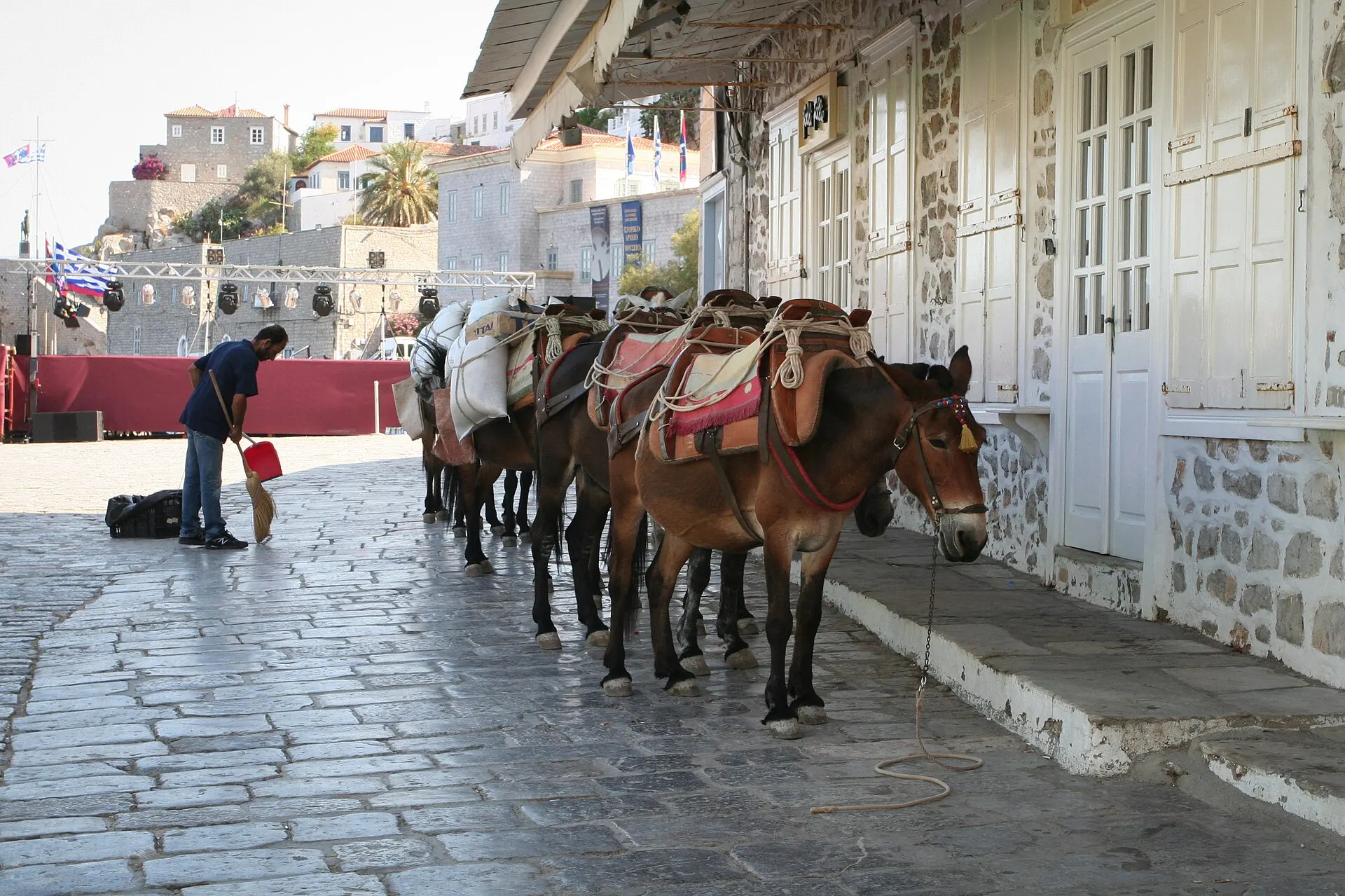
Donkeys and mules wait on the quay: on Hydra they replace taxis and delivery vans.
History: the fleet of 1821
In the late 18th century, Hydra's shipowners grew rich on Mediterranean trade, and the town's mansions date from this boom. When the Greek War of Independence broke out in 1821, Hydra, after initial hesitation among its leading families, committed its merchant fleet to the revolution, contributing around 150 ships. Admiral Andreas Miaoulis led Hydriot crews in naval actions against the Ottoman fleet, famously using fire ships, and the richest captain, Lazaros Kountouriotis, spent much of his fortune on the cause.
The island commemorates this every year in the Miaoulia, held in the last week of June, with events ending in a re-enactment at sea and fireworks in the harbour.
Swimming on Hydra
Hydra has few sandy beaches. Most swimming is off rocks and concrete platforms or in small pebble coves, with deep, clear water. Ladders and sunbed platforms make it easy.
- Near the town: the swimming rocks just west of the harbour (Spilia and Hydronetta) and Avlaki, reached by steps.
- Kamini: a small fishing harbour 15–20 minutes' walk west, with a tiny beach and tavernas.
- Vlychos and Plakes: about 40–50 minutes' walk west on the coastal path, or by water taxi; pebble beaches with tavernas and sunbeds.
- Palamidas, Bisti and Agios Nikolaos: further west, reached mainly by water taxi or boat.
- Mandraki: east of the town, a sandy bay with a hotel beach, reached by path or boat.
In summer, water taxis and small boats shuttle from the harbour to the western coves through the day.
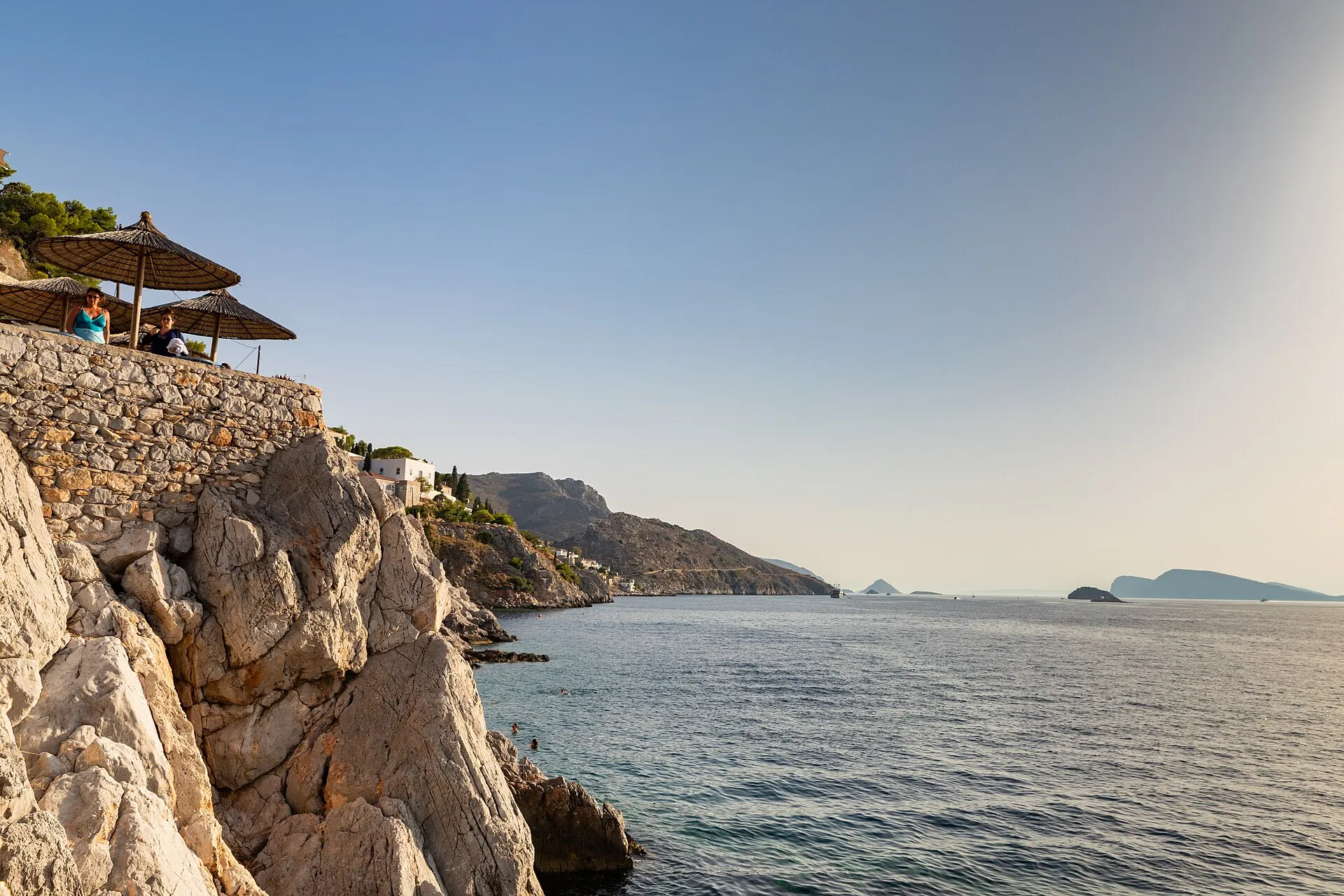
Hydra's rocky coast: most swimming is off rocks and in small pebble coves.
Walking
With no roads beyond the town, Hydra is a walker's island. The easy classic is the coastal path west to Kamini and Vlychos, paved and flat, with views across to the Peloponnese. A harder climb leads up from the town through pine woods to the monasteries of Profitis Ilias and Agia Efpraxia, which look down over the harbour; allow about an hour up on steep stone steps. Longer trails cross the bare spine of the island to remote chapels, coves and monasteries. Spring and autumn are best; in summer, walk early and take plenty of water, because there is little shade.
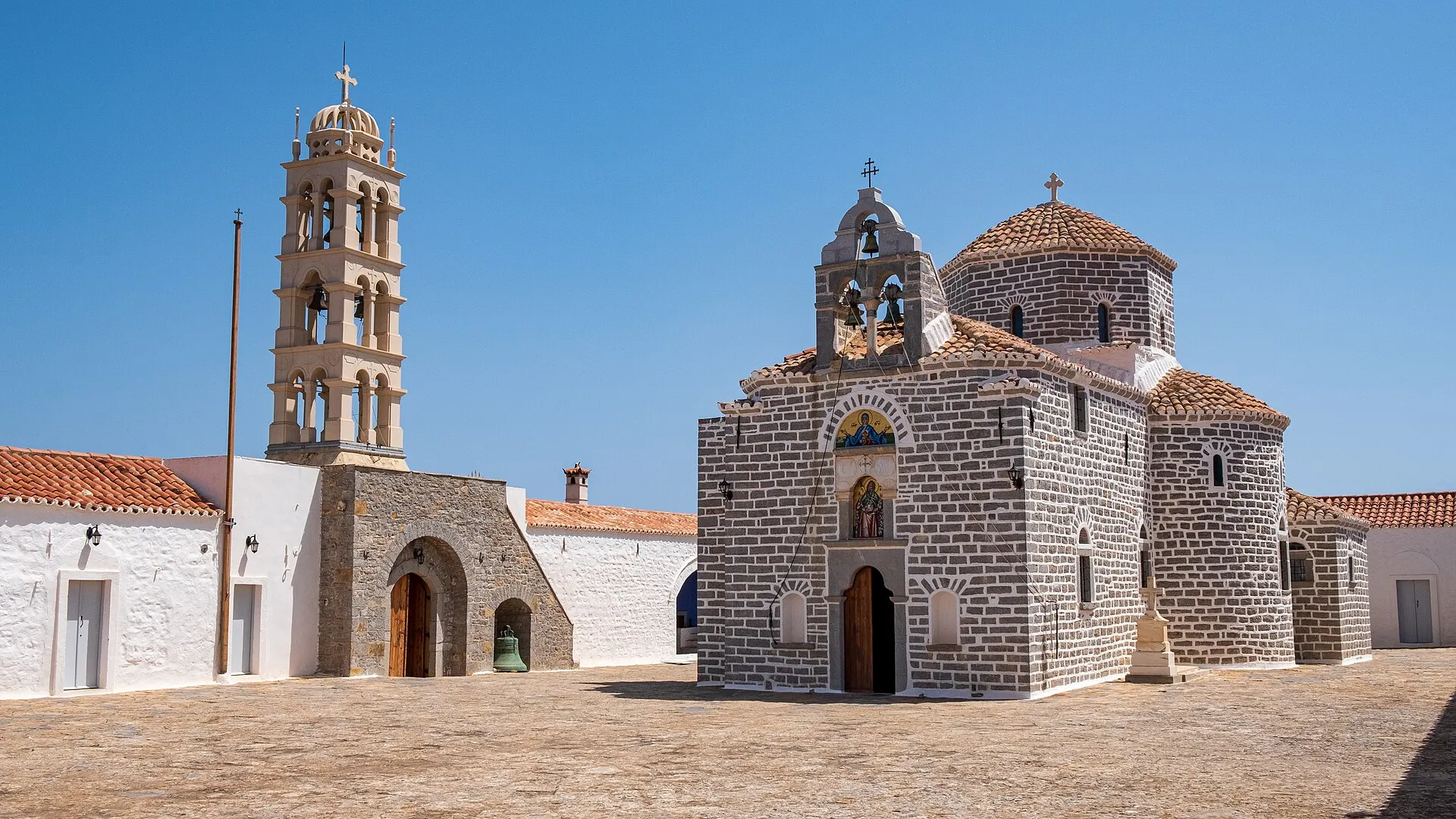
The monastery of Profitis Ilias, an hour's climb above Hydra Town.
Boat trips and day trips
Hydra's tour inventory is small, and that suits the island: you mostly explore on foot and by water taxi. On GetYourGuide you can book a maritime-heritage walk through the town, a swimming and snorkelling boat trip to the coves, a fishing day, no-licence boat hire and an art workshop. From the mainland, day trips run from Athens and Nafplio. The neighbouring islands of Poros and Spetses are easy to visit by the Saronic fast boats.
Food and evenings
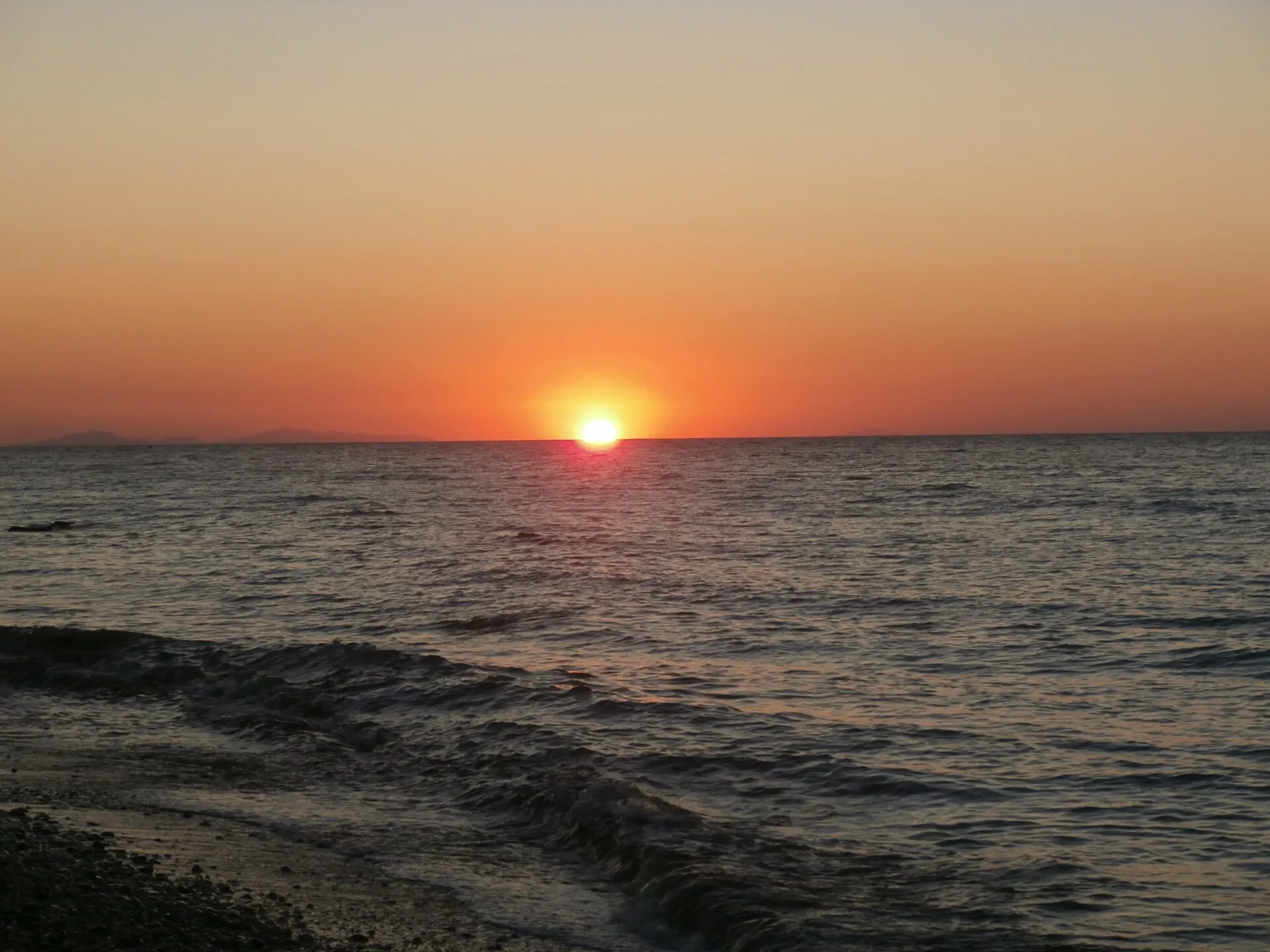
Hydra's tavernas serve fish, meze and island dishes in the lanes behind the harbour, at Kamini and at Vlychos. The harbour cafés are good for watching the boats come in, though prices on the front are higher. Sunset is best seen from the western swimming rocks or the path towards Kamini. In summer, the bars around the harbour stay busy late; the town is quiet again by early morning.
Getting there, when to go and how long
Fast boats and ferries run from Piraeus daily, with published crossing times from about 50 minutes to 2 h 20 min; some services continue to Spetses and Ermioni or link with Poros. See getting to Hydra. The season runs from April to October; May, June and September are the most pleasant months. See when to go.
A day trip from Athens gives you the harbour and a swim; two to four nights let you walk the island and enjoy the town in the evening. Combine Hydra with Aegina, Poros and Spetses for a Saronic island-hop: see the Saronic islands guide.
Plan your visit to Hydra
- Things to doThe best of Hydra ranked: the harbour and its mansions, the museums of the 1821 fleet,…
- ToursHydra's few bookable experiences, honestly compared: a heritage walk, swimming and…
- Getting thereHow to reach Hydra: fast boats from Piraeus by operator with published crossing times,…
- Where to stayWhere to stay on car-free Hydra: rooms by the harbour, stone houses in the quieter…
- When to goHydra month by month: measured temperatures and rainfall, sea temperature, summer heat…
Frequently asked questions
Are there cars on Hydra?
No. Cars and motorcycles are banned; the only motor vehicles are rubbish trucks. People walk, ride donkeys or take water taxis.
Is Hydra worth a day trip from Athens?
Yes, with fast boats from Piraeus taking about an hour or more. But staying a night or two lets you see the town after the day boats leave.
Does Hydra have sandy beaches?
Very few. Most swimming is off rocks and platforms or in pebble coves like Vlychos, Plakes and Bisti. Mandraki has the sandiest bay.
When is the Miaoulia festival?
In the last week of June, ending with a re-enactment of the naval battles of 1821 and fireworks in the harbour.
Sources and official information
Facts were checked against these official sources in November 2026. Opening hours, prices and timetables change, so confirm before you go.
AegeanSea.com is an independent guide, not the official site of any tourism board, government, port authority or ferry operator. Some links are affiliate links: tours go to GetYourGuide and stays go to Booking.com, and we may earn a commission at no extra cost to you.