- Region
- Cyclades, Greece
- How long
- 4–5 nights
- Population
- 5,302 (municipality, 2021 census)
- Port
- Adamas (Adamantas), in the great natural bay
- Airport
- Milos (MLO), a few km south-east of Adamas; flights from Athens
- From Athens
- ≈ 2 h 25 min–4 h 40 min from Piraeus
In short
- Why go: Milos's volcanic geology gives it the most varied coastline in the Cyclades: white, red, ochre and black rock, sea caves and arches, and around seventy beaches by local count, many best reached by boat.
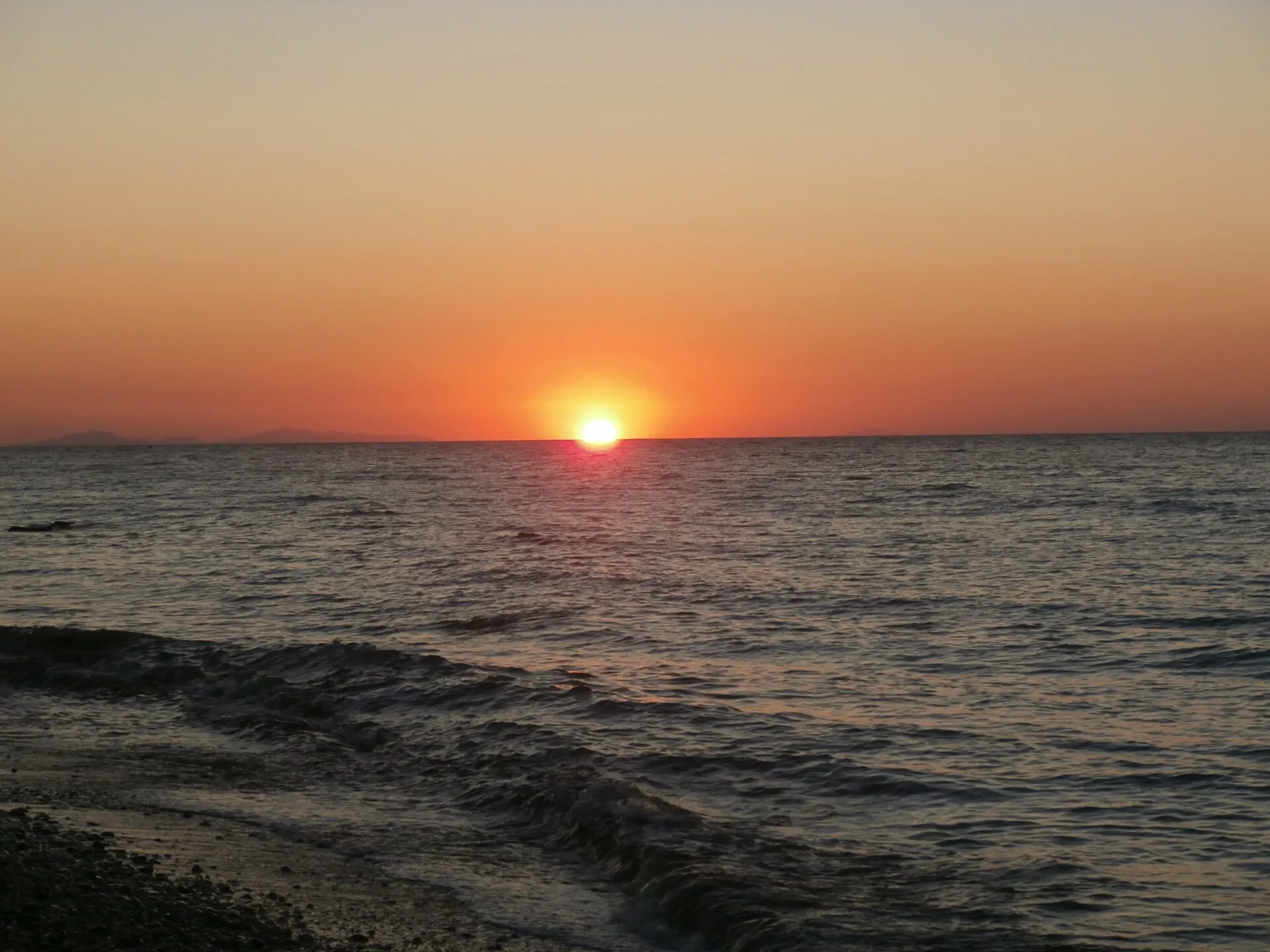
- Must-do: a boat trip to Kleftiko's sea caves and pirate cove, sunrise or sunset at Sarakiniko, the boathouses (syrmata) of Klima, and dusk from the Kastro above Plaka.
- History: the Venus de Milo was found here in 1820, near the ancient theatre. The catacombs at Trypiti are among the most important early Christian sites in Greece.
- Next door: quiet Kimolos and uninhabited Polyaigos, with some of the clearest water in the Aegean.
- How long: 4–5 nights. A car or ATV helps, and one or two boat days are essential.
Why Milos
Milos is the south-westernmost of the larger Cyclades and one of the most striking. It is a volcanic island, about 150 km² for the municipality, wrapped around one of the largest natural harbours in the Mediterranean. Millions of years of volcanic activity left it rich in minerals. Obsidian from Milos was traded across the Aegean in prehistoric times, and bentonite, perlite and sulphur were mined here into the modern era. The same geology painted the coastline in improbable colours.
For travellers, Milos means a beach for every wind direction, extraordinary boat trips, villages that look much as they did a century ago, and excellent food. It has grown in popularity over the last decade, but it still feels calmer than Santorini or Mykonos, and the west of the island remains wild.
Book tours in MilosLive times, prices and free cancellation terms on GetYourGuide.
Check availabilityPlaka, Trypiti and the hill villages
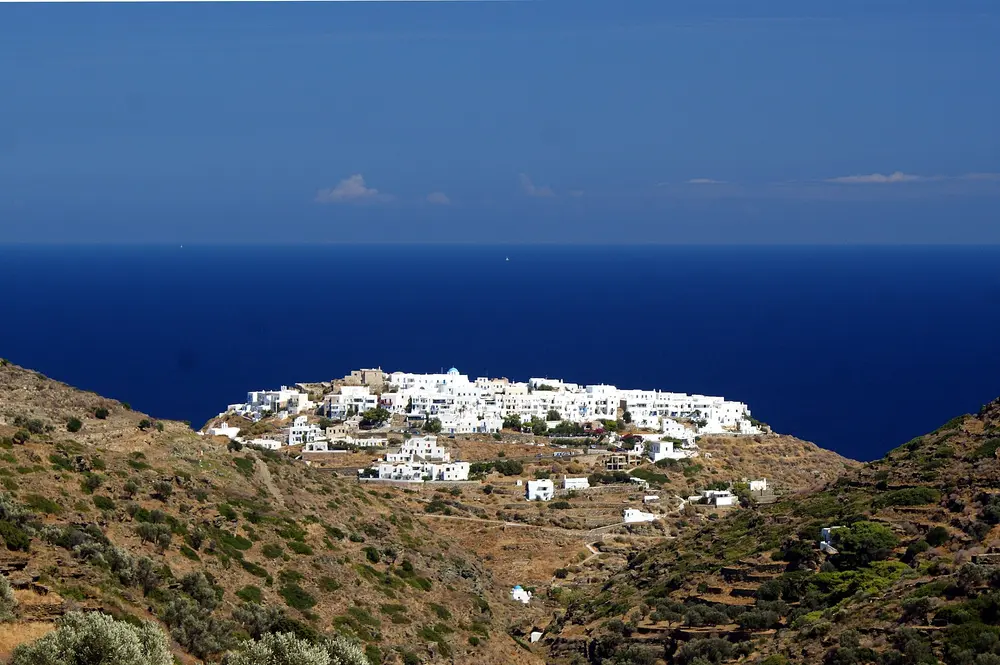
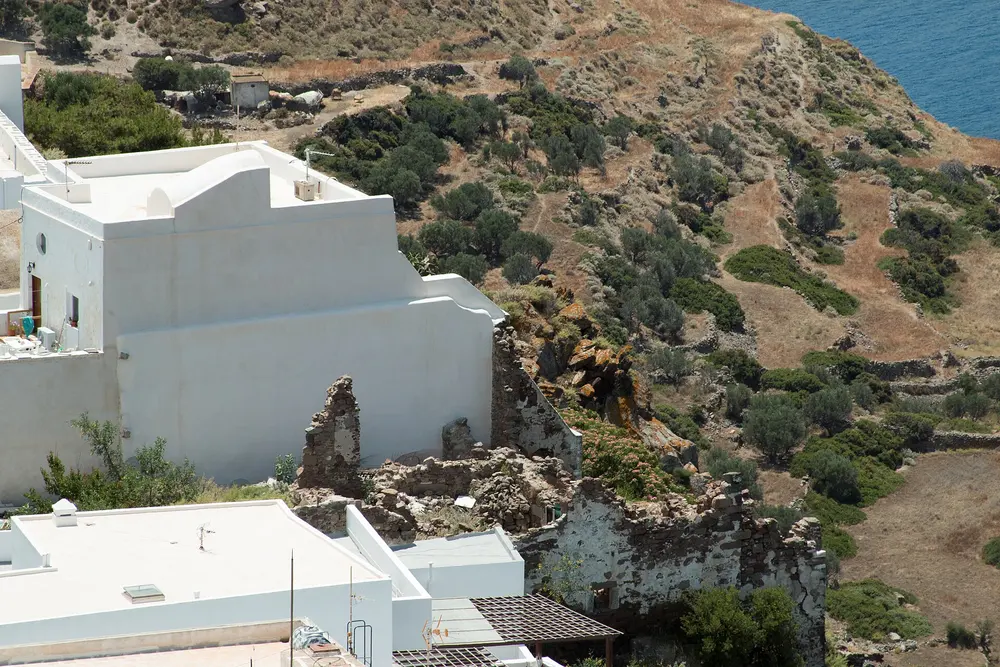
The capital, Plaka, sits on a hill above the bay with a cluster of neighbouring villages (Trypiti, Triovasalos, Pera Triovasalos). Its lanes are lined with whitewashed houses, flowers and small restaurants. Climb to the Kastro, the site of a Venetian castle, and the church of Panagia Thalassitra for the island's best sunset view over the bay and the west. Plaka has the Archaeological Museum (a replica of the Venus de Milo, finds from the Bronze Age town of Phylakopi; €5, reduced €3, closed Tuesdays in summer 2026) and a folk museum.
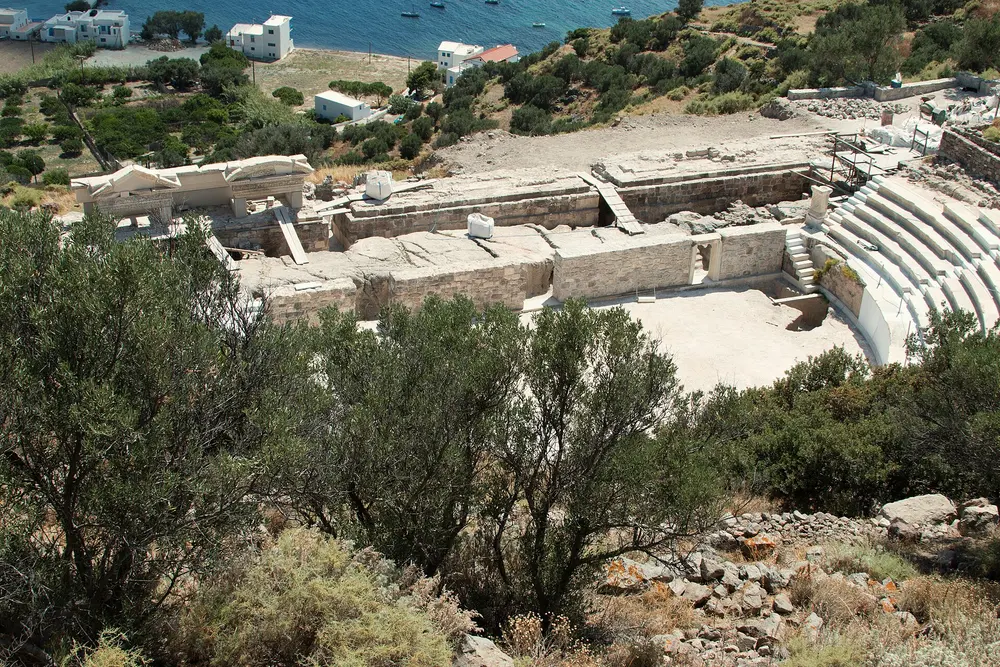
Below Plaka, near Trypiti, the ancient theatre looks over the bay. The field where a farmer found the Venus de Milo in 1820 is marked nearby (the statue is now in the Louvre). The catacombs, an underground Christian cemetery of the 1st–5th centuries AD cut into the soft volcanic rock, have galleries 1–5 m wide (entry €10, reduced €5, closed Tuesdays in summer; in winter 2026 open only Thursday and Sunday mornings).
Milos island archaeology and culture tour
A guided tour of Milos's archaeological sites and villages.
Check availabilityBook via GetYourGuideTour listings are on GetYourGuide. Prices, times and cancellation terms are shown live on each listing and can change; AegeanSea.com may earn a commission at no extra cost to you.
The syrmata: Klima, Mandrakia and Firopotamos
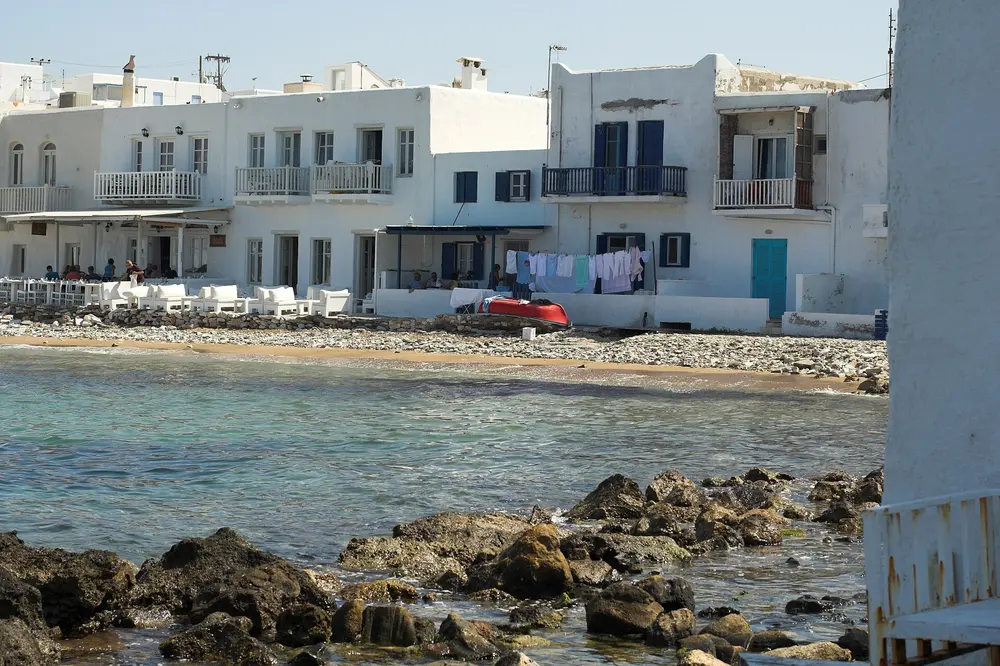
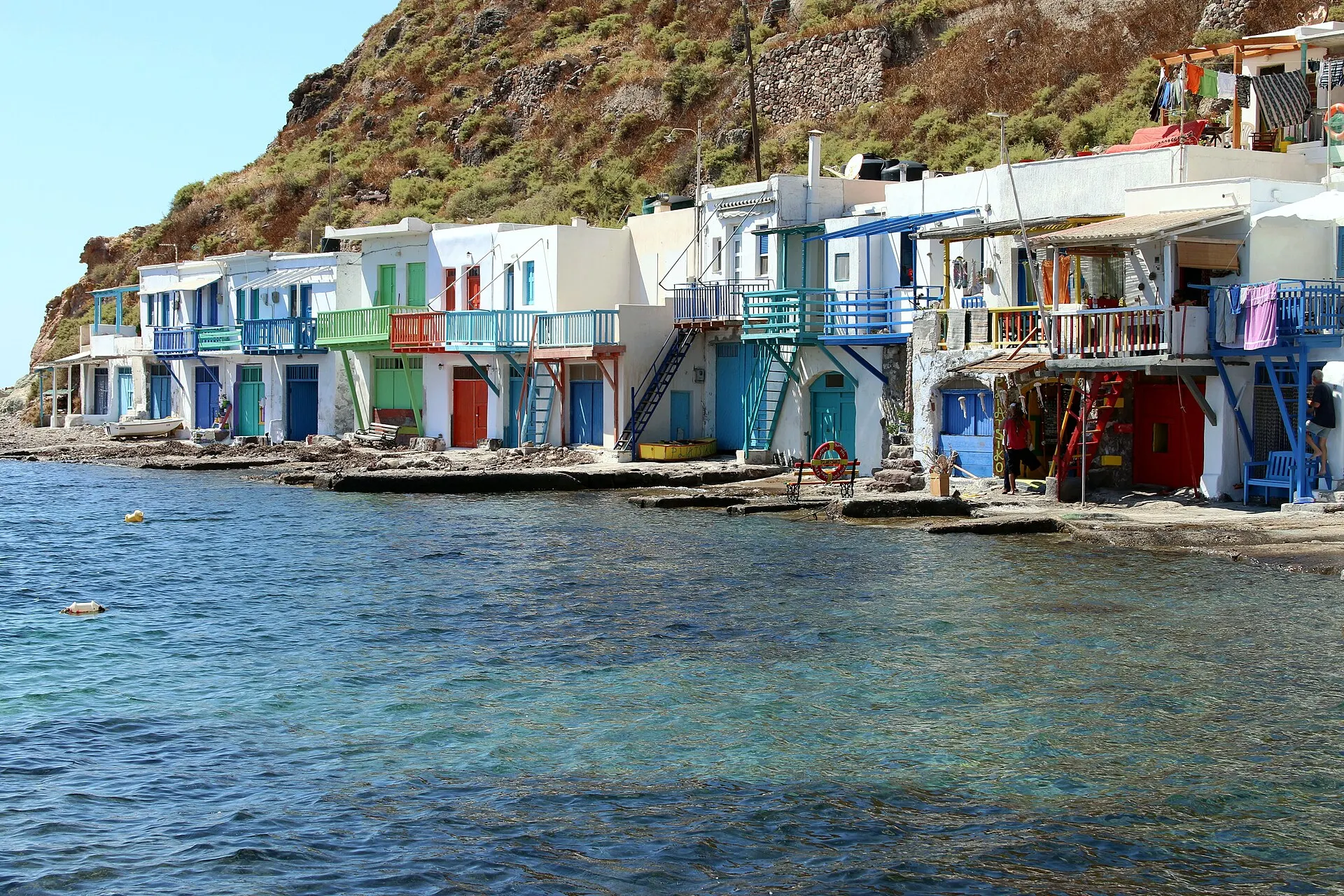
Milos's fishing villages are famous for their syrmata: boathouses cut into the soft rock at the water's edge, with living quarters above and brightly painted doors. Klima, below Plaka, is the classic, a row of white houses with red, blue and green doors right on the water. Mandrakia in the north is a tiny cove with a church and a taverna. Firopotamos has a white chapel on the point and a sheltered swimming bay. Please respect the residents: these are private homes.
Sarakiniko and the beaches
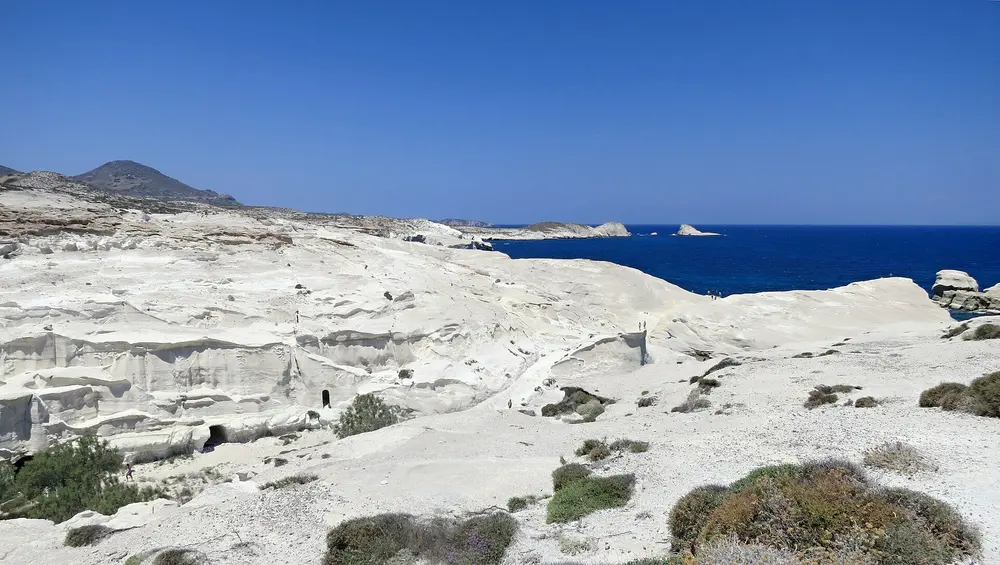
Sarakiniko, on the north coast, is one of the most photographed landscapes in the Aegean: wind- and wave-carved white volcanic rock that looks like the surface of the moon, around a narrow inlet of deep blue water. It is best at sunrise or sunset, crowded at midday and dangerous in strong north winds. Do not jump from the high rocks.
- North coast: Sarakiniko, Papafragas (a narrow sea-cut inlet below the road), Pollonia (a village beach with tavernas).
- South coast: Firiplaka and Tsigrado, with coloured cliffs (Tsigrado is reached by a steep path and ladder), Paleochori, a long beach where volcanic gases warm the sand and water in places, and Agia Kyriaki.
- West: remote bays such as Triades, Ammoudaraki and Agios Ioannis, on dirt roads. Kleftiko and Sykia are best by boat.
In the July–August meltemi, the south-coast beaches are the sheltered ones.
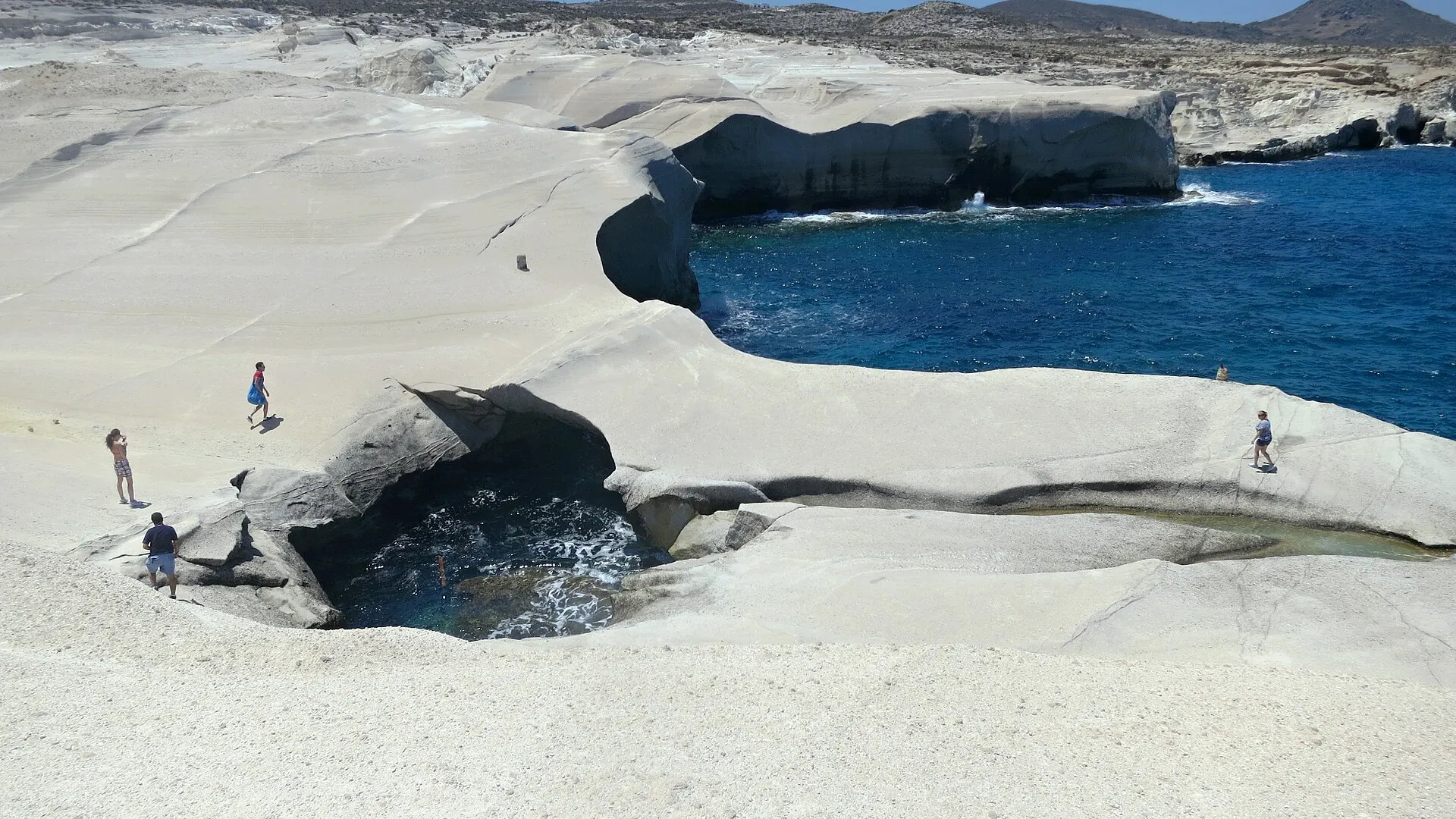
Sarakiniko's white volcanic rock on the north coast of Milos.
Kleftiko and the sea
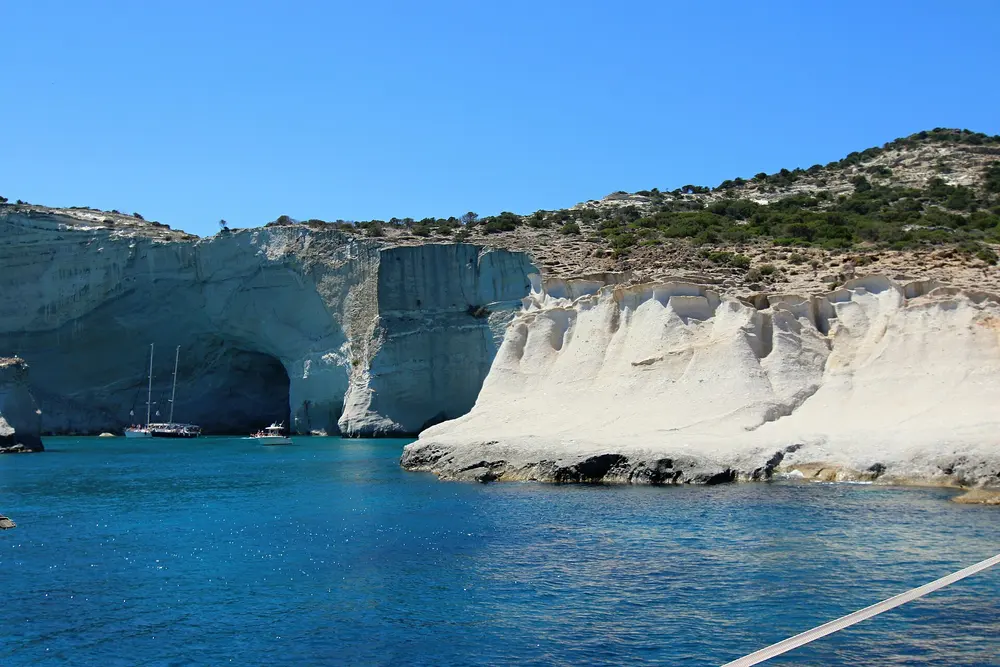
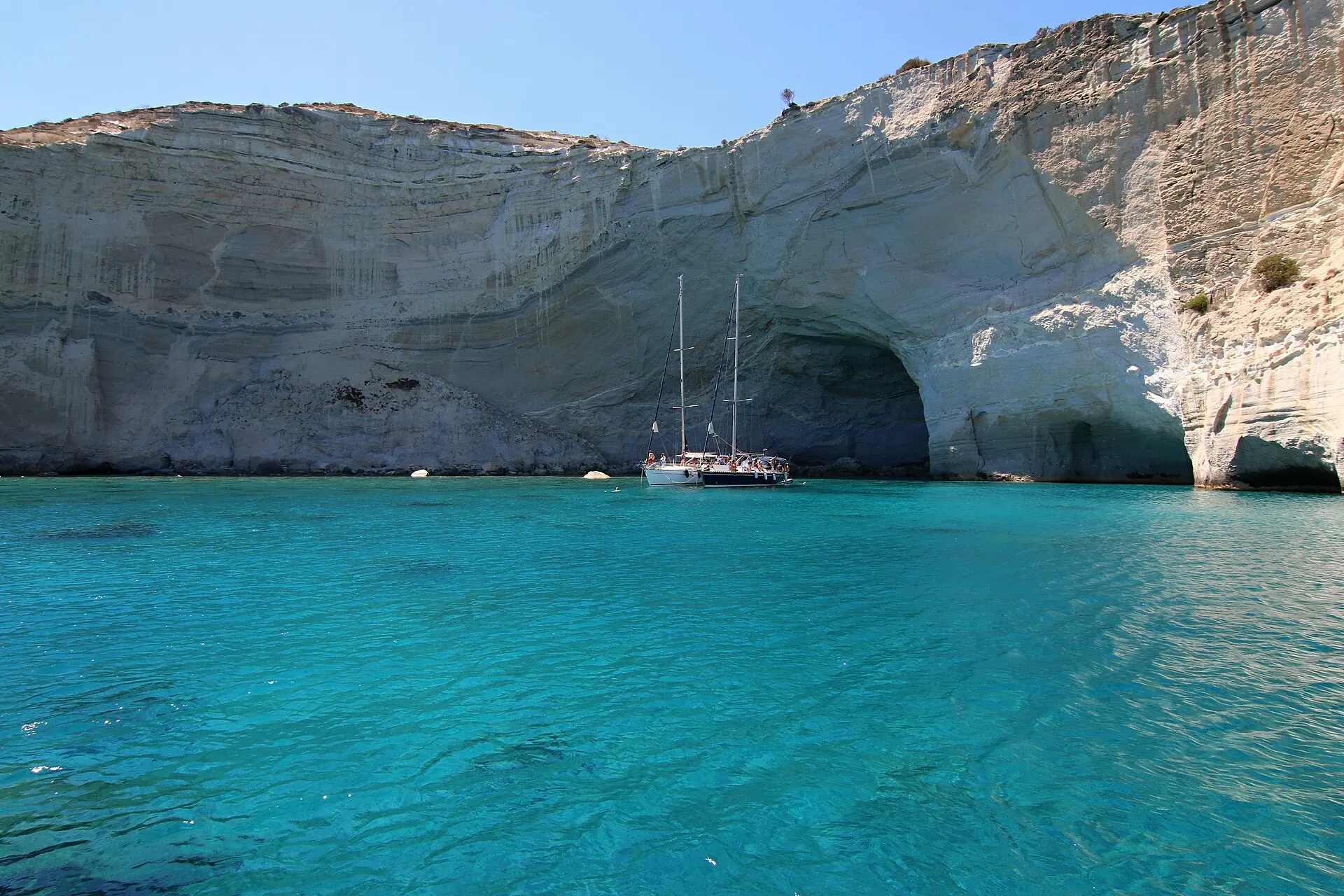
The highlight of Milos is seen from the water. On the south-west coast, Kleftiko is a cluster of white rock pillars, arches and sea caves where pirates once hid. It can be reached only by boat (or a long, rough hike). Boats anchor so you can swim through the arches. Most trips also visit Sykia, a cave with a collapsed roof that lets in a shaft of light, and the coloured cliffs of the south coast. Choose between half-day speedboats, catamaran cruises with lunch and sunset trips.
Polyaigos and Kimolos
North-east of Milos, Kimolos (810 residents, 2021 census) is a quiet island with a beautiful hilltop Chora, a fortified village and empty beaches. Ferries and a local service from Pollonia make it an easy day trip. Uninhabited Polyaigos, next to it, has some of the clearest turquoise bays in Greece and is reached only by boat, on full-day cruises from Adamas or Pollonia.
Mining heritage and geology
The Milos Mining Museum in Adamas tells the story of the island's minerals, from prehistoric obsidian to modern bentonite. On the north-east coast, the abandoned sulphur mines at Paliorema (Thiorichia) are an eerie ruin of rusting machinery above a sulphur-yellow beach, reached by a dirt road and a walk, or by boat. Geology tours explain the volcanic landscape.
Milos: geology and volcano half-day morning tour
A morning tour explaining the volcanic landscape and mineral history of Milos.
Check availabilityBook via GetYourGuideTour listings are on GetYourGuide. Prices, times and cancellation terms are shown live on each listing and can change; AegeanSea.com may earn a commission at no extra cost to you.
Food
Milos cooks well. Look for pitarakia (small fried cheese pies), karpouzopita (a watermelon pie), local manoura and ladotyri cheeses, and fresh fish in Pollonia, Klima and Adamas. Plaka has some of the most interesting restaurants in the Cyclades for its size. Book in July and August.
Where to stay, in short
Adamas is the port and the practical base, with restaurants, boat-trip departures and buses. Plaka and Trypiti are hilltop villages with sunset views and atmosphere. Pollonia in the north-east is a relaxed fishing village with a beach, close to Kimolos. See where to stay on Milos.
Sample plans
- 3 days: day 1, Adamas, the Mining Museum, Plaka and the Kastro at sunset. Day 2, a Kleftiko boat day. Day 3, Sarakiniko at sunrise, the catacombs and theatre, Klima, and a south-coast beach.
- 5 days: add Polyaigos and Kimolos, Pollonia and Papafragas, Firopotamos and Mandrakia, and a western dirt-road beach day by 4x4.
- Hopping: Sifnos is about 35–45 minutes away by fast ferry, and Santorini about 1 h 50 min. See getting to Milos.
Getting around
Buses run in summer from Adamas to Plaka, Pollonia, Paleochori, Provatas and Sarakiniko. To reach most beaches and villages, rent a car, scooter or ATV. The west of the island is on dirt roads, so check your rental conditions. Parking in Plaka is outside the village.
Plan your visit to Milos
- Things to doMilos's best experiences, ranked: a boat day to Kleftiko and Sykia, Sarakiniko at…
- ToursThe best Milos tours on GetYourGuide compared: Kleftiko and Sykia day cruises, half-day…
- Getting thereMilos ferries by operator with published crossing times from Piraeus, Lavrio and the…
- Where to stayMilos's bases compared: practical Adamas by the port, hilltop Plaka and Trypiti with…
- When to goMilos month by month: long-term temperatures and rainfall, sea temperature, the north…
Frequently asked questions
Is Milos worth visiting?
Yes. For beaches, coastal scenery and boat trips it is one of the best islands in Greece, and it has excellent food and characterful villages. It is busier than it used to be in August, so June and September are ideal.
Can you get to Kleftiko by land?
Only on a long, rough hike. Almost everyone visits by boat, and the arches and caves are best seen from the water.
Where was the Venus de Milo found?
In 1820, in a field near the ancient theatre below Plaka and Trypiti. The original is in the Louvre in Paris, and a replica stands in the Milos Archaeological Museum.
Do I need a car on Milos?
It helps a lot. Buses link the main villages and some beaches in summer, but a car or ATV is the way to reach most of the coast.
Sources and official information
Facts were checked against these official sources in November 2026. Opening hours, prices and timetables change, so confirm before you go.
- en.wikipedia.org
- en.wikipedia.org
- en.wikipedia.org
- en.wikipedia.org
- en.wikipedia.org
- cyclades.culture.gov.gr
- discovergreece.com
- ferryhopper.com
AegeanSea.com is an independent guide, not the official site of any tourism board, government, port authority or ferry operator. Some links are affiliate links: tours go to GetYourGuide and stays go to Booking.com, and we may earn a commission at no extra cost to you.