In short
- Bronze Age: the Early Cycladic culture (about 3200–2000 BC) and the Minoan palace civilisation of Crete (about 1900–1450 BC); Crete's six Minoan Palatial Centres joined the UNESCO World Heritage List in July 2025.
- The Thera eruption buried Akrotiri on Santorini in the late 17th or 16th century BC – one of the largest volcanic eruptions of the last 10,000 years; its exact date is still debated.
- Classical and Hellenistic: Delos, the sanctuary of Apollo; the Ionian cities of Miletus, Priene and Ephesus; Pergamon; Rhodes and its Colossus.
- Medieval to modern: Byzantine monasteries, the Venetian Duchy of the Archipelago (from 1207), the Knights of St John on Rhodes (1309–1522), Ottoman rule, the Greek War of Independence (1821) and the 1923 population exchange.
- Nine UNESCO sites around the Aegean are covered here, from Delos to Ephesus.
Why history is everywhere in the Aegean
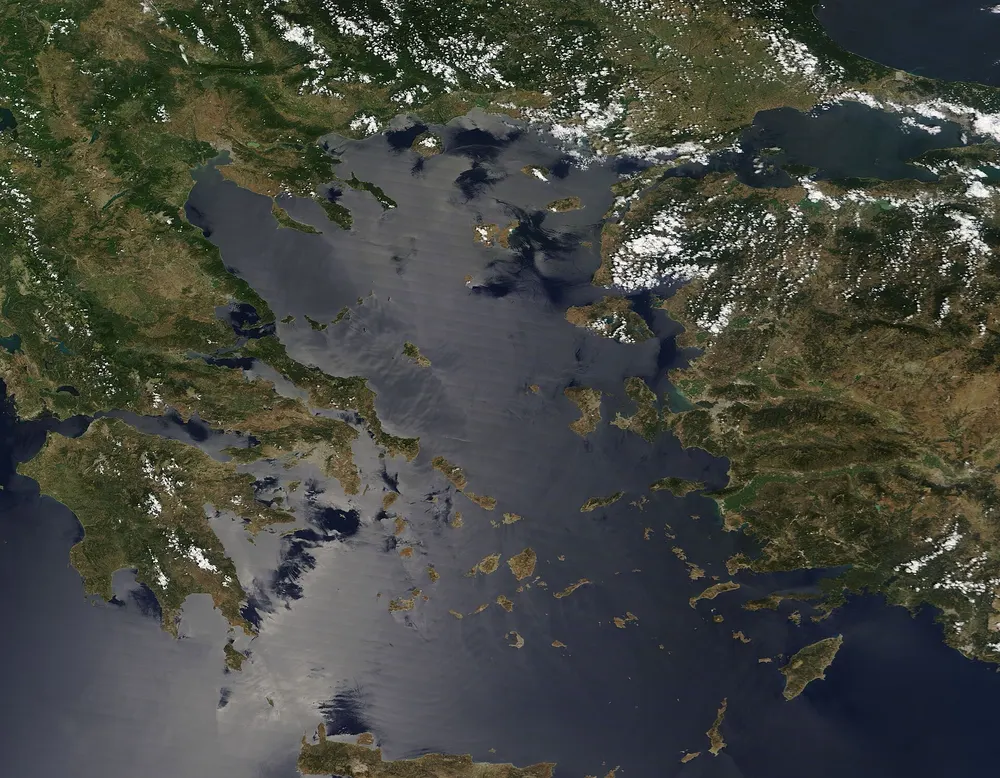
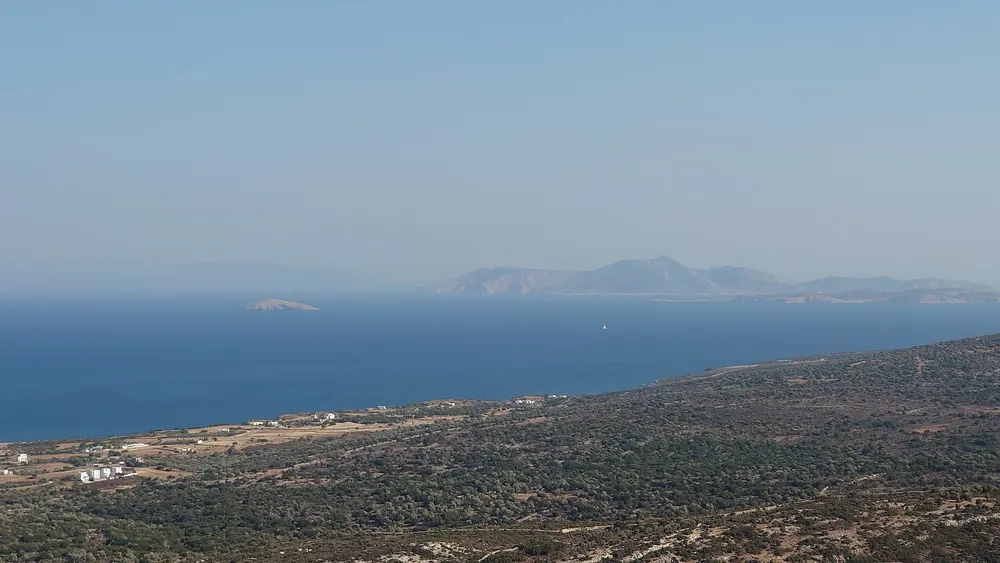
The Aegean is a sea of short distances: from almost any island you can see another, and the coast of Asia Minor is never far away. That made it one of the earliest seafaring worlds. People were sailing to Milos to collect obsidian for stone tools more than ten thousand years ago, long before farming reached the islands. From then on, ideas, goods and peoples moved constantly across the water – and every power that rose in the eastern Mediterranean, from Athens to Rome, Venice and the Ottomans, fought to control it.
This guide is a neutral overview. It follows the main eras and points you to the places where you can stand in them, with a timeline at the end.
The Bronze Age: Cycladic islanders and Minoan Crete
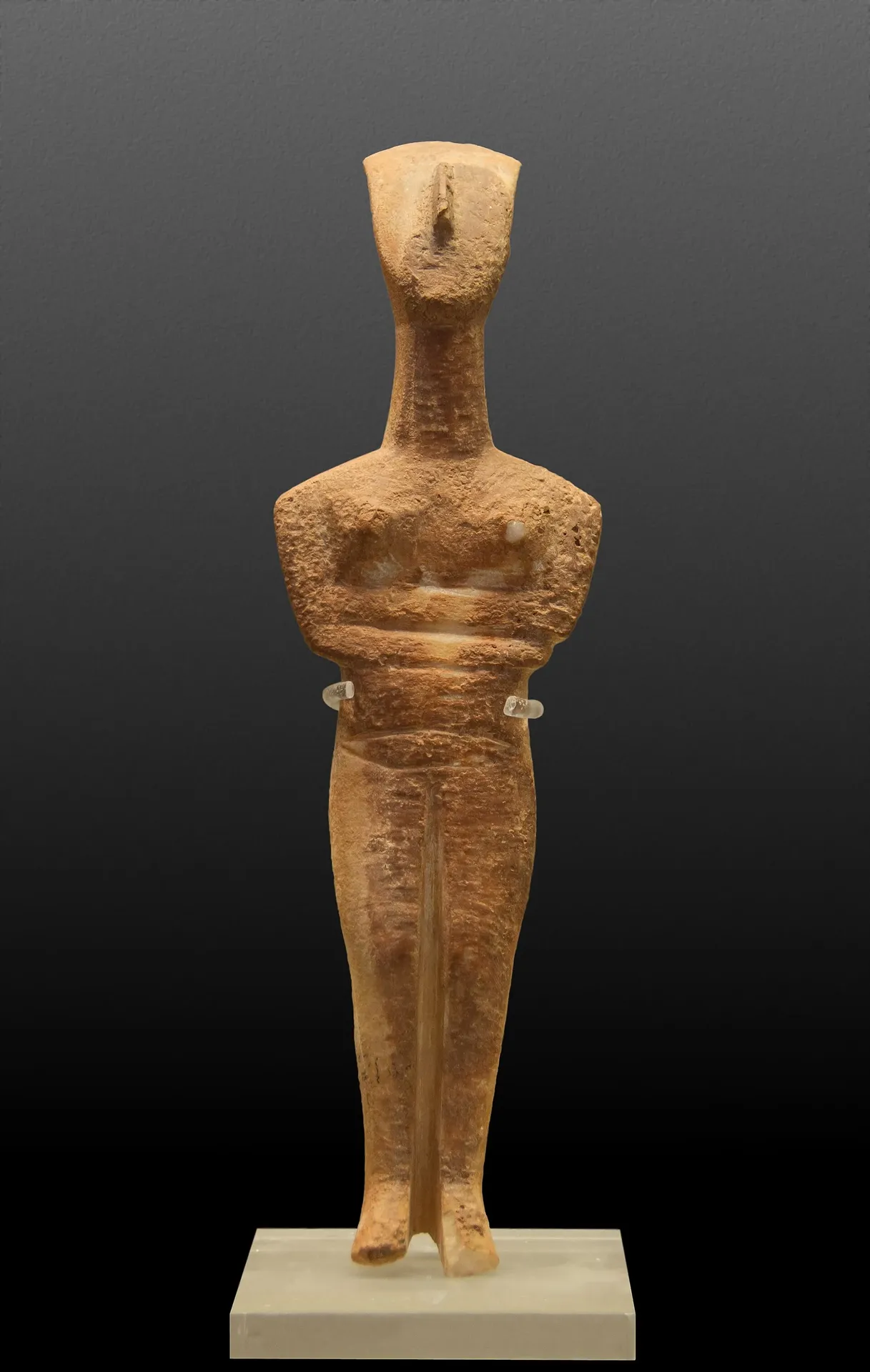
In the third millennium BC the Early Cycladic culture flourished on the small islands of the central Aegean. Its people left little architecture but extraordinary marble figurines – mostly female, folded-arm figures, simplified to pure geometry – which influenced 20th-century artists such as Brâncuși and Modigliani. The best collections are in the Museum of Cycladic Art and the National Archaeological Museum in Athens, and in the Naxos museum; the islet of Keros, opposite Koufonisia, was a major ritual centre.
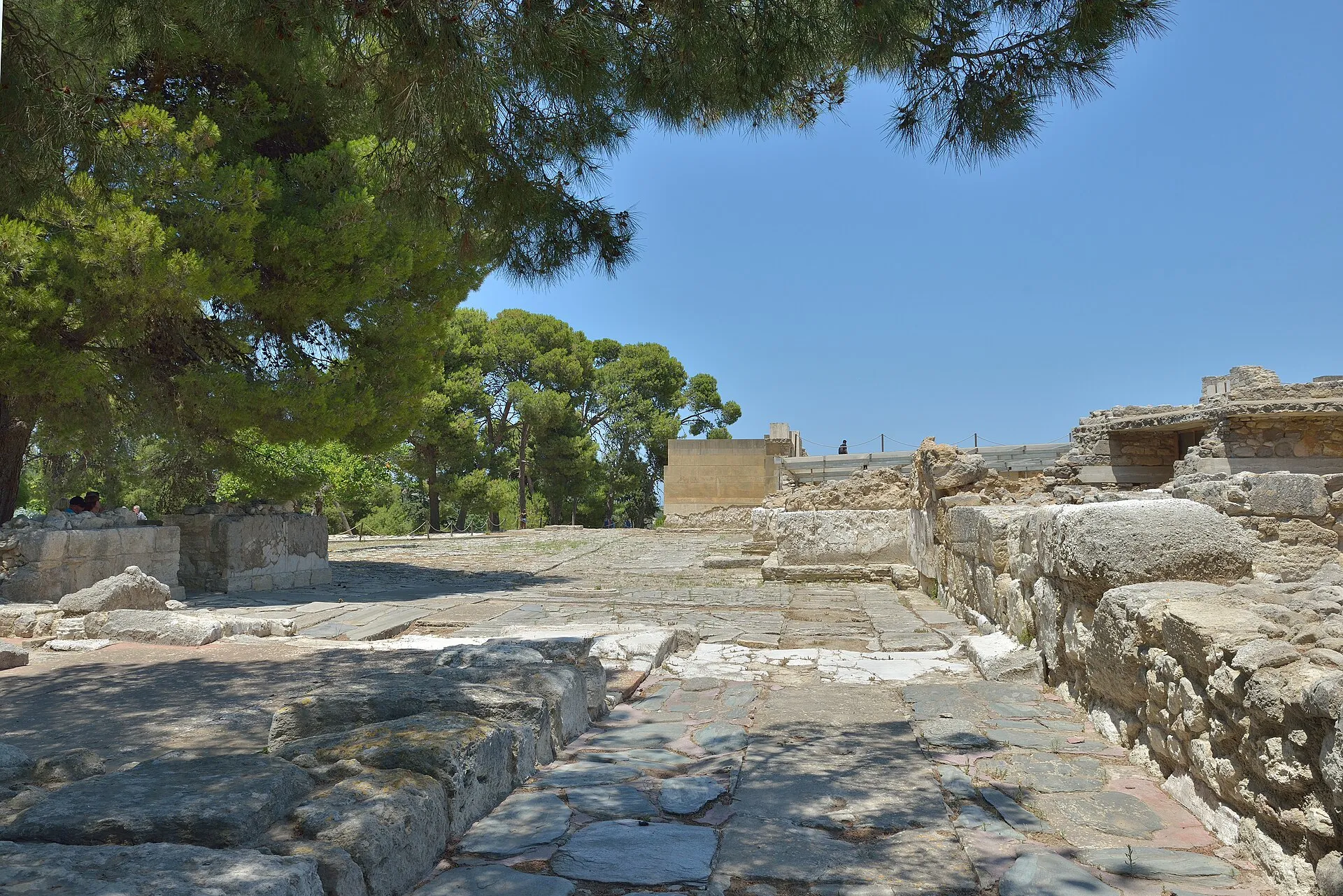
On Crete, the Minoans (named by the archaeologist Arthur Evans after the mythical King Minos) built palace complexes from about 1900 BC at Knossos, Phaistos, Malia and Zakros: multi-storey buildings around central courts, with storerooms, workshops, frescoes and drainage systems. They wrote in the still-undeciphered Linear A script, traded across the Mediterranean and influenced the islands around them. After about 1450 BC Mycenaean Greeks from the mainland took over Knossos, writing in Linear B, an early form of Greek. In July 2025 UNESCO inscribed the Minoan Palatial Centres – Knossos, Phaistos, Malia, Zakros, Zominthos and Kydonia – on the World Heritage List.
Visit Knossos and the Heraklion Archaeological Museum, which holds the finest Minoan frescoes and objects.
Heraklion Archaeological Museum and Knossos palace guided tour (half day)
Half-day guided visit to the Heraklion museum and the palace of Knossos.
Check availabilityBook via GetYourGuideCrete: Palace of Knossos archaeological site entrance ticket
Entrance ticket to the Palace of Knossos, for visiting at your own pace.
Check availabilityBook via GetYourGuideTour listings are on GetYourGuide. Prices, times and cancellation terms are shown live on each listing and can change; AegeanSea.com may earn a commission at no extra cost to you.
The eruption of Thera
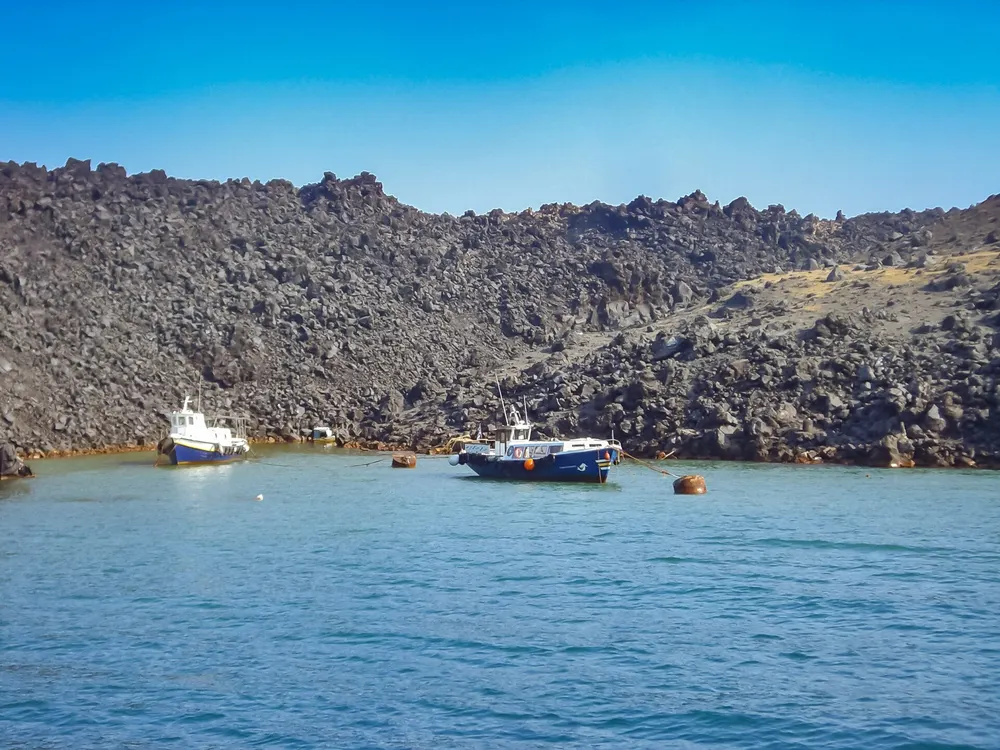
Sometime in the late 17th or 16th century BC the volcano of Thera (Santorini) exploded in one of the largest eruptions of the past ten thousand years. The centre of the island collapsed into the sea, forming the caldera you see today, and thick layers of pumice and ash buried the prosperous Bronze Age town at Akrotiri. Its inhabitants seem to have left in time – few human remains have been found – but its multi-storey houses, with their wall paintings, survived under the ash.
The date is one of archaeology's great debates: radiocarbon dating points to the late 17th century BC, while traditional archaeological chronologies favoured the 16th. Theories linking the eruption to the decline of Minoan Crete, or to the legend of Atlantis, remain speculative. Akrotiri is one of the most remarkable sites in the Aegean; see Santorini.
Archaic and Classical: Delos and the Ionian cities
In the first millennium BC Greek cities spread across the islands and the coast of Asia Minor. Ionia – the coast around Miletus, Priene, Ephesus and the islands of Samos and Chios – was the most advanced region of the Greek world in the 6th century BC: here Thales and the Milesian thinkers began Greek philosophy, Pythagoras was born on Samos, and the Temple of Artemis at Ephesus counted among the Seven Wonders.
Delos, tiny and barren, was sacred as the birthplace of Apollo and Artemis. After the Persian Wars it became the treasury of the Athenian-led Delian League (478 BC) and later, in the 2nd century BC, a busy free port and slave market. It was sacked in 88 BC and declined; today the entire island is an archaeological site and a UNESCO World Heritage Site (1990), visited by boat from Mykonos.
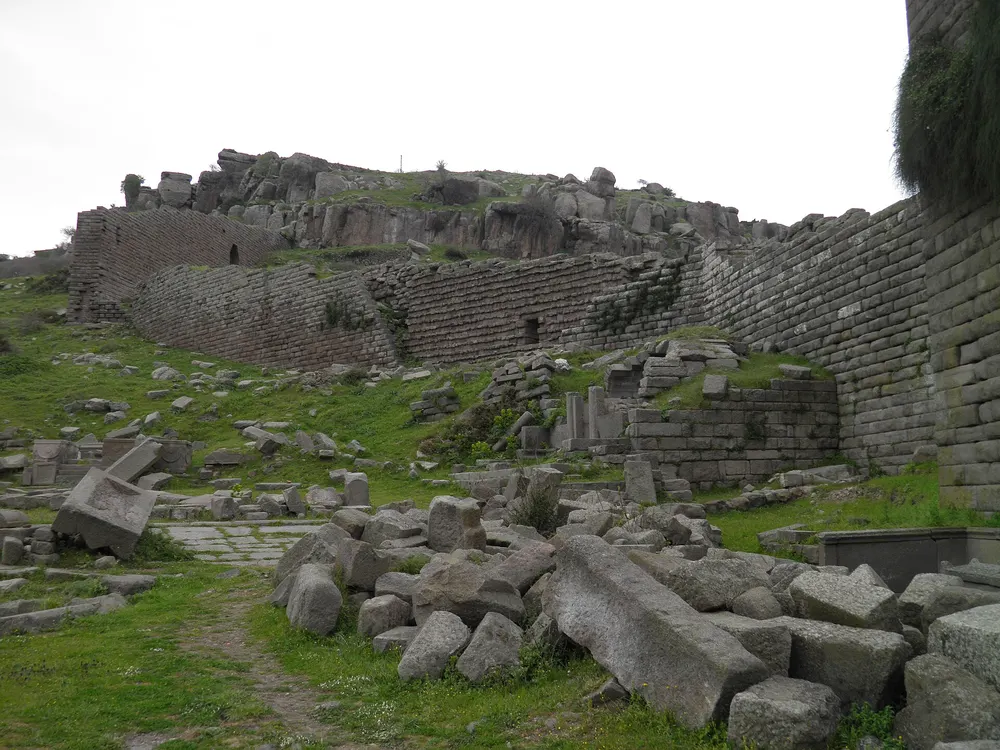
Rhodes became a major naval and trading power and built the bronze Colossus, another Wonder, which fell in an earthquake in the 3rd century BC. Pergamon rose under the Attalid kings into a centre of learning before being bequeathed to Rome in 133 BC. Halicarnassus (Bodrum) gave the world the Mausoleum.
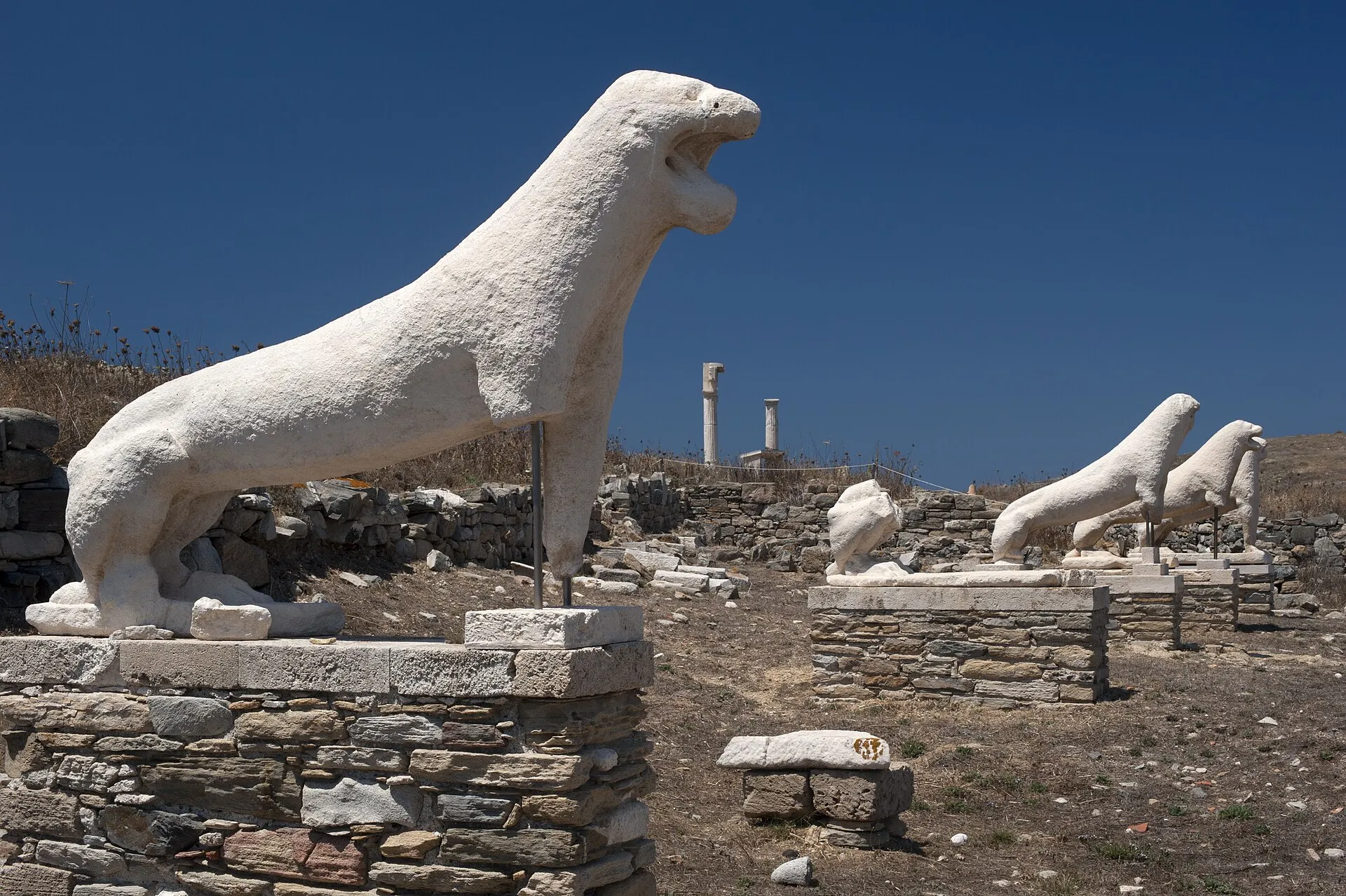
The marble lions of Delos, dedicated by the people of Naxos in the 7th century BC (the originals are in the site museum).
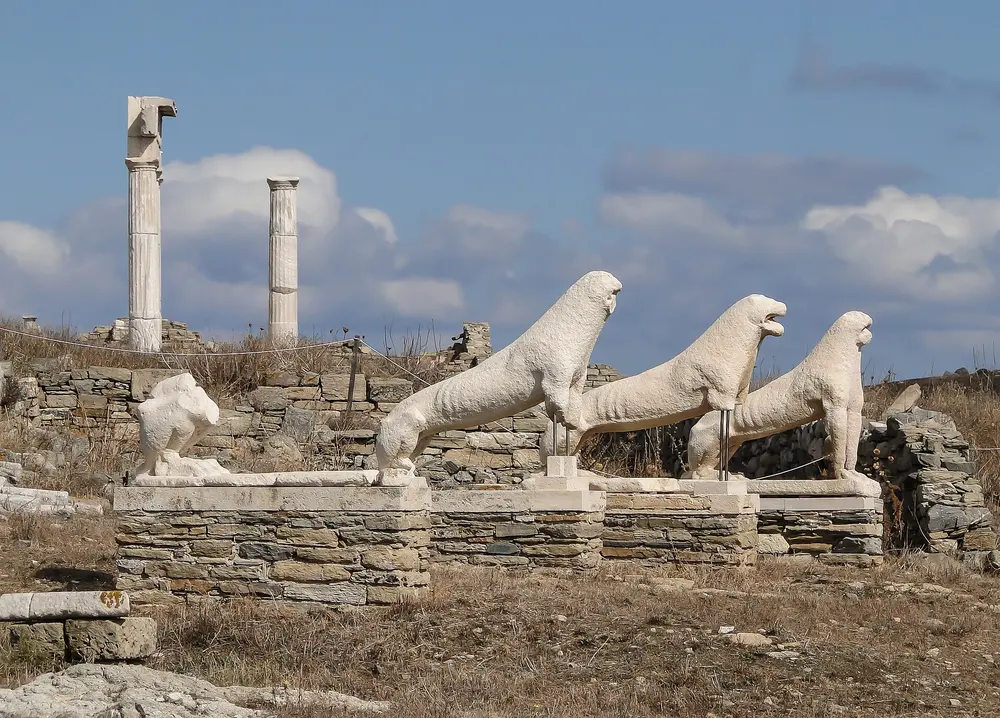
Mykonos: ancient Delos tour
Boat from Mykonos to Delos with a guided tour of the sanctuary of Apollo, the Terrace of the Lions and the merchants' houses.
Check availabilityBook via GetYourGuideEphesus: full-day tour to the House of Mary and Temple of Artemis
Full-day tour of ancient Ephesus with the House of the Virgin Mary and the Temple of Artemis site.
Check availabilityBook via GetYourGuidePergamon acropolis and Asclepion tour
A tour of the acropolis and the Asclepion, the healing sanctuary, of Pergamon.
Check availabilityBook via GetYourGuideTour listings are on GetYourGuide. Prices, times and cancellation terms are shown live on each listing and can change; AegeanSea.com may earn a commission at no extra cost to you.
Roman and Byzantine Aegean
Under Rome, Ephesus became the capital of the province of Asia and one of the largest cities of the empire; the Library of Celsus and the Terrace Houses date from this time. Christianity spread early through the Aegean: Paul preached at Ephesus, and tradition holds that John wrote the Book of Revelation on Patmos.
For a thousand years the Aegean was part of the Byzantine Empire. Its legacy is in the churches and monasteries: Nea Moni on Chios (11th century) with its gold-ground mosaics, the fortified Monastery of St John on Patmos (founded 1088), the Panagia Ekatontapiliani on Paros, and countless frescoed chapels on Naxos and Crete.
Patmos: guided tour to St John's Monastery and the Cave of the Apocalypse
Guided visit to the two UNESCO-listed holy sites of Patmos.
Check availabilityBook via GetYourGuideTour listings are on GetYourGuide. Prices, times and cancellation terms are shown live on each listing and can change; AegeanSea.com may earn a commission at no extra cost to you.
Venetians, Genoese and Knights
The Fourth Crusade of 1204 broke up the Byzantine Empire. Venice took Crete, which it held until 1669, fortifying Heraklion (Candia), Chania and Rethymno and the island fortress of Spinalonga. In 1207 the Venetian Marco Sanudo founded the Duchy of the Archipelago, based on Naxos; its Catholic lords built the kastro quarters and towers you still see on Naxos, Paros, Sifnos, Folegandros and Antiparos. The Genoese ruled Chios, where they organised the mastic trade and built the fortified mastic villages, and Lesbos.
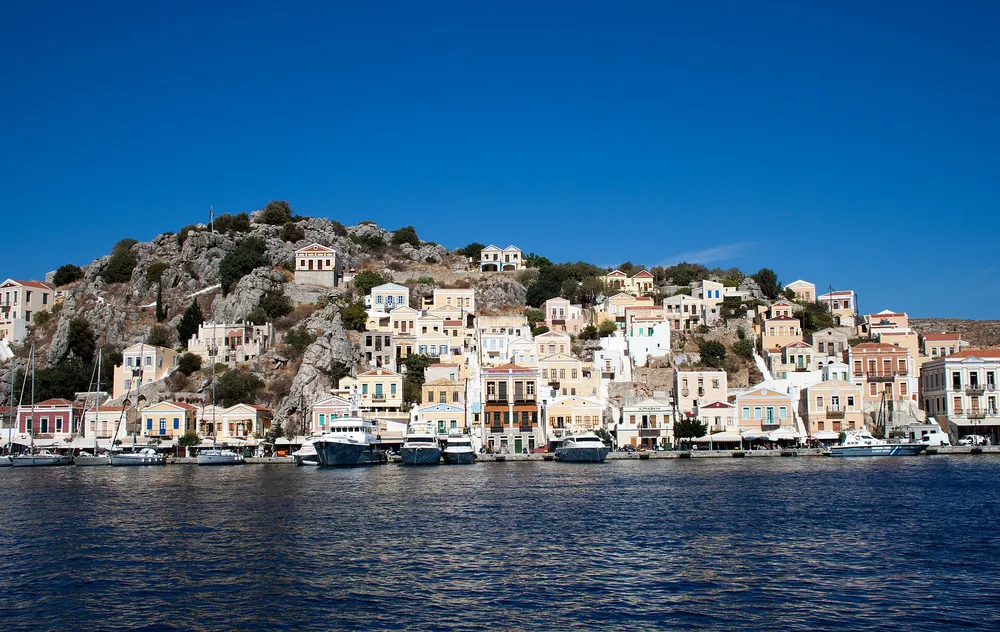
In 1309 the Knights Hospitaller of St John took Rhodes and built the walled city, the Palace of the Grand Master and the Street of the Knights, as well as castles on Kos and at Bodrum (the Castle of St Peter). The Medieval City of Rhodes is a UNESCO World Heritage Site (1988).
Boat cruise and guided tour of Spinalonga from Agios Nikolaos
Boat from Agios Nikolaos with a guided tour of Spinalonga.
Check availabilityBook via GetYourGuide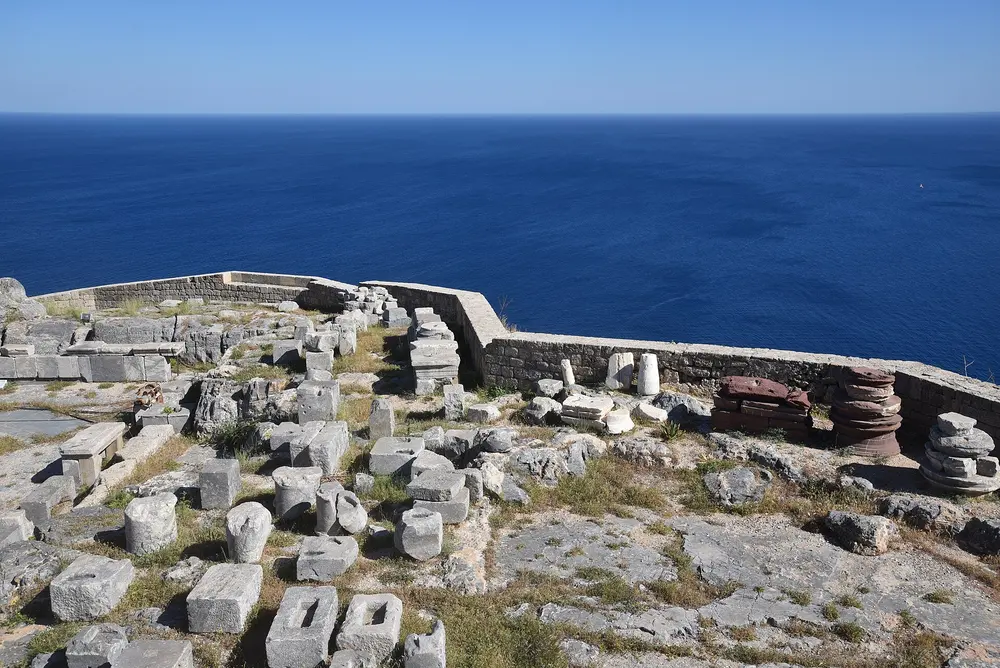
Acropolis of Lindos entrance ticket with AR audiovisual tour
Entry ticket for the Acropolis of Lindos with an augmented-reality audiovisual guide.
Check availabilityBook via GetYourGuideTour listings are on GetYourGuide. Prices, times and cancellation terms are shown live on each listing and can change; AegeanSea.com may earn a commission at no extra cost to you.
The Ottoman centuries
The Ottoman Empire, which took Constantinople in 1453, absorbed the Aegean over two centuries: Rhodes fell after a famous siege in 1522, the Duchy of the Archipelago was absorbed in the 16th century, and Candia (Heraklion) surrendered in 1669 after a siege of more than twenty years. Many islands kept a large degree of self-government in exchange for taxes, and Greek-owned merchant shipping grew rich in the 18th century, above all on Hydra, Spetses, Psara and Andros. Mosques, fountains and hammams survive in Rhodes, Kos, Chania and Rethymno; on the Anatolian coast, Ottoman towns such as Birgi and Şirince keep their old houses.
Independence, wars and exchange: the making of modern borders
In 1821 the Greek War of Independence began. The island fleets of Hydra, Spetses and Psara played a central role at sea; the island of Chios suffered a massacre by Ottoman forces in 1822. The new Greek state, recognised in 1830, included the Cyclades and the Saronic islands. Over the following century Greece expanded: the North Aegean islands and Crete (which formally united with Greece in 1913) came after the Balkan Wars of 1912–13; the Dodecanese, occupied by Italy from 1912, passed to Greece by the Paris Peace Treaty of 1947 and were incorporated in 1948.
On the eastern shore, the Greek–Turkish War of 1919–22 ended with the burning of Smyrna (İzmir) in 1922 and the founding of the Republic of Türkiye in 1923. The Treaty of Lausanne (1923) included a compulsory exchange of populations: Orthodox Christians from Anatolia went to Greece and Muslims from Greece to Türkiye. Many island towns, from Mytilene to Chios, and coastal towns such as Ayvalık and Alaçatı still show the traces in their architecture and food.
In the second half of the 20th century tourism transformed the islands. Today Greece and Türkiye share the Aegean as neighbours, with ferry links, shared dishes and a long common history.
UNESCO World Heritage Sites around the Aegean
| Site | Where | Inscribed | Read more |
|---|---|---|---|
| Medieval City of Rhodes | Rhodes | 1988 | Rhodes |
| Delos | Off Mykonos | 1990 | Mykonos |
| Monasteries of Daphni, Hosios Loukas and Nea Moni of Chios | Chios (and mainland) | 1990 | North Aegean |
| Pythagoreion and Heraion of Samos | Samos | 1992 | North Aegean |
| Archaeological Site of Troy | Çanakkale | 1998 | Türkiye's coast |
| Chora, Monastery of St John and Cave of the Apocalypse | Patmos | 1999 | Dodecanese |
| Pergamon and its Multi-Layered Cultural Landscape | Bergama | 2014 | Türkiye's coast |
| Ephesus | Selçuk | 2015 | Kuşadası and Ephesus |
| Minoan Palatial Centres | Crete | 2025 | Crete |
Timeline
- before 10,000 BC
Obsidian from Milos
Seafarers carry Milos obsidian to the Greek mainland.
- c. 3200–2000 BC
Early Cycladic culture
Marble figurines; Keros as a ritual centre.
- c. 1900 BC
First Minoan palaces
Knossos, Phaistos, Malia and Zakros.
- late 17th–16th c. BC
Eruption of Thera
Akrotiri buried; the caldera forms.
- c. 1450 BC
Mycenaeans at Knossos
Linear B, an early form of Greek, appears.
- 6th c. BC
Ionian enlightenment
Thales of Miletus; Pythagoras of Samos.
- 478 BC
Delian League
Delos becomes the League's treasury.
- 133 BC
Pergamon to Rome
The last Attalid king bequeaths his kingdom to Rome.
- 1088
Monastery of St John, Patmos
Founded by the monk Christodoulos.
- 1207
Duchy of the Archipelago
Marco Sanudo establishes Venetian rule on Naxos.
- 1309–1522
Knights of St John on Rhodes
Until the Ottoman siege of 1522.
- 1669
Fall of Candia
Crete passes from Venice to the Ottomans.
- 1821
Greek War of Independence
Island fleets of Hydra, Spetses and Psara at sea.
- 1913
Crete unites with Greece
After the Balkan Wars; North Aegean islands also join Greece.
- 1923
Treaty of Lausanne
Republic of Türkiye founded; population exchange.
- 1947–48
Dodecanese to Greece
Ceded by Italy under the Paris Peace Treaty.
- 2025
Minoan Palatial Centres
Inscribed on the UNESCO World Heritage List.
See history with a guide
Ancient sites make much more sense with someone who can read the stones. These guided visits cover the Aegean's greatest sites.
Frequently asked questions
What is the most important ancient site in the Aegean?
There is no single answer, but Knossos on Crete, Delos off Mykonos, Akrotiri on Santorini and Ephesus near Kuşadası are the essential four.
Was Santorini Atlantis?
Some have linked Plato's Atlantis story to the Thera eruption, but there is no evidence that Plato was describing Santorini; most historians treat Atlantis as a philosophical myth.
Why are there Venetian castles on Greek islands?
After 1204 Venice and Venetian nobles ruled Crete and many Cyclades for centuries; they built kastro quarters, towers and harbour fortresses.
Sources and official information
Facts were checked against these official sources in November 2026. Opening hours, prices and timetables change, so confirm before you go.
- whc.unesco.org
- whc.unesco.org
- whc.unesco.org
- whc.unesco.org
- whc.unesco.org
- whc.unesco.org
- whc.unesco.org
- whc.unesco.org
- whc.unesco.org
- britannica.com
- cycladic.gr
- odysseus.culture.gr
AegeanSea.com is an independent guide, not the official site of any tourism board, government, port authority or ferry operator. Some links are affiliate links: tours go to GetYourGuide and stays go to Booking.com, and we may earn a commission at no extra cost to you.