In short
- Islands connect in chains, not in a grid. The ferry network runs along a few lines out of Athens's ports (Piraeus, Rafina, Lavrio) and between neighbouring islands. Pick islands that sit on the same line and your trip flows; pick islands on different lines and you spend days going back through Piraeus.
- Easiest first trip: Athens → Paros → Naxos → Santorini, or Athens → Mykonos → Naxos → Santorini. Each hop is roughly 1–3 hours by high-speed boat in summer.
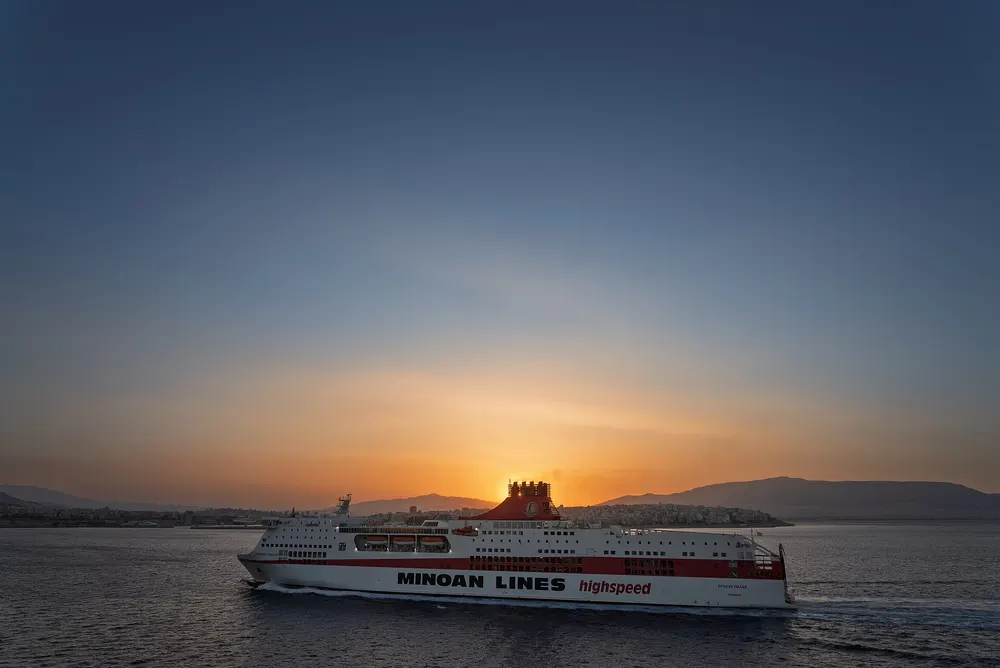
- Two kinds of ferry: big conventional ferries (Blue Star Ferries, Minoan Lines and others) are slower but steadier and run all year; high-speed catamarans (Seajets and others) halve the time but run mainly April–October and are the first to stop when the meltemi blows.
- Published times, November 2026: Piraeus–Mykonos 2 h 35 min (Seajets) to 5 h 50 min (Blue Star); Piraeus–Santorini 5 h 5 min to 12 h 5 min; Mykonos–Santorini 2 h–3 h 5 min (Seajets, April–October 2027); Heraklion–Santorini 1 h 35 min (Seajets, summer) or about 3 h 15 min (Blue Star) – timetables on gtp.gr, updated 21 November 2026.
- Greece to Türkiye: short international ferries link Kos–Bodrum (about 30–45 min), Rhodes–Marmaris (about 1 h), Samos–Kuşadası (about 45 min–1.5 h) and Chios–Çeşme (about 30–45 min). You leave the Schengen area each time – carry your passport.
How Aegean island hopping really works
Greece's ferry network is not a web where every island links to every other. It is a set of lines. Most begin at Piraeus, the main port of Athens, or at Rafina and Lavrio on the east coast of Attica, and run out through a chain of islands before turning round. Ships call at the same islands in the same order, so neighbouring islands on one line are connected several times a day in summer, while two islands on different lines may have no direct boat at all.
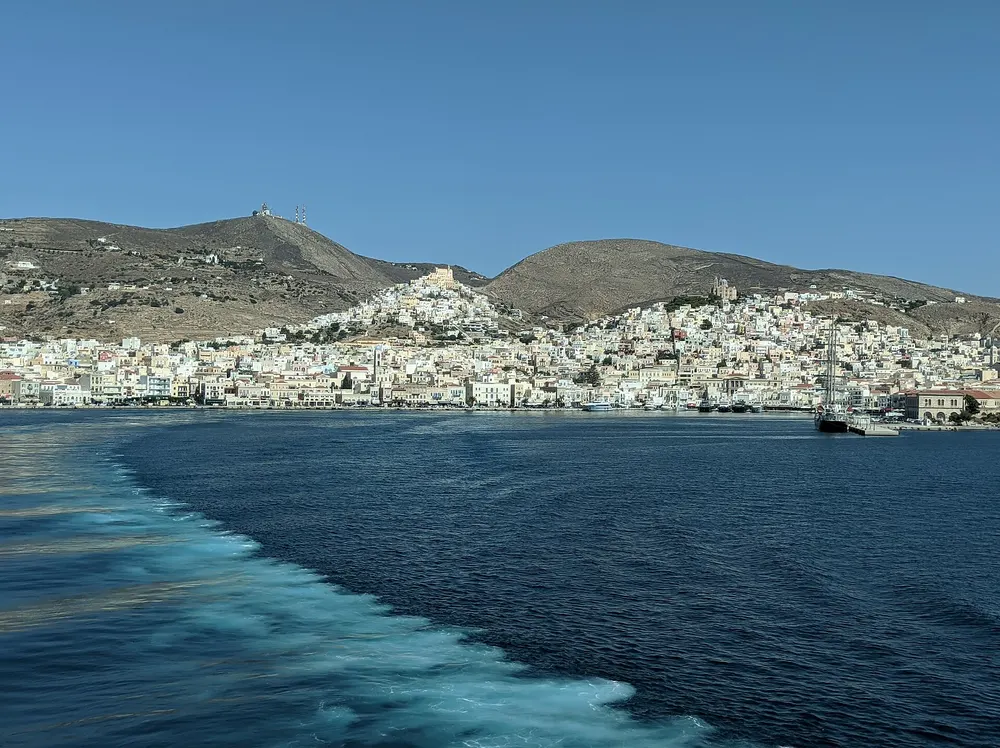
That single fact decides most good itineraries. Paros, Naxos, Ios and Santorini sit one after another on the main central Cyclades line, which is why they make the classic route. Mykonos connects easily to Tinos, Syros, Paros and Naxos. Milos, Sifnos, Serifos and Folegandros form the western Cyclades line. The Dodecanese (Rhodes, Kos, Kalymnos, Patmos and Symi) have their own long line from Piraeus plus a fast local catamaran service between the islands. The Sporades (Skiathos, Skopelos, Alonissos) are reached from Volos on the mainland, not from Piraeus. The Saronic islands (Aegina, Poros, Hydra, Spetses) are a short hop from Piraeus and work best as their own mini-trip.
Hub islands make the joins. Paros and Naxos are the busiest crossroads in the Cyclades; Santorini links the Cyclades to Crete (Heraklion); Rhodes and Kos link the Dodecanese to Türkiye; Syros is the administrative capital of the Cyclades and a useful transfer point. When a route looks impossible on the map, the answer is usually to change boats at one of these.
Read the regional guides to see which islands belong together, and the transportation guide for airports, ports and ticketing in detail.
- Main Athens ports
- Piraeus (most lines), Rafina (Andros, Tinos, Mykonos, Naxos, Paros), Lavrio (Kea, Kythnos and some western Cyclades)
- Cyclades hubs
- Paros, Naxos, Mykonos, Syros
- Crete link
- Heraklion–Santorini (summer high-speed, year-round conventional)
- Türkiye links
- Kos, Rhodes, Samos, Chios, Lesbos
- Sporades gateway
- Volos (mainland), plus Skiathos airport
- Peak sailing season
- Late May to late September; many high-speed routes run April–October only
The island chains at a glance
Use this table to group islands that share ferry lines. Islands in the same row are the ones you can hop between without returning to Athens.
| Chain | Islands | Main mainland port | Works well with |
|---|---|---|---|
| Central Cyclades | Paros, Naxos, Ios, Santorini, Small Cyclades (Koufonisia, Iraklia, Schinoussa), Amorgos | Piraeus, Rafina | Mykonos via Paros or Naxos; Crete via Santorini |
| Northern Cyclades | Andros, Tinos, Mykonos, Syros | Rafina, Piraeus | Paros and Naxos |
| Western Cyclades | Kythnos, Serifos, Sifnos, Kimolos, Milos, Folegandros | Piraeus | Santorini via Folegandros or Ios (seasonal) |
| Crete | Heraklion and the east, Chania and the west | Piraeus (overnight ferries) | Santorini, Milos (seasonal), Rhodes via Karpathos |
| Dodecanese | Rhodes, Symi, Kos, Kalymnos, Leros, Patmos, Karpathos | Piraeus (long overnight) | Türkiye (Bodrum, Marmaris); Samos via Patmos |
| North Aegean | Samos, Ikaria, Chios, Lesbos, Lemnos | Piraeus, Kavala, Thessaloniki | Türkiye (Kuşadası, Çeşme, Ayvalık) |
| Sporades | Skiathos, Skopelos, Alonissos, Skyros (separate, from Kymi) | Volos | Each other only |
| Saronic Gulf | Aegina, Agistri, Poros, Hydra, Spetses | Piraeus | Each other; Athens day trips |
Ferry operators and published crossing times
These are the crossing times printed in the operators' timetables as collected by Greek Travel Pages (gtp.gr), updated 21 November 2026 for sailings until autumn 2027. They are scheduled times – real crossings can run 15–60 minutes late in a busy port or in wind – and the shortest times are for direct sailings; a boat with four stops on the way takes much longer.
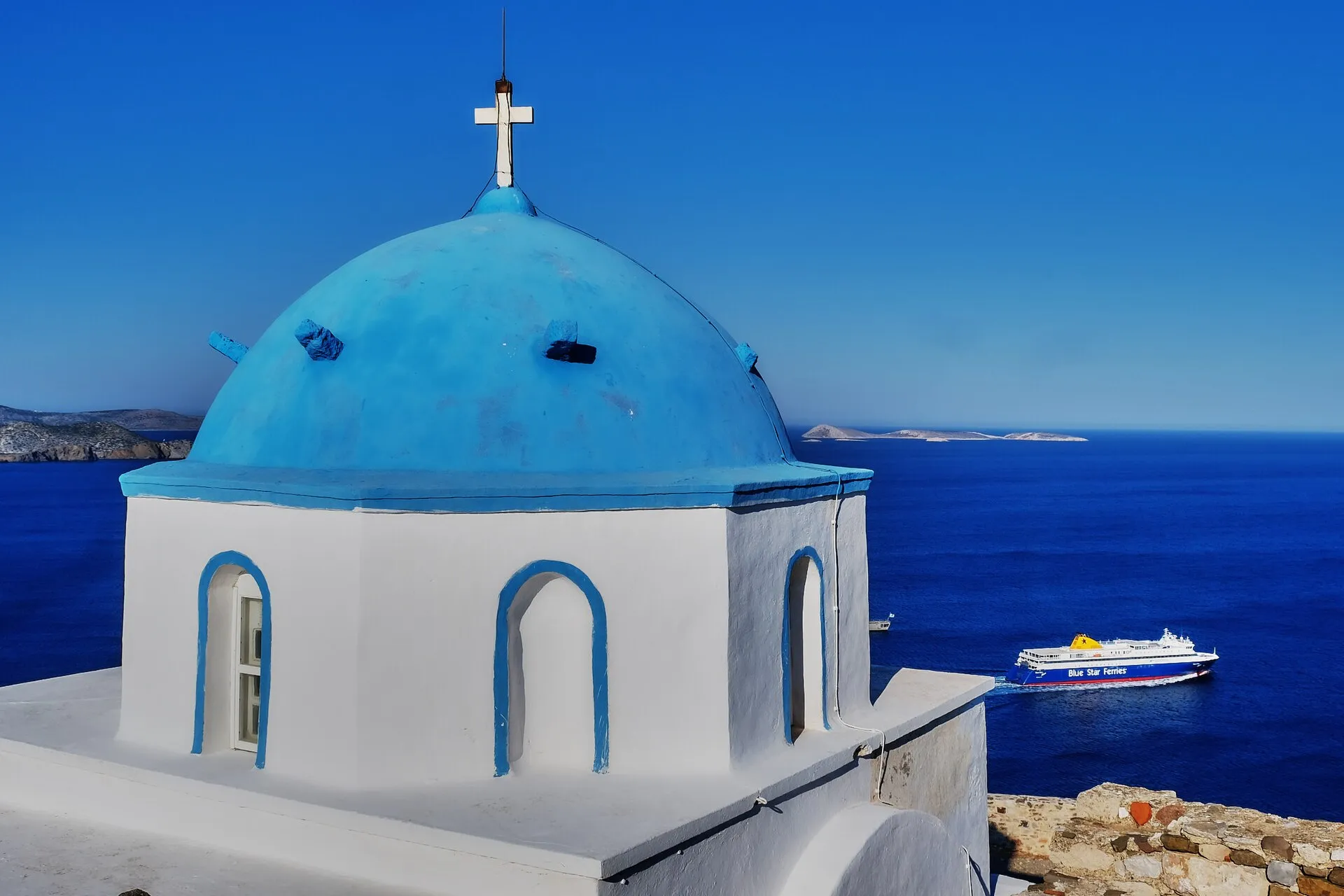
- Blue Star Ferries (Attica Group): large conventional car ferries, year-round, the backbone of the Cyclades and Dodecanese lines. Slow but steady in a swell, with outdoor decks and cafeterias.
- Seajets: the largest fleet of high-speed catamarans (Champion Jet, Worldchampion Jet, Eurochampion Jet and others). Fastest times in the Cyclades and to Crete; most routes are seasonal and the boats are more affected by rough sea.
- Minoan Lines and ANEK: overnight ferries from Piraeus to Heraklion and to Chania (Souda) on Crete, with cabins.
- Hellenic Seaways (Attica Group): conventional ferries such as Nissos Rodos to the Dodecanese and North Aegean, plus the Saronic high-speed catamarans to Poros, Hydra and Spetses.
- Dodekanisos Seaways: fast catamarans linking Rhodes, Symi, Kos, Kalymnos, Leros and Patmos.
- Fast Ferries, Golden Star Ferries and smaller operators fill in the Rafina routes and the small islands; local caïques run the very short hops (for example between Naxos and the Small Cyclades in summer).
| Route | High-speed (published) | Conventional (published) | Notes |
|---|---|---|---|
| Piraeus – Mykonos (Tourlos) | 2 h 35 min – 2 h 55 min (Seajets) | 4 h 35 min – 5 h 50 min (Blue Star) | Rafina–Mykonos is the other option; times vary with stops |
| Piraeus – Naxos | 3 h 25 min – 4 h 25 min (Seajets) | 5 h 5 min – 7 h (Blue Star) | Usually via Paros |
| Piraeus – Santorini | 5 h 5 min – 5 h 50 min (Seajets) | 5 h 30 min – 8 h 45 min (Blue Star); 9–12 h (Fast Ferries, many stops) | Measured Santorini→Piraeus on gtp.gr |
| Mykonos – Santorini | 2 h – 3 h 5 min (Seajets) | – | Seajets season 2 April – 21 October 2027 |
| Heraklion – Santorini | 1 h 35 min – 1 h 40 min (Seajets) | 3 h 15 min – 3 h 25 min direct (Blue Star) | Seajets from 3 April 2027; Blue Star in winter |
| Heraklion – Piraeus | 7 h 25 min – 7 h 40 min (Seajets) | 9 h 10 min – 11 h 10 min (Minoan Lines, Blue Star) | Overnight ferries have cabins |
| Piraeus – Rhodes | – | 12 h 50 min – 24 h 10 min (Blue Star, Hellenic Seaways) | Many visitors fly instead |
| Rhodes – Kos | 2 h 5 min (Dodekanisos Seaways, direct) | up to 5 h 50 min (Blue Star, with stops) | Catamarans also call at Symi, Kalymnos, Patmos |
| Piraeus – Hydra | 1 h 10 min – 1 h 45 min (Hellenic Seaways, Magic Sea Ferries) | – | Passenger-only catamarans; some via Poros |
| Piraeus – Aegina | about 35–40 min (hydrofoil) | about 1 h – 1 h 25 min | Several operators; very frequent |
| Volos – Skiathos | about 1 h 25 min (seasonal high-speed) | about 2 h 15 min – 2 h 30 min | Winter 2026–27: one Seajets ship, 2 h 17 min, five days a week |
Conventional ferry, high-speed catamaran or plane?
The choice is time against comfort and reliability. On a calm June morning a catamaran from Piraeus to Mykonos saves more than two hours. On a windy August afternoon the same catamaran rolls hard, may be delayed or cancelled, and the slow ferry is the one that sails. Many island hoppers mix both: fast boats for short hops between islands, big ferries for the long legs to and from Piraeus.
| Most reliableConventional ferry | High-speed catamaran | Small local boat | Domestic flight | |
|---|---|---|---|---|
| Speed | ●●○○○ | ●●●●○ | ●●○○○ | ●●●●● |
| Comfort in wind | ●●●●○ | ●●○○○ | ●○○○○ | ●●●●○ |
| Runs in winter | Yes, core routes | Mostly no | Few | Athens routes yes |
| Cars carried | Yes | Some (larger catamarans) | No | No |
| Outdoor deck | Yes | Usually no | Yes | – |
| Seasickness risklower is better | ●●○○○ | ●●●●○ | ●●●●○ | ○○○○○ |
| Best for | Long legs, families, cars, rough weeks | Short hops on calm days | Small Cyclades, day trips | Athens–island and Crete/Rhodes legs |
-
Conventional ferry
Most reliable- Speed
- ●●○○○
- Comfort in wind
- ●●●●○
- Runs in winter
- Yes, core routes
- Cars carried
- Yes
- Outdoor deck
- Yes
- Seasickness risk
- ●●○○○
- Best for
- Long legs, families, cars, rough weeks
-
High-speed catamaran
- Speed
- ●●●●○
- Comfort in wind
- ●●○○○
- Runs in winter
- Mostly no
- Cars carried
- Some (larger catamarans)
- Outdoor deck
- Usually no
- Seasickness risk
- ●●●●○
- Best for
- Short hops on calm days
-
Small local boat
- Speed
- ●●○○○
- Comfort in wind
- ●○○○○
- Runs in winter
- Few
- Cars carried
- No
- Outdoor deck
- Yes
- Seasickness risk
- ●●●●○
- Best for
- Small Cyclades, day trips
-
Domestic flight
- Speed
- ●●●●●
- Comfort in wind
- ●●●●○
- Runs in winter
- Athens routes yes
- Cars carried
- No
- Outdoor deck
- –
- Seasickness risk
- ○○○○○
- Best for
- Athens–island and Crete/Rhodes legs
Editorial judgement for summer sailings, as of November 2026.
Routes by length of trip
Every route below works on the summer timetable without backtracking. Leave at least two nights per island – one-night stops lose half a day to packing and the port. The itineraries guide has day-by-day versions.
- 7 days – the classic three: Athens → Paros (2 nights) → Naxos (2 nights) → Santorini (2 nights), fly home from Santorini or ferry back. Hops of about 40 minutes (Paros–Naxos) and 1.5–2 hours (Naxos–Santorini) on summer high-speed boats.
- 7 days – glamour and ruins: Athens → Mykonos with a morning at Delos (3 nights) → Santorini (3 nights). Direct high-speed boats from about 2 hours (April–October).
- 10 days – the central Cyclades: Athens → Mykonos (2) → Paros (2) → Naxos (3) → Santorini (3). Add a day cruise from Naxos to the Small Cyclades.
- 10 days – the quiet west: Athens → Sifnos (3) → Milos (4) → Folegandros (2) → Santorini (1) or back to Piraeus. Check that the Milos–Folegandros link is running on your dates.
- 14 days – Cyclades and Crete: Athens → Paros (3) → Naxos (3) → Santorini (3) → Heraklion for Knossos (2) → Chania (3), fly home from Chania or Heraklion.
- 14 days – Dodecanese and Türkiye: fly to Rhodes (4) → Symi day trip → Kos (3) → ferry to Bodrum (3) → Kuşadası and Ephesus (3), fly home from İzmir or Bodrum.
- 21 days – the long arc: Athens → Mykonos (3) → Naxos (3) → Amorgos (3) → Santorini (3) → Crete (5) → fly or overnight ferry to Rhodes (4), or finish in Athens.
Routes by travel style and budget
- First trip, want the famous sights: Mykonos, Santorini and one calmer island between them (Naxos or Paros). Book Santorini and Mykonos rooms first – they sell out earliest.
- Beaches: Naxos (Agios Prokopios, Plaka), Milos (Sarakiniko, Firiplaka), Paros (Kolymbithres, Golden Beach), Ios (Mylopotas), Koufonisia. See the beach guide.
- Families: Naxos and Paros have shallow sandy bays, short transfers and plenty of apartments; Crete adds archaeology and gorges for older children. Keep hops under three hours.
- Walkers: Amorgos, Sifnos, Naxos's mountain villages, Tinos and the Samaria Gorge on Crete. Spring and autumn are best.
- History: Delos from Mykonos, Knossos and the Heraklion museum on Crete, Rhodes Old Town and Lindos, Ephesus from Kuşadası. The history guide explains how the sites fit together.
- Lower budget: the conventional ferries, the shoulder months of May, June and late September, and islands outside the Mykonos–Santorini price bracket: Naxos, Syros, Tinos, Ios outside July–August, Crete, Samos, Lesbos.
Combining the Greek islands with Türkiye's Aegean coast
Five Greek islands lie within sight of the Turkish coast and have short international ferries in season: Kos–Bodrum, Rhodes–Marmaris, Samos–Kuşadası, Chios–Çeşme and Lesbos–Ayvalık/Dikili. They make it easy to add Ephesus, Bodrum or Alaçatı to an island trip, or to day-trip to Greece from a Turkish resort.
Crossing is an international border. Greece is in the Schengen area and Türkiye is not, so you are checked out of one and into the other; since 10 April 2026 the EU's Entry/Exit System registers non-EU travellers' entries and exits at Schengen external borders, which can slow the first crossing. Most passport holders from the EU, UK, US, Canada, Australia and New Zealand currently need no visa for a short tourist stay in Türkiye, but always confirm on the official sites – see the visa guide. Bring your passport, not just an ID card, unless you are an EU or Turkish citizen and certain your card is accepted for the crossing.
Several ports host more than one operator, and timetables are published late and change often. Book through the operator or a ferry platform and buy return tickets on the same company if you are day-tripping.
| Crossing | Typical crossing time | Operators named in current listings | Good for |
|---|---|---|---|
| Kos – Bodrum | about 30–45 min | Makri Travel, Dentur Avrasya, Turyol and others | Bodrum from Kos; Kos day trip from Bodrum |
| Rhodes – Marmaris | about 1 h (high-speed) | Sea Dreams | Marmaris and the Datça coast |
| Samos – Kuşadası | about 45 min – 1.5 h | Meander Travel, Makri Travel, İDO and others | Ephesus from Samos |
| Chios – Çeşme | about 30–45 min | Ertürk Lines and others | Alaçatı, Çeşme and İzmir |
| Lesbos – Ayvalık / Dikili | short crossing; check schedule | Seasonal operators | Ayvalık, Cunda island, Pergamon |
From Bodrum: day trip by ferry to the Greek island of Kos
A day trip across to Kos by ferry. Take your passport.
Check availabilityBook via GetYourGuideKuşadası–Samos day trip by ferry with transfers
A day across the water on the Greek island of Samos by ferry. Take your passport.
Check availabilityBook via GetYourGuideFrom Çeşme: ferry transfer to Chios
A ferry ticket across the strait to the Greek island of Chios. Take your passport.
Check availabilityBook via GetYourGuideTour listings are on GetYourGuide. Prices, times and cancellation terms are shown live on each listing and can change; AegeanSea.com may earn a commission at no extra cost to you.
Ferry booking tips that save a trip
- Book the big legs early, the short hops later. Piraeus–Santorini and Piraeus–Mykonos in July and August, cabins to Crete, and car spaces sell out; a 40-minute Paros–Naxos seat rarely does.
- Keep a buffer before flights. The meltemi can cancel high-speed sailings for a day or more in July and August. Spend your last night on the island with your departure airport, or in Athens, not on a neighbouring island.
- E-tickets and ID. Most operators issue e-tickets or boarding passes by email; the name on the ticket must match your ID, and port police can check it.
- Be at the port early. Operators ask passengers to be at the port well before departure – typically 30 minutes, more with a car – and boats do not wait. In Piraeus, check which gate (E1–E12) your ship uses; they are far apart.
- Check the right port. Mykonos has the New Port (Tourlos) and the Old Port; Santorini's ferries use Athinios, not Fira's Old Port; Paros uses Parikia; Crete's ferries use Heraklion or Souda (for Chania).
- Luggage. Bags go in a hold area near the car deck on conventional ferries or a rack at the entrance of catamarans; keep valuables and medicine with you.
Island hopping beyond the Cyclades
The Cyclades get most of the attention, but the other island groups hop just as well – often with fewer people on the boats.
- Dodecanese: fly into Rhodes and use the Dodekanisos Seaways catamarans north: Rhodes → Symi (about an hour) → Kos (about 2 hours direct from Rhodes) → Kalymnos → Leros → Patmos. From Patmos, conventional ferries continue to Samos or back to Piraeus. Kos and Rhodes add Bodrum and Marmaris across the water.
- North Aegean: Samos, Ikaria, Chios and Lesbos are linked by the conventional ferries that run between Piraeus and Kavala or Thessaloniki, but sailings are less frequent – often a few a week. Plan around the timetable, or use domestic flights via Athens.
- Sporades: Skiathos, Skopelos and Alonissos are minutes to an hour apart, with several boats a day in summer – a perfect week without long crossings.
- Saronic Gulf: Aegina, Poros, Hydra and Spetses are linked by catamarans and ferries from Piraeus; four or five days and you never sail more than two hours.
- Crete as a hinge: Heraklion links north to Santorini and the Cyclades in summer; Sitia, in the far east, links via Kasos and Karpathos to Rhodes on a slower conventional line.
A day on an Aegean ferry
On a big conventional ferry you board through the car deck (foot passengers usually walk up the ramp beside the vehicles), leave large bags in the luggage area, and climb to the passenger decks. There are lounges with airline-style seats, cafés and self-service restaurants, and open decks at the stern and on top – the best place to watch the islands go by. Overnight ships have cabins with bunks and showers. Announcements are in Greek and English, and the crew lower the ramp quickly at each port, so be ready with your bags when your island is called.
High-speed catamarans are enclosed, air-conditioned and faster, with assigned seats and a snack bar. You cannot go outside on most of them while under way, which makes them less pleasant in rough water. Small local boats and caïques are open, simple and often the most memorable rides of all.
- Bring: water, a light jacket for the deck (the wind is cool even in August), seasickness tablets if you need them, and something to read for the long legs.
- Pets: most ferries carry pets in designated areas or cabins; check the operator's rules.
- Accessibility: newer conventional ferries have lifts between car deck and passenger decks; tell the operator about mobility needs when booking.
Island hopping with a car or with children
- With your own car: conventional ferries and the larger catamarans carry cars; vehicle spaces sell out earliest, so book them as soon as the timetable is open. On small islands such as Hydra, Koufonisia or Symi a car is pointless or not allowed.
- With a hire car: most companies forbid taking their cars on ferries; hire a car on each island instead, for the days you need it.
- With children: keep legs short (under three hours), choose conventional ferries on windy days, and pick islands with sandy beaches and easy transfers – Naxos, Paros, Kos, Rhodes, Crete. Children usually pay reduced fares; infants often travel free (check with the operator).
- With a lot of luggage: pack light. You will carry bags up ramps, along quays and up village steps, and small boats have little room.
Let someone else do the hopping: organised trips
If you only have a few days, an organised island-hopping transfer or a cross-water day trip covers a second island without changing hotels. These are the most useful ones on GetYourGuide, chosen by what their listing titles promise.
Frequently asked questions
How many islands can I visit in a week?
Two or three. Three islands with two nights each is comfortable; four means a hop almost every other day and a lot of time in ports.
Do I need to book ferries in advance?
For July and August, book the long Piraeus legs, cabins and car spaces as soon as the timetable for your date is published. Short inter-island hops can usually be bought a few days ahead, except on the busiest weekends around 15 August.
Which is the best first island-hopping route?
Athens → Paros → Naxos → Santorini: short hops on the busiest line, a mix of beaches, villages and the caldera, and a flight home from Santorini.
Can I island hop in winter?
Yes, on the conventional ferries, which keep the core lines running. Most high-speed routes stop around late October, many hotels on smaller islands close, and storms cause more cancellations.
Can I take a ferry from Greece to Türkiye?
Yes: Kos–Bodrum, Rhodes–Marmaris, Samos–Kuşadası, Chios–Çeşme and Lesbos–Ayvalık/Dikili are the main crossings. Bring a passport and check visa rules for your nationality first.
Sources and official information
Facts were checked against these official sources in November 2026. Opening hours, prices and timetables change, so confirm before you go.
- gtp.gr
- gtp.gr
- gtp.gr
- gtp.gr
- gtp.gr
- gtp.gr
- gtp.gr
- gtp.gr
- gtp.gr
- gtp.gr
- ferryhopper.com
- ferryscanner.com
- ferryscanner.com
- feribotseferleri.com.tr
- directferries.com
- directferries.co.uk
- home-affairs.ec.europa.eu
AegeanSea.com is an independent guide, not the official site of any tourism board, government, port authority or ferry operator. Some links are affiliate links: tours go to GetYourGuide and stays go to Booking.com, and we may earn a commission at no extra cost to you.